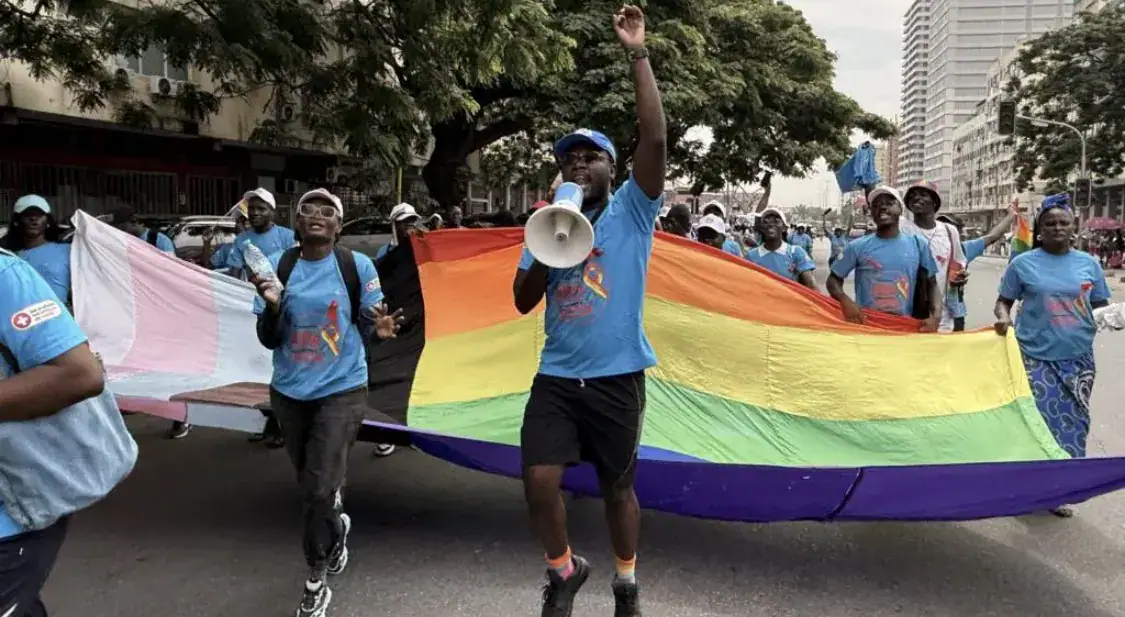
In the Angolan capital of Luanda, hundreds of individuals from the LGBTQ+ community and their allies took part in a march to demand an end to discrimination and violence against them. The event was organized by the Angolan Network of Associations Working in the Fight Against AIDS and took place on the National Day to Combat AIDS. Participants, including around 50 young people from the LGBTQ+ community, carried rainbow flags and chanted slogans calling for an end to prejudice and discrimination.
The march aimed to highlight the struggles faced by Angola's LGBTQ+ community, who continue to experience violence, discrimination, and marginalization. Despite Angola being one of the few African countries that decriminalized homosexuality in 2021, the community still faces significant challenges. According to Emica, a member of the LGBTQ+ rights association "Iris", the fight against AIDS and the defense of LGBTQ+ rights are closely linked, and it is essential for the community to demand their rights, even if it requires great courage.
The new Angolan penal code, which came into effect in 2021, prohibits discrimination in employment, education, and access to goods and services, and provides for penalties of up to two years in prison for those found guilty. However, despite this progress, LGBTQ+ individuals say they continue to face discrimination in their daily lives. Marley, a 32-year-old LGBTQ+ individual, spoke of the fear that still accompanies him whenever he goes out in public, citing the risk of physical attacks and the trauma of past experiences.
The case of Carlos Fernandes, a prominent figure in Angola's LGBTQ+ rights movement, who was found dead in his home in Luanda in 2024, has highlighted the risks faced by the community. While the authorities have not established a link between his death and his sexual orientation, human rights groups have expressed concerns about the possibility of homophobic motives. The march's participants called for an end to such violence and discrimination, with chants of "Our existence is resistance".
The event also highlighted the economic challenges faced by Angola's LGBTQ+ community, who often struggle to access employment and are forced to resort to prostitution to make ends meet. According to Rokiana, a lawyer and human rights activist with "Iris", the community continues to face significant obstacles, despite Angola being considered one of the few African countries where LGBTQ+ individuals can live in relatively safer conditions.
Rokiana noted that her organization had achieved a significant victory in court, winning a case against three police officers who had attacked a transgender woman. The officers were sentenced to one year in prison, suspended, and ordered to pay compensation of 1.2 million kwanzas (approximately $1,200). The march's participants, including Rashid, a transgender man who attended the event with his partner and one-year-old child, called for equal rights and an end to discrimination.
The event concluded with a sense of hope and determination, as participants vowed to continue fighting for their rights. While Angola has made progress in recent years, the LGBTQ+ community still faces significant challenges, and activists say that much work remains to be done to achieve full equality. The march served as a powerful reminder of the community's resilience and determination to demand their rights and challenge discrimination.
Key points
- The march was organized by the Angolan Network of Associations Working in the Fight Against AIDS to coincide with the National Day to Combat AIDS.
- Despite decriminalization, the LGBTQ+ community in Angola continues to face significant challenges, including violence, discrimination, and marginalization.
- The event highlighted the economic challenges faced by Angola's LGBTQ+ community, who often struggle to access employment and are forced to resort to prostitution.