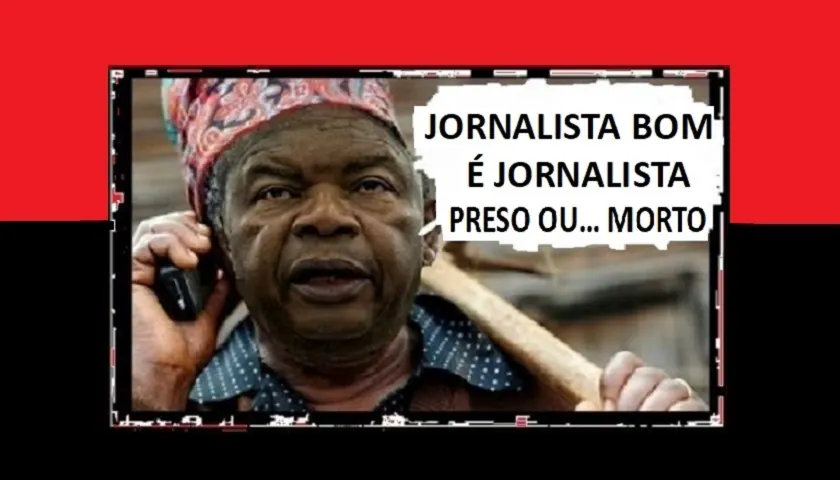
The Committee to Protect Journalists (CPJ) has criticized Angola for its treatment of journalists, stating that the country is one of the worst offenders in Africa when it comes to criminalizing journalism. According to the CPJ, Angola has been using justice to intimidate journalists, with 38 journalists facing investigations for defamation since 2015. The CPJ's findings were published in an article online, highlighting the challenges faced by journalists in Angola.
The CPJ's research revealed that the majority of journalists investigated for defamation were targeted for reporting alleged misconduct involving the police or government officials. The organization noted that the use of criminal defamation laws in Angola leaves journalists under constant threat of imprisonment for up to 18 months for investigating allegations of irregularities. This has resulted in a chilling effect on the media, with many journalists self-censoring or facing prolonged investigations.
The CPJ also highlighted that there is no official data on the number of journalists under investigation for defamation in Angola, as court records are kept by type of offense rather than by profession or sector. The organization interviewed 38 journalists who faced a total of over 200 investigations for defamation, with only one serving a prison sentence in the past decade. Six journalists were acquitted or had their cases dismissed, while 31 still have cases pending.
The CPJ's findings have been echoed by local experts, who argue that Angola's laws are not conducive to a free press. The country's Article 333 of the Penal Code, which criminalizes insulting the President and other state institutions, has been criticized for its potential to stifle free speech. The article has been in place for 50 years, and some argue that it is a relic of the past that should be repealed.
Local jurists, including Sebastião Vinte e Cinco, have expressed concerns about the article, stating that it is a clear setback for freedom of expression and the press. Vinte e Cinco argued that the article could lead to an increase in self-censorship and limit the ability of journalists to report on sensitive topics. He called on the opposition and institutions to challenge the article in court, arguing that it is likely to be deemed unconstitutional.
Other experts, including Benja Satula, director of the University of Angola's Law Center, have also weighed in on the issue. Satula argued that the current code was designed during the era of former President José Eduardo dos Santos and that the current President, João Lourenço, is now facing the consequences. Inglês Pinto, a former president of the Angolan Bar Association, noted that while the code is modern and in line with international standards, its implementation in Angola's specific context is a concern.
The CPJ's criticism of Angola's treatment of journalists comes as the country prepares for elections in 2027. The organization has called on Angola to reform its laws and ensure that journalists can report freely without fear of intimidation or reprisal. At least 11 African countries have abolished criminal defamation laws, which have been seen as a major obstacle to a free press.
Key points
- The Committee to Protect Journalists (CPJ) has ranked Angola as one of Africa's worst offenders in criminalizing journalism.
- 38 journalists have faced investigations for defamation in Angola since 2015.
- The country's Article 333 of the Penal Code has been criticized for its potential to stifle free speech.