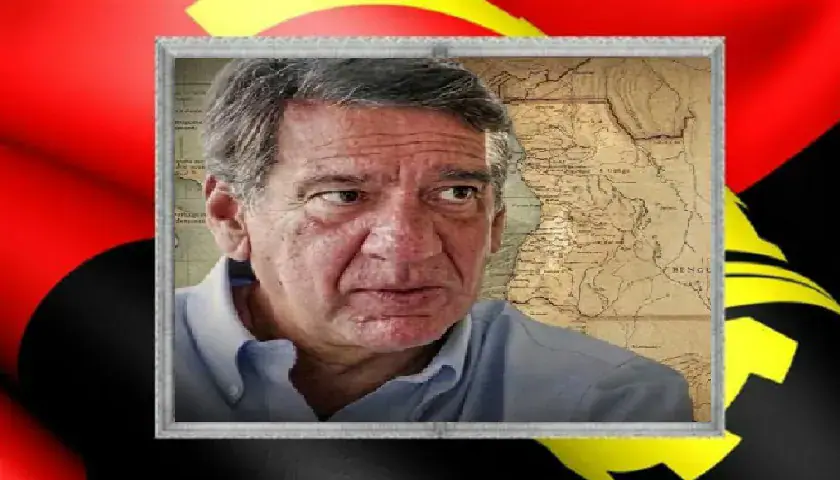
The relationship between Angola and China has undergone a significant transformation, from initial enthusiasm to disenchantment. According to Rui Verde, an investigator and author of the book "Redefining the China-Angola Relationship: Privatization, Development and Disenchantment," the costs of a relationship based on individual and corporate connections rather than institutional ties have become apparent. This shift has been marked by corruption, accumulated debt, and a progressive distancing between the two countries.
Following the end of the civil war in 2002, Angola needed to rebuild its destroyed infrastructure, and China was the available partner to help the country recover through loans and participation of Chinese companies in reconstruction efforts. However, this was not a relationship between states, but between individuals, including prominent figures such as Sam Pa, a Chinese-British businessman, and influential Angolan regime officials like Manuel Vicente and General Manuel Hélder Vieira Dias "Kopelipa."
The web of interests began to unravel after José Eduardo dos Santos stepped down as president in 2017, after 38 years in power, and was succeeded by João Lourenço. Rui Verde explains that China did not want to enter Angola visibly, fearing Western powers would perceive their involvement, and thus established individual and mixed-company schemes. This model led to two problems for Angola: the diversion of funds, often through the state-owned oil company Sonangol, and the debt incurred, which the country continues to pay.
The Chinese financing model operated in a closed circuit: China granted loans to Angola, which were used to pay Chinese companies responsible for rebuilding infrastructure destroyed by war. The Angolan state then reimbursed these loans with oil revenues. Rui Verde's book describes the evolution of the relationship, marked by confusion between public and private interests during dos Santos' era and the subsequent cooling of relations under Lourenço, characterized by some friction.
The absence of João Lourenço at the China-Africa Cooperation Forum (FOCAC) summit in Beijing in September 2024 left the Chinese "quite annoyed," according to Rui Verde. The academic adds that Beijing is expectant about what will happen in Angola in the 2027 elections. Despite the debt payment having "asphyxiated" the Angolan state, there are still interests in Chinese companies that can invest in the country, involving new Angolan actors.
Although the "deals" of the past no longer exist, not only due to fewer funds but also because China has changed its stance, the Asian country intends to continue its presence in the Angolan economy and academia. China maintains an important role in the Lobito Corridor, both through its participation in the concessionaire consortium and as the owner of most of the mines from which materials will be transported.
Rui Verde considers that Beijing is waiting for the 2027 elections and a change in Angolan leadership, as João Lourenço was a "bad president" for them. He adds that there is "a certain indefiniteness regarding Angola's future external relations." In Verde's perspective, Angola's approach to China could have been different, particularly through negotiations on debt that would consider the country's growth needs.
Key points
- The shift in Angola-China relations has been marked by disenchantment due to corruption, debt, and lack of institutional ties.
- The Chinese financing model operated in a closed circuit, with loans granted to Angola, used to pay Chinese companies, and reimbursed with oil revenues.
- Beijing is expectant about what will happen in Angola in the 2027 elections, with a possible change in leadership.
Reporting sources
- CHINA/ANGOLA, DO ENCANTO DE ONTEM AO DESENCANTO DE HOJE · jornalf8.net