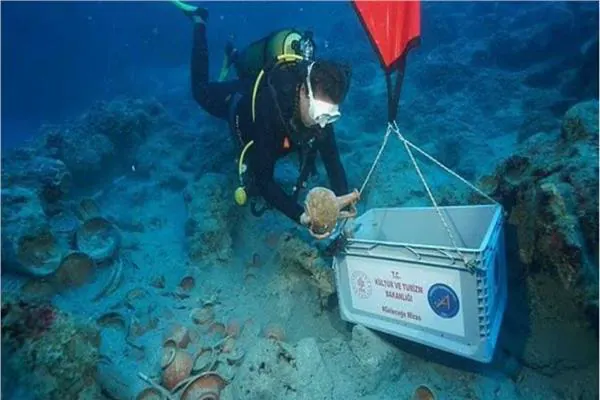
In the depths of the Mediterranean Sea, off the coast of Antalya, Turkey, lies the wreckage of an ancient ship that has yielded a treasure trove of archaeological finds. The vessel, estimated to have sunk around 2100 years ago, was carrying a diverse cargo of fine ceramics, including thousands of pieces of tableware. These artifacts provide a unique glimpse into the lives of the wealthy elite during the Roman period, showcasing their refined tastes and dining habits.
The ship, believed to have originated from the ancient settlement of Rusos in southern Turkey, was headed to Rome when it met its demise. Researchers speculate that the vessel encountered a storm, causing it to crash into a shallow area and sink. The cargo, which includes over 122 different types of ceramic pieces, was remarkably well-preserved, thanks to careful packaging in wooden boxes with clay used to prevent breakage.
The discovery, made in 2025, has generated significant excitement among archaeologists, who see it as a window into the daily lives of ancient Romans. The ceramics, which include fish plates, soup bowls, and serving dishes, demonstrate the sophistication of ancient Roman dining culture. By studying these artifacts, researchers can gain insights into the consumption patterns and preferences of the elite, as well as the extensive trade networks that existed across the Mediterranean.
One of the most significant aspects of the find is its connection to written records from ancient Rome. A letter from the Roman statesman Cicero, dated 50 BCE, mentions the request for ceramic vessels from Rusos, providing a tangible link between the archaeological evidence and historical records. This correlation enables researchers to better understand the relationship between production, trade, and consumption in ancient times.
The ceramics, which include products from various islands in the Aegean Sea, suggest that the ship was involved in a complex network of trade routes. This highlights the interconnectedness of the Mediterranean region during the Roman period, with goods, ideas, and cultural practices being exchanged across vast distances. The discovery has shed new light on the significance of maritime trade in shaping the ancient world.
Turkish Culture and Tourism Minister Mehmet Nuri Ersoy emphasized the importance of the find, noting that it reveals a 2,100-year-old dining set and showcases the region's rich history of production and trade. The discovery has sparked widespread interest, offering a fascinating glimpse into the lives of ancient civilizations and their culinary traditions.
As researchers continue to study the artifacts, they are likely to uncover even more secrets about the ancient world. The shipwreck serves as a testament to the enduring legacy of Mediterranean trade and culture, with its influence still felt today. The findings will undoubtedly contribute to a deeper understanding of human history, providing a unique perspective on the evolution of dining habits and cultural exchange.
Key points
- The discovery of the 2,100-year-old shipwreck off Turkey's coast has yielded a vast array of ceramic artifacts, offering insights into ancient Roman dining culture and trade networks.