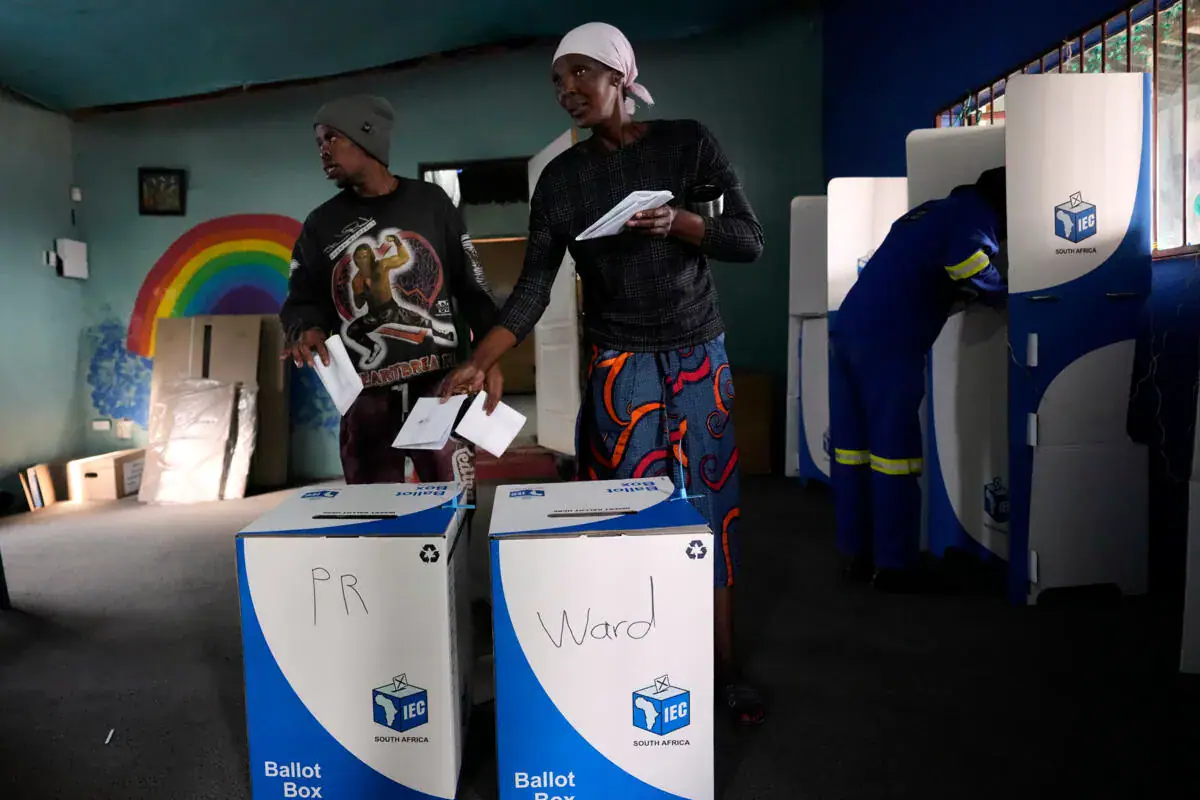
The African National Congress (ANC), the ruling party of South Africa since the end of apartheid in 1994, has suffered its worst electoral defeat in local elections held on November 4. The ANC won 31% of the votes, a significant decline from 46% in 2021 and 65% two decades ago. This result marks a major shift in the country's political landscape, with the ANC losing control of several major cities it had dominated for over 30 years.
The Democratic Alliance (DA), a party seen as having roots in the apartheid era, gained 25% of the votes and control of key cities such as Cape Town. The DA has been steadily gaining ground in South African politics, and this election result further solidifies its position as a major player. The DA's gains come at a time when the ANC is facing significant challenges, including high unemployment, crime, and persistent power and water outages.
The ANC's decline is evident in the fact that it secured the majority in only one of the nine provinces, Limpopo, compared to six in 2021. The party's vote share was also lower in most of the major cities, with the exception of a few areas. The results have been attributed to the country's dire economic situation, with many citizens expressing frustration with the ANC's handling of issues such as joblessness, inflation, and service delivery.
The MK party, led by former President Jacob Zuma, emerged as a significant force, winning 10% of the votes and positioning itself as a third force in South African politics. The Economic Freedom Fighters (EFF), led by Julius Malema, secured 6% of the votes, coming in fourth place. The results reflect a changing political landscape in South Africa, with new players emerging and the traditional dominance of the ANC being challenged.
ANC President Cyril Ramaphosa has acknowledged the party's poor performance, describing it as a "catastrophe". The party's leadership will need to reflect on the results and consider strategies to regain the trust of voters. The ANC has been the dominant party in South Africa since the end of apartheid, but this result suggests that its support base is eroding.
The DA's gains are significant, but the party still faces challenges in terms of its own support base and the perception that it represents the interests of white South Africans. The DA has sought to broaden its appeal in recent years, but it remains to be seen whether it can capitalize on the ANC's decline and become a more dominant force in South African politics.
The election results have significant implications for the future of South African politics, with the ANC's dominance being challenged and new players emerging. The country's economic and social challenges will need to be addressed, and the parties will need to work together to find solutions. The ANC's loss is a significant development, and it will be interesting to see how the party responds to this new reality.
Key points
- ANC's vote share declined to 31% from 46% in 2021.
- DA gained 25% of votes, securing control of key cities.
- MK party, led by Jacob Zuma, emerged as a significant force, winning 10% of votes.
Reporting sources
- África do Sul: Partido de Nelson Mandela esmagado nas... · novojornal.co.ao