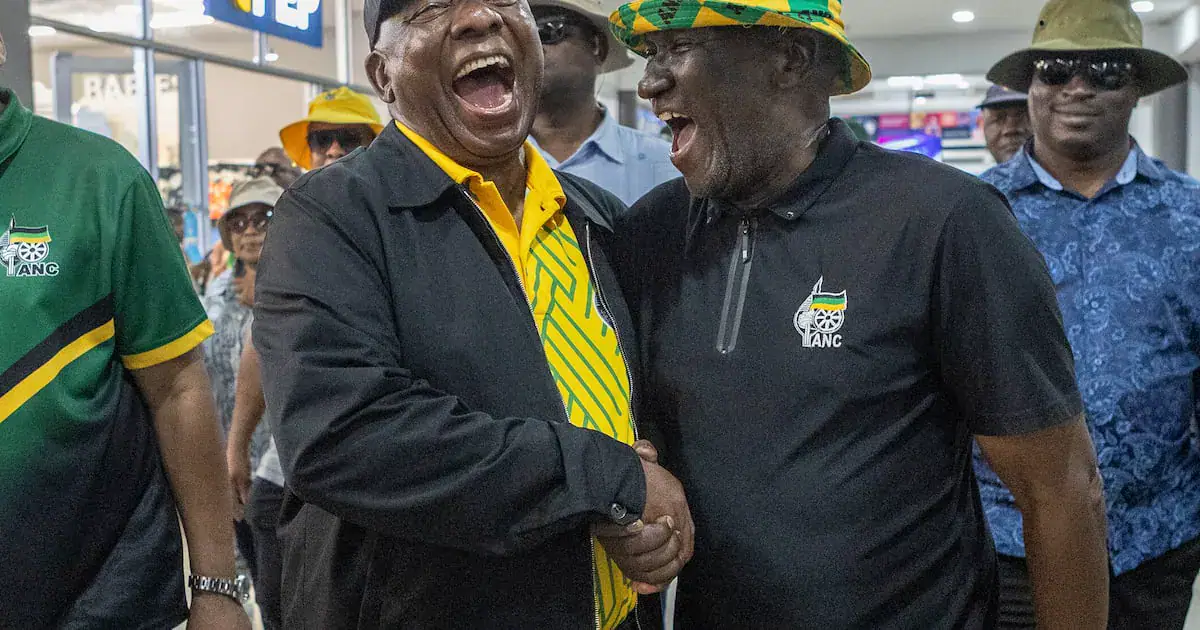
The African National Congress (ANC) has been preaching organisational renewal since its 2007 Polokwane conference, but South Africans have stopped believing it. In 2012, the ANC published a discussion document, Organisational Renewal: Building the ANC as a Movement for Transformation and a Strategic Centre of Power, addressing deep-seated structural and moral crises. This was after the 2011 local government elections saw a record voter turnout of 57.6%, with the ANC maintaining its majority nationally, winning 62% of the vote.
The 2012 document identified three key pillars for renewal: returning to the "mass line", building the ANC as a strategic centre of power, and combating internal pathology. It stressed reviving grassroots activism, shifting away from factional politics, and addressing corruption and organisational disunity. Despite this, the party's support declined, with a 2.82% decrease in voter support by 2011. The ANC's 2006 local government elections saw 64.82% of the national vote, but this had dropped by 2011.
Every conference across all structures, national general council, and national policy conference after 2007 has addressed moral, ethical, and political decay within the ANC. The term "organisational renewal" has been part of the party's lexicon for two decades. ANC leaders, including President Cyril Ramaphosa, have promised renewal, but it has not materialised. Ramaphosa was elected on a promise of renewal, but his presidency has seen sustained hollowing out of the state, poor governance, and corruption.
The ANC's 2012 discussion document explicitly confronted the effects of factionalism, corruption, and organisational disunity. It addressed the disconnection of the ANC from the people, reflecting on the party's growing alienation, loss of public trust, and a sense of leadership growing distant and out of touch. The document identified warning signs of declining support, tied to value system collapse and bureaucratisation.
Despite the ANC's efforts to address its problems, South Africans have lost faith in its ability to renew itself. The 2026 local government elections results indicate voters have collectively decided the ANC is past the point of renewal. Existing evidence supports this position, with many pointing to the party's failure to deliver on its promises. The ANC's rhetoric has failed to restore public trust, with voters rejecting the party's promises.
President Cyril Ramaphosa's election was seen as an opportunity for the ANC to renew itself, but his presidency has been marked by poor governance, maladministration, and corruption. The ANC's sustained hollowing out of the state has contributed to the public's loss of faith in the party. The party's failure to address its internal pathologies has had a lasting impact on its electoral performance.
The ANC's decline in voter support is a clear indication that its renewal efforts have failed. The party's leadership must take responsibility for its failures and work towards genuine transformation. The ANC's future depends on its ability to restore public trust and demonstrate a commitment to serving the people, rather than personal interests. The party's survival depends on it.
Key points
- ANC's organisational renewal rhetoric since 2007 has failed to convince South African voters.
- Party's internal pathologies, including factionalism and corruption, have contributed to its decline.
- Voters have lost faith in ANC's ability to renew itself, rejecting party's promises in 2026 local government elections.