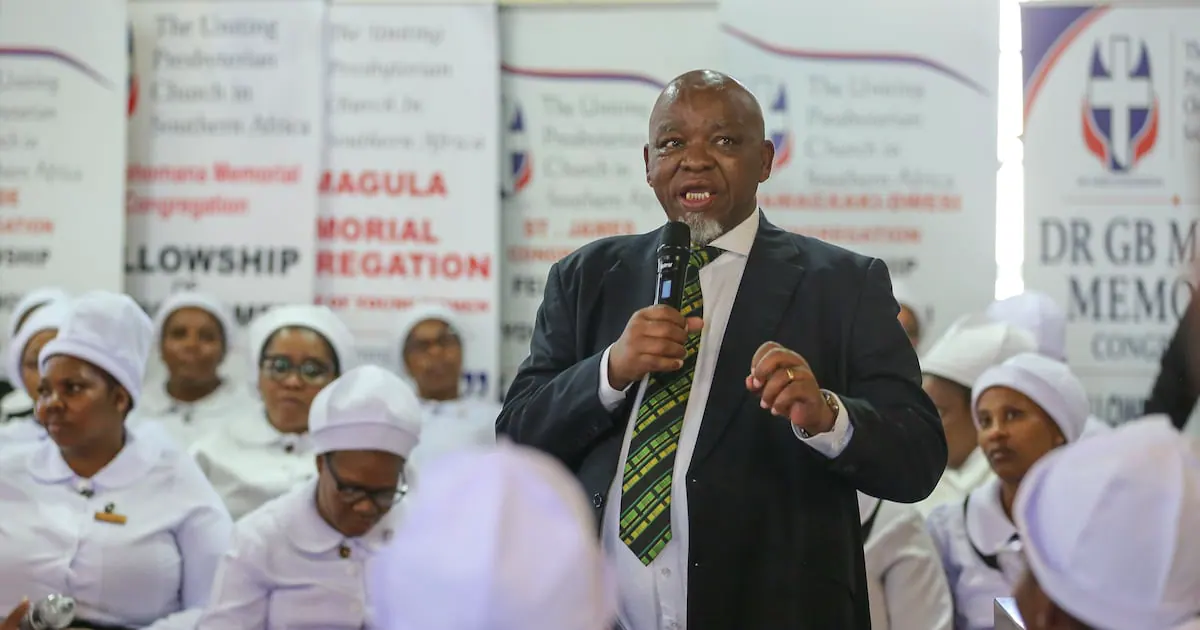
ANC national chairperson Gwede Mantashe recently addressed members of the Rhini community in Makhanda, Eastern Cape, as part of the party's campaign ahead of the November 4 local government elections. During his speech, Mantashe urged supporters not to abandon the ANC for newer parties, arguing that it would take any replacement party 30 years to learn how to govern. He also emphasized the party's commitment to addressing capacity challenges in local councils by pushing for councillor candidates with at least a matric qualification.
However, Mantashe's request for forgiveness from Makhanda residents for service delivery failures has sparked outrage. The author of the article, who lived in Makhanda from 2012 to 2017, expressed astonishment at Mantashe's remarks, citing the municipality's decades-long collapse. In 2014, the Makana local municipality was placed under national intervention and administration due to severe financial collapse, governance failures, and breakdowns in basic service delivery. Residents faced significant challenges, including water shortages, with some forced to collect water from natural springs or buy it at a local mall.
The situation in Makhanda was dire, with widespread breakdowns in water provision, sanitation, electricity, housing, and waste disposal. The municipality was confronted with four consecutive audit disclaimers, municipal creditors exceeding R100m, and massive debts owed to service providers, including over R65m to Eskom and R10m to the auditor-general. Despite being placed under administration, the intervention failed to yield long-term stability, and chronic dysfunction persisted. In January 2020, a high court ruling ordered the complete dissolution of the municipal council due to its persistent failure to deliver basic services.
The court ruling was a result of the municipality's unconstitutional breach of its duties to citizens, including water outages, electricity problems, unmanaged sewage spills, and waste management issues. The municipality and provincial government appealed the ruling, but in 2022, the Supreme Court of Appeal made the municipality's financial recovery plan a formal court order. This put the municipality and provincial government under strict judicial and institutional oversight to turn around governance and service delivery. However, by 2025, the municipality was in a worse place than ever, facing a severe water and sanitation crisis.
The South African Human Rights Commission described the crisis as a systemic failure rather than simply a question of scarcity. The commission noted persistent raw sewage spills and that parts of the community were still relying on the bucket system. Residents continued to experience chronic water disruptions, unmaintained roads, and widespread potholes. The municipality struggled with financial mismanagement, audit disclaimers, and material irregularities regarding landfills and wastewater plants.
The ANC's request for forgiveness from Makhanda residents has been deemed unconscionable and disrespectful. The author argues that the party has treated the people of Makana with contempt for decades and that it is unacceptable for Mantashe to ask for forgiveness without acknowledging the party's role in the municipality's failures. The ANC's actions have had a profound impact on the lives of residents, who continue to face significant challenges in accessing basic services.
The situation in Makhanda highlights the need for accountability and effective governance. The ANC's call for forgiveness raises questions about the party's commitment to addressing the systemic failures that have plagued the municipality for decades. As the party continues to campaign ahead of the local government elections, its actions in Makhanda will likely be closely scrutinized.
Key points
- The ANC's request for forgiveness in Makhanda has sparked outrage amid decades-long service delivery failures.
- The municipality's failures include chronic water disruptions, unmanaged sewage spills, and widespread potholes.
- The ANC's actions in Makhanda have had a profound impact on the lives of residents, who continue to face significant challenges in accessing basic services.