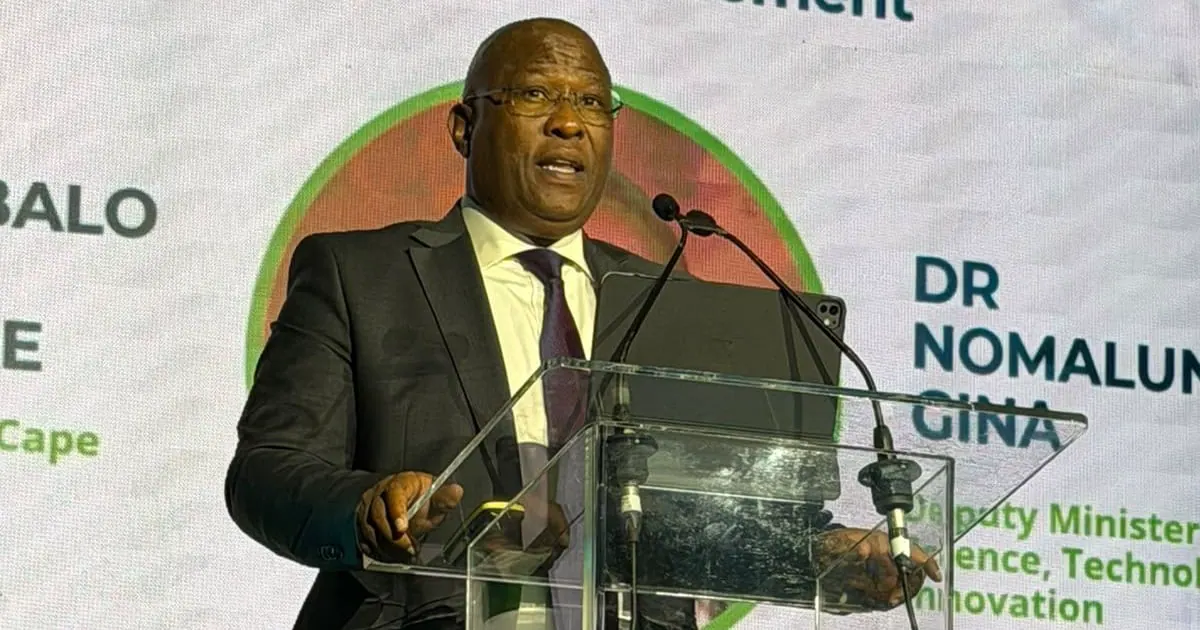
ANC Eastern Cape chair Oscar Mabuyane has called for the ANC and the South African Communist Party (SACP) to consider a potential governing arrangement after the November 4 elections. Speaking at the SACP's Red October launch in Great Kei, Mabuyane acknowledged a new reality where the two parties are competing for votes, but may need to work together to govern. This shift in approach marks a significant change for the ANC, which has traditionally been the dominant force in South African politics.
Mabuyane's comments have been seen as an olive branch to the SACP, which has decided to contest local government elections independently for the first time. The SACP's decision has disrupted the traditional arrangement between the two parties, which had previously contested elections together as part of the Tripartite Alliance. The ANC has little choice but to adjust to this new reality, as it is no longer the electoral giant it was before 2024, having lost its national majority and forced into the Government of National Unity.
The ANC's vulnerability was highlighted in the Emfuleni ward 28 by-election in May, where the DA defeated the ANC by just eight votes. The SACP received over 60 votes in the by-election, which could have potentially swung the result in favor of the ANC. This outcome should concentrate minds at Luthuli House, according to analysts, as a relatively small independent SACP vote can become decisive when the ANC and an opposition party are closely matched.
Mabuyane was also blunt about the ANC's own weaknesses, citing organisational problems, factionalism, governance failures, and declining municipal capacity as factors behind the party's vulnerability. He emphasized that these failures are not merely administrative, but have significant political implications. The ANC's candidate-list failure in four Eastern Cape municipalities was cited as a concrete example of the organisational problems he was addressing.
The ANC needs to rethink its relationship with the SACP, according to Mabuyane, and the alliance needs a reset. The question is no longer whether the SACP should contest independently, but what both parties do with the consequences. Mabuyane's call for a "reconfiguration" of the Tripartite Alliance deserves serious attention, as the ANC has spoken about reconfiguration for years.
If the ANC and SACP find themselves in a position to govern together, negotiations should begin with a programme, not a scramble for mayoral, speaker, or committee positions. The focus should be on fixing municipalities, tackling corruption, improving basic services, and creating jobs. These questions matter more than who gets the mayor's chain, according to analysts.
Mabuyane has put the issue squarely on the table, and the ANC should take the hint. The ANC can fight the SACP for votes on November 4, but if the numbers leave them needing each other afterwards, it will have to negotiate from political reality, not from memories of its former dominance. The lesson is uncomfortable, but the ANC cannot blame its decline entirely on its opponents.
Key points
- ANC Eastern Cape chair Oscar Mabuyane signals potential coalition with SACP after November 4 elections
- Mabuyane cites organisational problems, factionalism, governance failures, and declining municipal capacity as factors behind ANC's vulnerability
- ANC and SACP may need to work together to govern if election results lead to a hung council