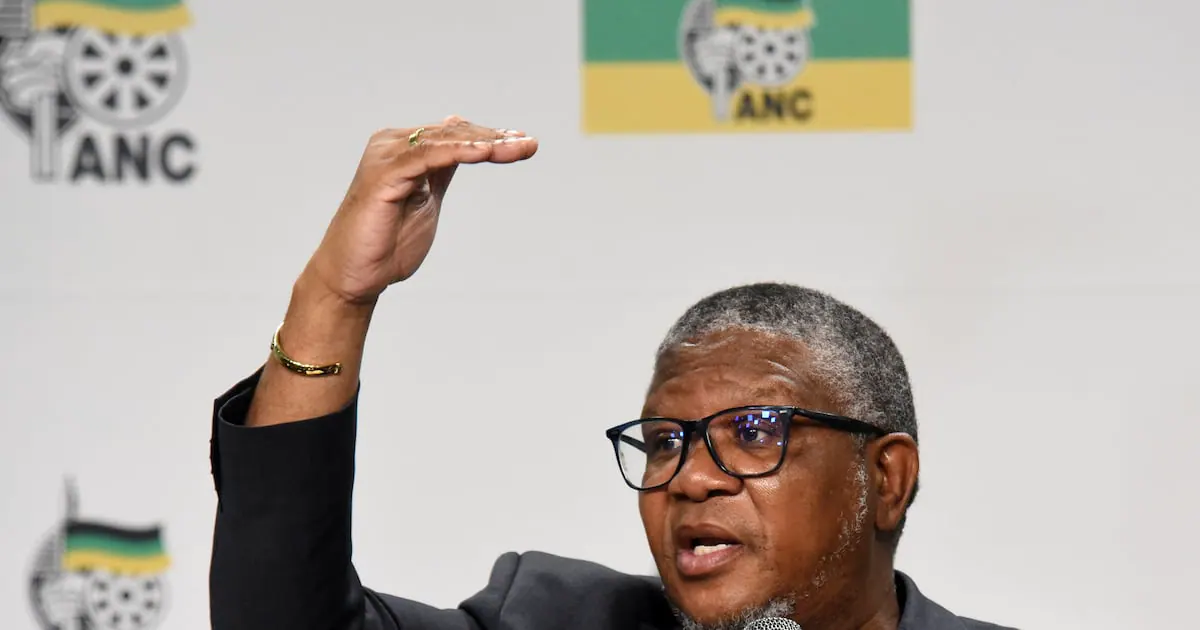
The African National Congress (ANC) is facing a crisis of internal dysfunction, with infighting and power struggles among its members dominating headlines. The party's inability to submit its candidates' list on time has sparked widespread criticism, with many questioning its ability to govern effectively. The ANC's troubles are not limited to this incident, as the party's internal struggles have been escalating in recent months.
The ANC's failure to meet the deadline was attributed to "systems glitches" at the Independent Electoral Commission (IEC), but many observers saw this as a weak excuse. The party's decision to take the matter to court was seen as a futile attempt to save face. The IEC has faced criticism for its handling of the 2024 elections, but in this instance, the ANC's problems appear to be largely self-inflicted.
The ANC's internal struggles are rooted in its failure to fully embrace democracy. The party has historically sought to control the process from the top, suppressing dissent and ambition among its members. This approach has led to resentment and infighting, particularly among those who feel they have been unfairly overlooked for leadership positions. The party's leadership, including President Cyril Ramaphosa, has been accused of exacerbating these problems.
The ANC's troubles are also linked to its declining influence and popularity. The party has shed support in recent years, and its attempts to control the process from the centre are no longer effective. The party's decision to reveal the names of its mayoral and premiership candidates ahead of elections is a belated recognition of the need for greater transparency and accountability.
The ANC's internal struggles have significant implications for its survival. The party's dysfunction has landed the country in dire straits, and its inability to govern effectively has led to widespread criticism. The ANC's leadership must address these problems if the party is to remain relevant and effective. Failure to do so could lead to further decline and potentially even its disappearance from the political scene.
The ANC's problems are not unique to South Africa, as many liberation movements on the continent have struggled to adapt to changing circumstances. The party's leadership must learn from these examples and take steps to address its internal dysfunction. This will require a fundamental shift in the party's approach to governance and leadership.
The ANC's future is uncertain, but one thing is clear: the party must change if it is to survive. The November 4 local government elections will be a critical test of the party's ability to adapt and reform. If it fails, the consequences could be severe, and the party's very survival could be at stake.
Key points
- The ANC's internal struggles threaten its survival ahead of the November 4 local government elections.
- The party's dysfunction has landed the country in dire straits and has led to widespread criticism.
- The ANC's leadership must address its internal problems and adapt to changing circumstances if the party is to remain relevant and effective.