The African National Congress (ANC) is facing an uncertain future, with its support waning significantly over the past few years. The party, which has been in power since the end of apartheid, has been plagued by dysfunction and corruption. According to Ipsos polling, the ANC could drop to 29% in Buffalo City, a 30-percentage-point collapse from its 2021 performance. Nationally, the party sits at 31%, with the Democratic Alliance (DA) at 25%, the MK Party at 14%, and the Economic Freedom Fighters (EFF) at 11%.
The ANC's decline in support can be attributed to its failure to deliver on its promises, particularly in terms of economic development and service delivery. The party's candidate list chaos, which saw it fail to submit 181 councillor candidates for six municipalities before the IEC's 5pm deadline on 28 August, is a symptom of its dysfunction. Secretary-general Fikile Mbalula admitted that some branch-submitted lists contained inaccurate and unverified identity numbers. The Electoral Court dismissed the party's application, and the Electoral Commission of South Africa (IEC) has been unambiguous: the exclusion is a result of the ANC's failure.
The ANC's problems are not new, and the party has been struggling with corruption and internal battles for years. According to Michela Wrong's book It's Our Turn to Eat, about corruption in Kenya, the characters could be replaced with ANC politicians and the book would still make sense. The party's failure to address these issues has led to widespread disillusionment among voters, with nearly half of South Africans saying no political party represents their views. Two-thirds of adults do not vote in local government elections.
The IEC's own research points to "disillusionment with the lack of tangible democratic dividends". This sentiment is particularly pronounced among young people, who have no living memory of apartheid but live its legacy. The poverty they did not choose, the reliance on social grants, the struggle for university funding, and the youth unemployment that swallows their peers have all contributed to their disillusionment with the ANC.
Despite the ANC's decline, many of its supporters remain loyal, driven by a sense of nostalgia and a desire to honor the party's history. For many, the ANC represents a symbol of the struggle against apartheid and the fight for democracy. The author's mother, who is 80-something and frail, is a case in point. She has been a lifelong ANC supporter, and her loyalty to the party is driven by her experiences under apartheid.
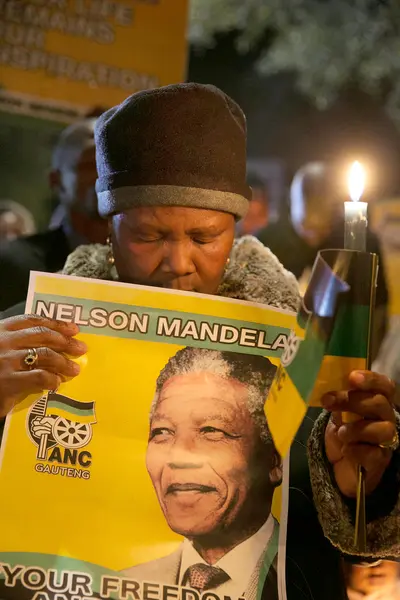
The author's mother remembers the year her father was arrested without trial for his work as a trade unionist and his political views. She recalls the anger in her chest when a young white man shouted "Hey!" at her, and the sound she can probably still hear. For her generation, Nelson Mandela became the ANC, and the ANC became Mandela. The party promised a life of dignity, and for many, it delivered. However, for younger generations, the ANC's legacy is not as clear-cut.
As the ANC struggles to come to terms with its decline, it must confront the reality that its support is waning. The party's leadership has admitted that it is in crisis, and there are growing calls for it to be overhauled. If the ANC cannot be that party, then perhaps it is time to let it go, not with anger but with the recognition that some things, like the author's mother's name, were never meant to be taken from them in the first place.
Key points
- The ANC's future is uncertain as support wanes, with the party's dysfunction and corruption contributing to its decline.
- The party's failure to deliver on its promises, particularly in terms of economic development and service delivery, has led to widespread disillusionment among voters.
- The ANC's legacy as a symbol of the struggle against apartheid and the fight for democracy remains strong, but its support is waning among younger generations.