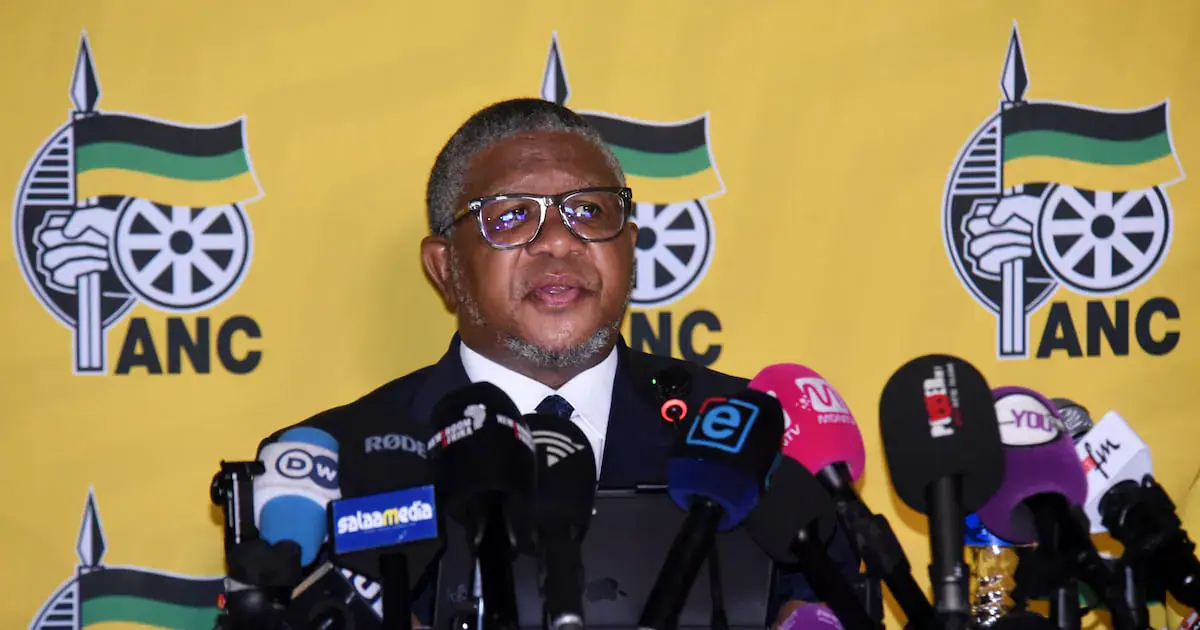
The African National Congress (ANC) was aware of its declining support, with internal polling showing 30-34% backing, but failed to take effective action to avert the crisis. ANC secretary-general Fikile Mbalula admitted that the party knew a disaster was coming but did not behave like a party facing an existential crisis. Despite having a large following, the ANC's inaction and poor strategy ultimately led to a historic loss in the South African elections. The party received more than 9-million votes, but lost control of all but one of the country's metros.
In the months leading up to the election, the ANC's campaign efforts were minimal, with little visible activity on the streets. It wasn't until the past three weeks that Mbalula and his team launched a full-court press, but it was too little, too late. The party's delay in responding to the crisis was evident in its inability to choose a mayoral contender for Johannesburg, with the selection of a candidate being mired in indecision. Even the deployment of senior leaders to go door-to-door in townships where support was haemorrhaging failed to yield results.
The ANC's poor performance has been attributed to its failure to communicate its successes and focus on service delivery. The party's decision to partner with ActionSA in Tshwane was also seen as a strategic error, given the similarities between their constituencies. ActionSA's mayor, Nasiphi Moya, was adept at showcasing his achievements, highlighting the importance of spreading hope through delivery and communication in politics.
The ANC's loss of support from the middle class was a significant factor in its poor performance. The middle class, often referred to as "clever blacks," shifted their support from the Economic Freedom Fighters (EFF) to Helen Zille in Johannesburg. This shift was driven by the ANC's incompetence and inability to provide basic services, such as water and electricity. The final straw was the water crisis in Johannesburg on the eve of the election, which led many to back Zille as a more viable option.
ANC leaders have acknowledged that the party needs to do a diagnosis beyond media statements to understand its poor performance. However, with the party's Titanic-like decline, it is uncertain whether it will be able to stage a dramatic recovery. The ANC's problems run deep, and it may be beyond the grasp of many in its leadership structures to effect meaningful change.
The ANC's failure has significant implications for the country's future, with the party's decline creating opportunities for other parties to gain traction. The ANC's loss of control of the metros, where big budgets are allocated, will likely have a lasting impact on the country's governance and service delivery. As the ANC struggles to come to terms with its new reality, it remains to be seen whether it will be able to adapt and regain the trust of its supporters.
Despite the ANC's poor performance, its supporters still turned out in their millions, highlighting the party's enduring loyalty and support base. However, with the 2029 national election looming, it is uncertain whether the ANC will be able to learn from its mistakes and stage a recovery. The party's leadership will need to take a long, hard look at its strategy and approach if it is to regain the trust of its supporters and restore its position as a dominant force in South African politics.
Key points
- ANC's inaction and poor strategy led to historic loss in South African elections
- Middle class shifted support from EFF to Helen Zille in Johannesburg due to ANC's incompetence
- ANC's decline creates opportunities for other parties to gain traction in South African politics