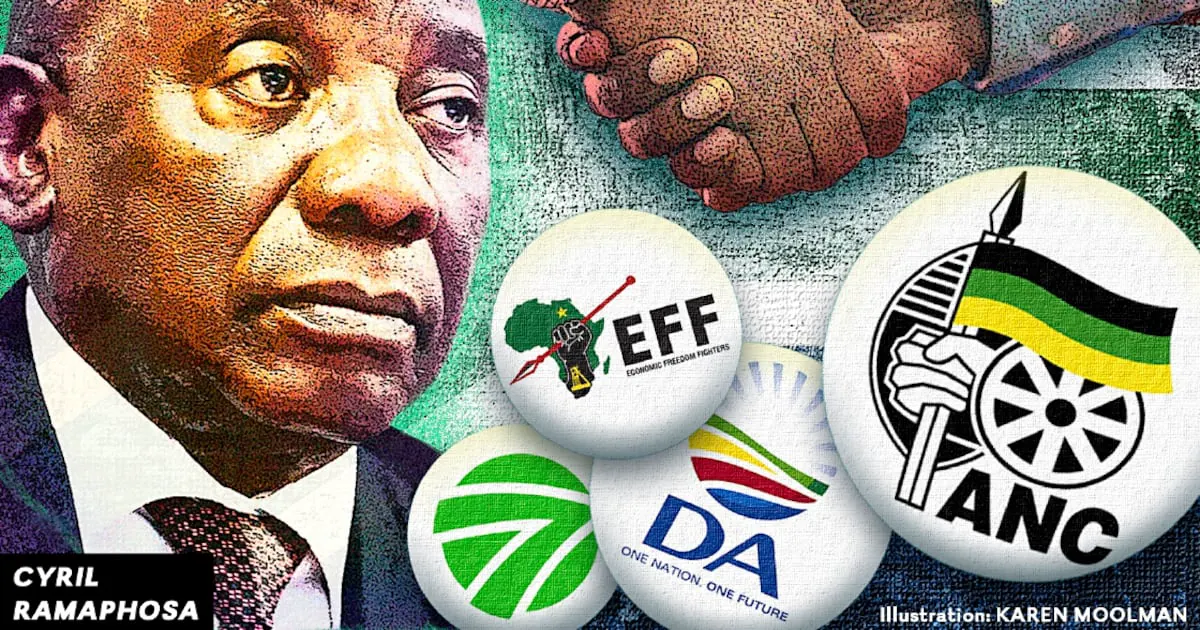
A new report by the Mapungubwe Institute for Strategic Reflection (Mistra) has shed light on the development of coalition politics in South Africa. The Coalitions Barometer 2026 reveals that coalitions have become increasingly prevalent, with three provincial legislatures and over a third of municipal councils having no majority party at some point. This has led to a complex web of coalitions, with many councils experiencing multiple different coalition governments.
The ANC has adopted a "pragmatic inclusion" approach to coalitions, frequently ceding the mayoralty to small coalition partners to secure power. This strategy has allowed the party to extend its "governing footprint" from 45% of hung councils in 2021 to 68% by 2025. In contrast, the DA has mostly insisted on leading any coalition it has joined, holding the mayoralty in 43 of the 52 administrations it belonged to. This approach has resulted in less enduring coalitions for the DA.
The DA's strategy of assembling anti-ANC coalitions where the ANC was the biggest party has failed comprehensively, according to the report. The ANC's size, its placement as a centre party, and its strategy have given it an advantage. The report notes that trying to govern without the council's largest party - which is most often the ANC - is the biggest predictor of coalition collapse.
The EFF has also entered government 37 times but holds the mayoralty only twice, largely due to its dispersed electorate leaving it relatively weak everywhere. The party made a major strategic shift in late 2022, dissolving partnerships with the DA and IFP and turning to the ANC as its key partner. This shift highlights the complex and often unpredictable nature of coalition politics in South Africa.
Coalitions between parties on the ideological left and right that exclude the centre - known as doughnut coalitions - are also vulnerable to collapse. The report identifies several factors behind the instability of coalitions in metropolitan authorities, including the division of metro voters across numerous parties and the high levels of media exposure that make negotiation difficult.
The report notes that metros have multibillion-rand budgets that raise the political stakes, and they are plagued by posturing political leaders who engage in blackmail and tactical defection. This suggests that the politics of the municipalities crucial for economic growth and social development will continue to be fraught after the November 4 elections.
Despite no longer being a majority party, the ANC may well be able to draw on similar residual advantages after the 2029 national and provincial elections. The party's pragmatic approach to coalitions has resulted in more durable partnerships, while the DA's insistence on leading coalitions has resulted in fragile agreements.
Key points
- The ANC's pragmatic inclusion approach to coalitions has led to more durable partnerships.
- The DA's insistence on leading coalitions has resulted in fragile agreements.
- Coalitions in metropolitan authorities have been especially unstable due to various factors.