The African National Congress (ANC) has retained its position as the largest party in South Africa's local government elections, despite a significant decline in voter support. According to the Electoral Commission of South Africa (IEC), the ANC received 30.76% of the votes nationwide, down 14 percentage points from the 2021 local elections. This decline marks another setback for the ANC, which has governed South Africa since the end of apartheid in 1994. The party's support has been decreasing, with 45.59% of the vote in 2021 and 40.18% in the 2024 national elections.
The Democratic Alliance (DA) emerged as the second-largest party, securing 24.64% of the votes. The uMkhonto weSizwe (MK) Party, led by former President Jacob Zuma, made a significant debut in the local government elections, winning 9.76% of the votes. Voter turnout increased to 52%, higher than the 45.9% recorded in the 2021 local elections. The IEC released the results on Sunday, showing a changing balance of political forces across the country. The ANC maintained its lead in traditional strongholds, while the DA made gains in major urban centers, particularly in Gauteng.
The MK Party emerged as a major force in KwaZulu-Natal, drawing substantial support. In the metropolitan municipalities, the ANC led in Buffalo City and Mangaung, while the DA emerged as the largest party in Cape Town, Johannesburg, Tshwane, Ekurhuleni, and Nelson Mandela Bay. The MK Party led in eThekwini, which includes the coastal city of Durban. The DA secured over half of the votes in Cape Town, positioning it to retain control of the city. In most metropolitan municipalities, no single party appeared likely to win an outright majority, making coalition negotiations necessary.
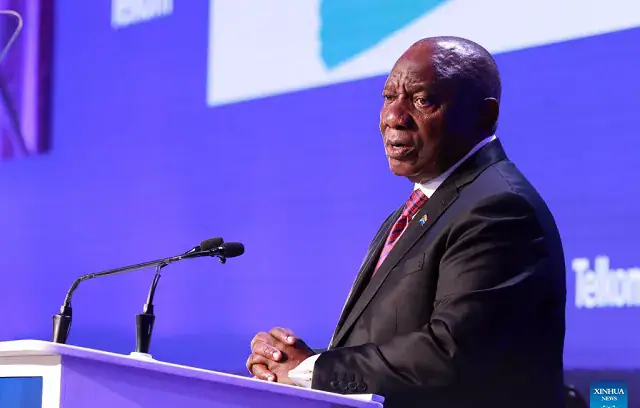
President Cyril Ramaphosa, leader of the ANC, addressed the announcement ceremony in Midrand, emphasizing the strength of South Africa's democracy. He congratulated newly elected councillors and urged parties in municipalities without an outright majority to prioritize community interests and negotiate in good faith. Ramaphosa stressed that councils must be constituted without delay, ensuring that political disagreements do not disrupt service delivery.
The election results have significant implications for the country's politics, particularly in terms of multiparty politics and coalition governance at the local level. Parties are expected to engage in negotiations over governing arrangements, executive positions, and policy priorities in municipalities where no party has secured a majority. The outcome is likely to shape the political landscape ahead of the 2029 national elections.
The DA is expected to build on its gains in urban areas, while the MK Party may continue to attract voters who traditionally supported the ANC. Other parties, including the Economic Freedom Fighters and ActionSA, will seek to strengthen their positions in an increasingly competitive environment. The ANC's decline and the rise of other parties indicate a shift in the country's political dynamics.
The 2026 local government elections demonstrate the evolution of South Africa's democracy, with parties adapting to changing voter needs and preferences. As the country moves towards the 2029 national elections, the ANC, DA, and other parties will need to reassess their strategies to remain relevant and competitive. The elections have set the stage for a dynamic and unpredictable political landscape in the years to come.
Key points
- ANC's vote share declined by 14 percentage points from the 2021 local elections.
- Voter turnout increased to 52%, higher than the 45.9% recorded in 2021.
- The MK Party emerged as a significant force in KwaZulu-Natal, winning 9.76% of the votes.
Reporting sources
- South Africa’s ANC remains largest party despite vote decline · The Independent magazine