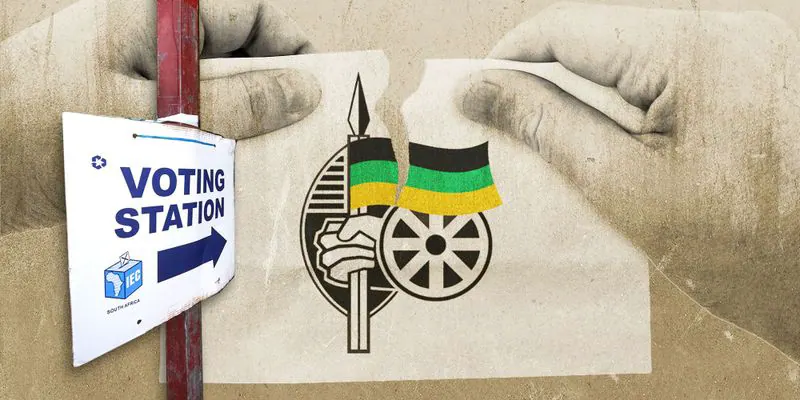
The African National Congress (ANC) is grappling with internal divisions that threaten to tear the party apart ahead of the 2026 local elections. According to analyst Stephen Grootes, the party's current trajectory suggests it will emerge from the elections more divided than ever. This internal contestation is a significant indictment on the party's regions, structures, and leaders. Historically, ANC divisions would subside during election seasons, but this is no longer the case.
The ANC's internal divisions have become increasingly public, with the party's Eastern Cape secretary, Lulama Ngcukayitobi, threatening to sue the ANC secretary-general, Fikile Mbalula, for defamation. The dispute centers on allegations about the registration of provincial candidates for the local elections. Ngcukayitobi's decision to take legal action highlights the intense pressure on provincial leaders to justify their actions to their constituents. With many members facing job losses, Ngcukayitobi must demonstrate that he was not at fault.
Tensions within the ANC are also evident in Johannesburg, where the party has retained Dada Morero as mayor despite Loyiso Masuku's efforts to take the position. The decision has contributed to the electoral disaster unfolding in the city. Notably, Frank Chikane, a highly respected figure, was left off the ANC's candidate list, depriving the party of an opportunity to claim it can reform itself in the city. Chikane's exclusion has been widely criticized, with many viewing it as a grave injustice.
The ANC's internal divisions have led to several high-profile incidents, including the cancellation of an event to announce mayoral candidates for metros. The event's collapse exposed the party's internal power struggles and highlighted Luthuli House's weakness compared to regional structures. This incident demonstrates that some party members have little understanding of the true balance of power within the ANC. The consequences of these divisions may persist even after the elections.
The impact of the ANC's internal divisions will be felt across various provinces, including the Eastern Cape and Free State. In the Free State, the party's failure to submit a full list of proportional representation candidates in Mangaung may result in it losing power entirely in the city. This loss will lead to widespread frustration among party members, who will likely look for someone to blame. Ngcukayitobi's claims of innocence and Mbalula's defense are likely to intensify.
The ANC's decline has led to a vicious cycle of infighting, with party members fighting over increasingly limited positions of power. As the party loses votes, the struggles for power become more intense, further accelerating its decline. This cycle is unlikely to be broken, given the fracturing of South African politics and the ANC's own internal dynamics. Instead, each public division will likely drive the party further apart.
The ANC's internal divisions have significant implications for its future. With each public spat and power struggle, the party's decline accelerates. The 2026 local elections may mark a turning point, with the party's fragmentation potentially becoming irreversible. As the ANC continues to lose votes, its ability to govern effectively will be increasingly compromised. The party's leaders must address these internal divisions to prevent further decline.
Key points
- The ANC's internal divisions threaten to accelerate its decline ahead of the 2026 local elections.
- Public spats and power struggles within the party have become increasingly common.
- The party's decline has led to a vicious cycle of infighting over limited positions of power.