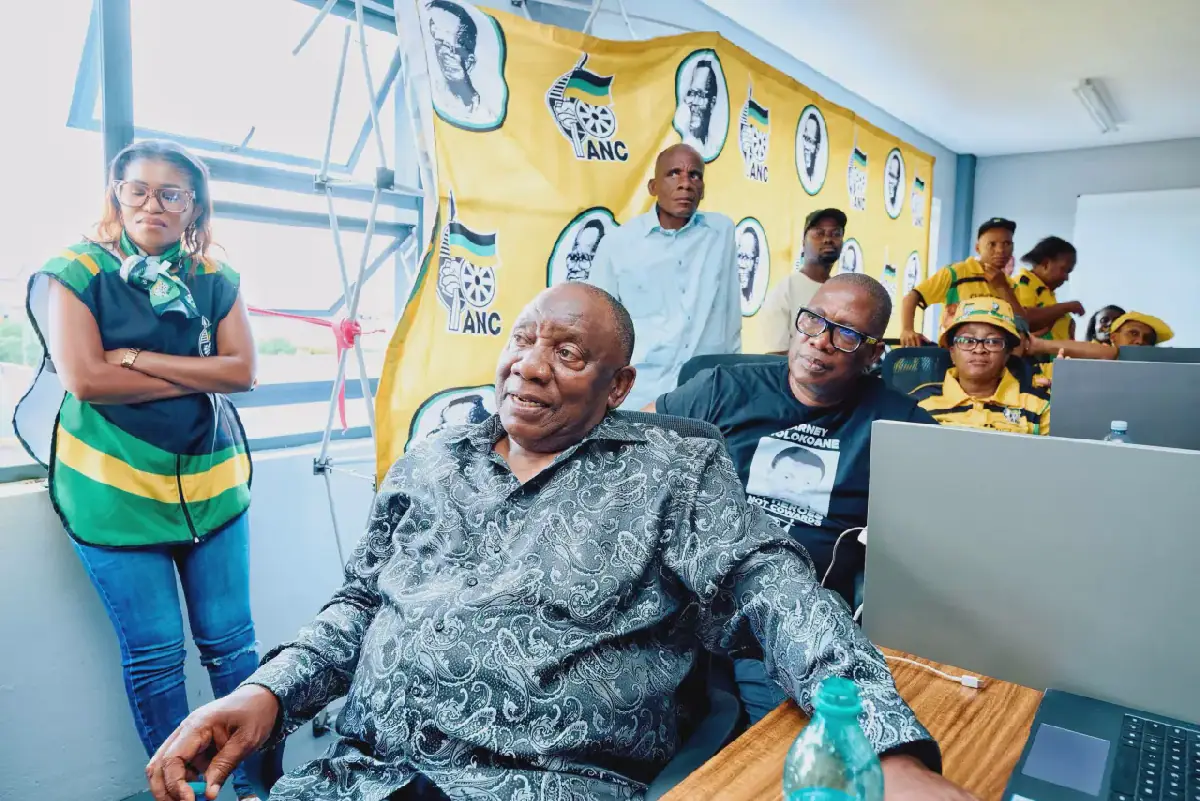
The African National Congress (ANC) is holding closed-door talks with five parties in Midrand, Johannesburg, to discuss the formation of coalitions in Gauteng's hung municipal councils. The meetings come after the local government elections left Johannesburg, Tshwane, and Ekurhuleni without an outright winner. The Democratic Alliance (DA) emerged as the largest party in all three metros but fell short of securing a majority.
The ANC has said it is open to engaging with a wide range of parties as it weighs how to govern councils where no party can rule alone. National spokesperson Mahlengi Bhengu stated that the party's national executive committee had endorsed this approach and that engagements were already underway. Bhengu emphasized that any agreement should be based on a common program with measurable service-delivery targets.
The ANC's willingness to speak to parties across the political spectrum reflects the difficult arithmetic facing it after a sharp decline in support. The party's share of the vote fell to 30.76%, from 45.59% in 2021. Despite remaining the largest party nationally, the ANC lost its outright majority in councils it had previously controlled. This has left smaller parties with significant influence over who can assemble enough support to elect mayors and establish functioning administrations.
The DA received 34.79% of the vote in Johannesburg, ahead of the ANC on 20.25% and ActionSA on 16.27%. The DA also led in Tshwane and Ekurhuleni but did not win a majority in any of the three metros. ActionSA has already engaged with the ANC and EFF, while also holding talks with the DA, the IFP, and other parties. The party's national chairperson, Michael Beaumont, has stated that it is willing to engage across the political spectrum, subject to its coalition principles.
The ANC's options are complicated by its national Government of National Unity with the DA, alongside sharp political differences between the parties and resistance to a local agreement among some ANC members and potential partners. The ANC has also faced calls from the EFF and MK Party to work with parties they describe as part of a broader left-wing bloc. The negotiations are taking place against a deadline to establish new municipal administrations.
Newly elected councils must meet to swear in councillors, elect speakers, and choose mayors. Parties have until the end of the following week to reach common ground on partnerships in councils without a majority. The stakes extend beyond the allocation of mayoral positions, with the ANC emphasizing that coalition agreements should prioritize residents and basic services. Analysts have warned that unstable arrangements could produce another term of political deadlock and weak local government.
The Midrand meeting brings several potential partners together, but no coalition agreement has been announced. The parties' negotiations will determine whether Gauteng's metros are governed through ANC-led arrangements, DA-led coalitions, or broader partnerships. The outcome will have significant implications for the governance and service delivery in these municipalities.
Key points
- The ANC is holding closed-door talks with five parties to discuss the formation of coalitions in Gauteng's hung municipal councils.
- The ANC's willingness to engage with multiple parties reflects its sharp decline in support and the need to form coalitions to govern councils.
- The negotiations are taking place against a deadline, with parties having until the end of the following week to reach common ground on partnerships.