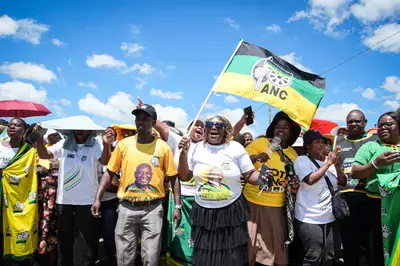
The African National Congress (ANC) is gearing up for the local government elections on 4 November, but its prospects appear uncertain. The party's backing has dropped from 65% in the 2006 municipal elections to just 40.2% in the anticipated national elections. This election will be a critical test for the party to halt its electoral decline. Recent polls indicate that more hung councils are likely, leading to increased reliance on coalitions across major municipalities.
The number of hung councils has jumped from 27 in 2016 to 70 in 2021, with the Democratic Alliance (DA) currently governing 24 councils and the Inkatha Freedom Party (IFP) controlling 16. Projections suggest the ANC could lose at least six percentage points, potentially dropping its support into the mid-30s. Key locations such as Johannesburg, Tshwane, and Nelson Mandela Bay are expected to result in no outright winner, which could further undermine the ANC's position.
Intense competition from the DA in Gauteng and the uMkhonto weSizwe Party (MK Party) in KwaZulu-Natal presents a significant challenge, with the ANC potentially falling below 30% in some regions. Polling data from Ipsos shows the ANC at 31%, with the DA at 25% and the MK Party at 14%. This polling data suggests that the ANC's support is eroding, and it may struggle to regain its footing.
Political analyst Wayne Sussman highlighted the importance of the 2026 local elections as possibly being the last under President Cyril Ramaphosa's leadership, as the party prepares for the 2029 national elections. Internal strife and the inability to field mayoral candidates could severely impact the ANC's electoral performance. The party has faced turmoil, including health issues among leaders and the fallout from earlier Constitutional Court rulings.
The failure to appoint candidates for mayoral positions in numerous municipalities may further diminish voter support, with Sussman noting that voters want to know their local leaders. Despite the struggles, the ANC still shows resilience in rural constituencies, which have historically been a strength. However, the rise of smaller parties and ongoing issues with public service delivery could threaten its dominance.
The expectations for coalition governments are rising as fragmentation within the political landscape progresses. Strategically, losing Johannesburg could severely harm the ANC given the city's economic significance. Political strategist Jonathan Moakes emphasised the ongoing issues of factionalism within the party that complicate candidate selection. The ANC is considering several contenders for the mayoral position in Johannesburg, but the lack of clarity remains a concern.
Overall, the ANC's campaign faces an uphill battle, with criticism over its organisation and preparation as it approaches the pivotal elections. The party's ability to adapt to the changing political landscape and address its internal issues will be crucial in determining its success. As the elections draw near, the ANC must work to regain the trust of voters and demonstrate its ability to govern effectively.
Key points
- ANC's support has dropped from 65% in 2006 to 40.2% in anticipated national elections.
- The party faces intense competition from the DA and MK Party in key regions.
- The ANC's ability to field mayoral candidates and address internal strife will be crucial in determining its success.