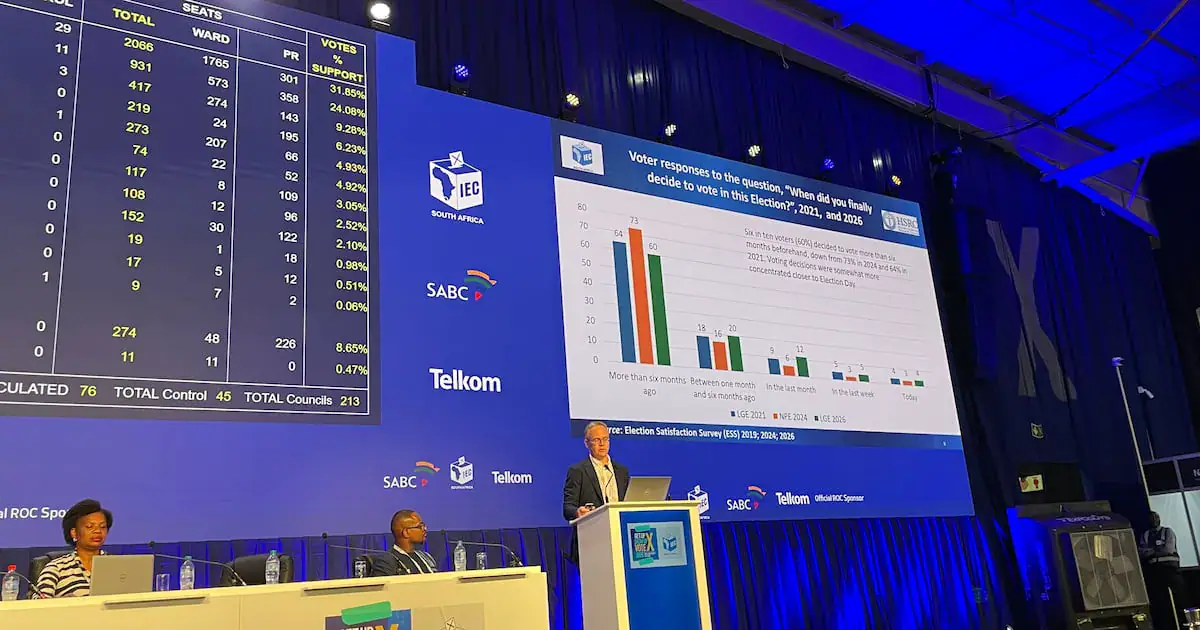
The recent local government elections in South Africa have resulted in a significant shift in the country's political landscape. With nearly 100 hung councils, the main political parties, including the ANC and the DA, must engage in complex negotiations to form coalitions and establish stable governments. The ANC, in particular, faces tough choices, having lost voters across the political spectrum due to its decline as a functioning political organization and failures in government.
The ANC's leadership must decide whether to allow local politicians to handle deal-making or control it from national leadership level. They must also consider whether to offer 'package deals' where one party supports another's mayoral candidate in one council in return for support for their own in another. Both the ANC and the DA have opted for national-level negotiating teams, which have already been formed and are primed for action, particularly in the eight metros and other bigger councils.
ANC NEC member Mdumiseni Ntuli stated that some colleagues in the ANC leadership find the DA's Johannesburg mayoral candidate, Helen Zille, arrogant for presenting herself as a "Messiah" to save the city. This sentiment may impact the ANC's willingness to form a Government of Local Unity (GLU) with the DA. However, Ntuli's comments also highlight the need for the ANC to assess whether sharing power with the DA in the Government of National Unity (GNU) has hurt its prospects in this election.
The ANC's voter exodus is not primarily attributed to its alliance with the DA, but rather its fundamental decline as a political organization and failures in government. Support for populist parties, such as the MK Party and EFF, has fallen since 2024, and the ANC has lost voters to both the centre right and centre left. To revive itself, the ANC must focus on course correction and addressing the bread and butter issues that matter most to residents.
ActionSA has emerged as a standout performer in the elections, particularly in Gauteng, and is now in a position to play a powerful king-maker role in the Gauteng metros. Based on CSIR projections, ActionSA could provide the DA with a two-party solution in all three Gauteng metros, but the difficult relationship between Herman Mashaba and certain DA leaders makes this deal challenging.
Given the complexities, the ANC's most viable option may be to extend the national grand coalition with the DA to the metros. This requires leadership maturity and courage to overcome internal opposition and the psychological barrier of being the smaller party in the partnership. The business and investment world would welcome such a move, which could be sweetened by adding smaller parties to the coalition or entertaining a 'package' approach.
As negotiations begin, political leaders must prioritize the country's interests, the economy, and the residents of municipalities in need of stable and trustworthy governments. The outcome will have a significant impact on the rebuilding of basic services and infrastructure in South Africa's municipalities. The ANC and other parties must demonstrate leadership and a commitment to the greater good to achieve a successful outcome.
Key points
- The ANC faces tough choices in forming coalitions in 100 hung councils, including decisions on local vs national control and package deals.
Reporting sources
- # 1 COMMENTARY: ANC faces tough choices after voter exodus in metros · The Rand Daily Mail