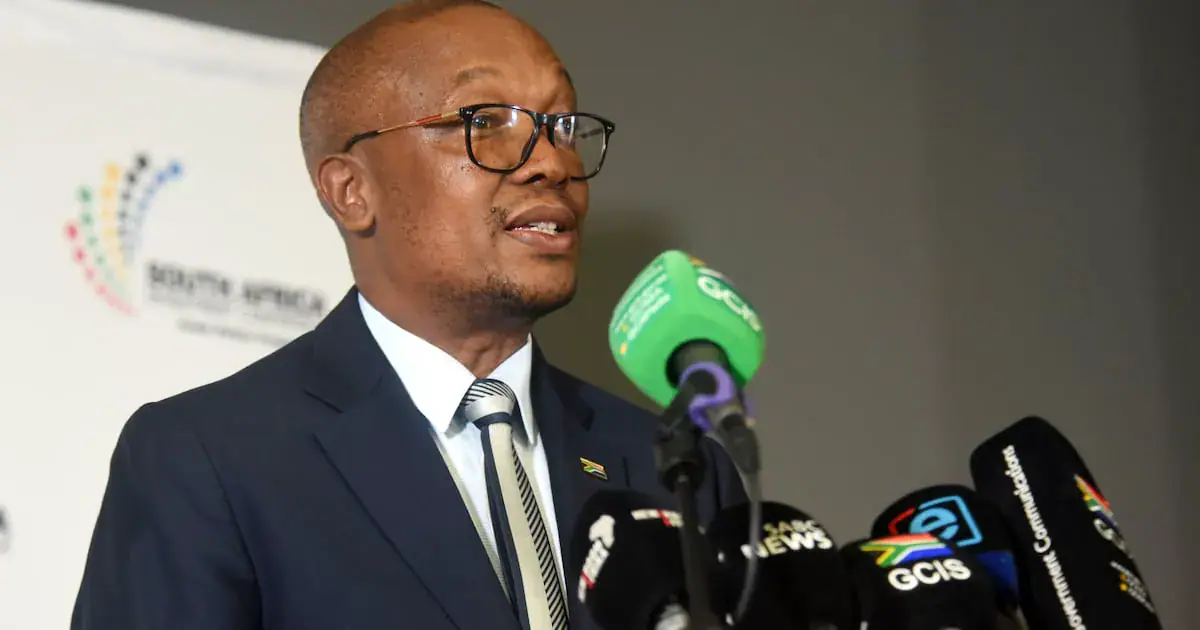
The African National Congress (ANC) and the Democratic Alliance (DA) are centralizing coalition talks ahead of the 2026 municipal elections in South Africa. According to ANC NEC member Parks Tau, the party's secretary-general's office will oversee coalition negotiations after the November 4 municipal elections. This move is seen as a strategic effort to secure alliances and partnerships that will strengthen their positions in local governments. The development comes as the ANC faces a historic low in support, according to an Ipsos poll.
The Ipsos poll reveals that the ANC's support has dropped to a historic low, while the DA has gained traction in metropolitan areas. The poll results are a significant concern for the ANC, which has traditionally been the dominant party in South African politics. The DA's gains in metros suggest a shift in voter preferences, which could have implications for the outcome of the municipal elections. The ANC and DA are taking steps to secure coalition agreements that will help them navigate the changing political landscape.
The municipal elections, scheduled for November 2026, are crucial for the country's local governance structures. The elections will determine the composition of municipal councils and the mayors who will lead them. The ANC and DA are keen to secure strong positions in these councils, as they will play a significant role in shaping local policies and service delivery. Coalition talks are an essential part of this process, as parties seek to form alliances that will help them achieve their goals.
The centralization of coalition talks by the ANC and DA reflects the increasing complexity of South African politics. The two parties have traditionally been rivals, but they are now seeking to form strategic alliances to advance their interests. This shift in approach is driven by the changing voter landscape and the need for parties to adapt to new realities. The outcome of the coalition talks will have significant implications for the future of South African politics.
The IEC (Independent Electoral Commission) is working tirelessly to prepare for the municipal elections. The commission has extended a Constitutional Court ruling to 32 other parties, ensuring that all parties are treated fairly and have an equal opportunity to participate in the electoral process. The IEC is also racing against time to print 27 million ballots in a week, a task that requires meticulous planning and execution.
Other parties are also gearing up for the elections. The Congress of the People (COPE) and the Economic Freedom Fighters (EFF) are among the parties that have been actively campaigning and preparing for the elections. The EFF, in particular, has been vocal about its policies and plans for local government, which include the provision of a basic income grant for youth without matric certificates.
The municipal elections will have significant implications for South Africa's economic growth and development. The outcome will determine the trajectory of local economic policies and service delivery, which are critical for the country's growth and development. The elections will also provide an opportunity for voters to hold parties and leaders accountable for their performance in local government.
Key points
- ANC support has dropped to a historic low, according to an Ipsos poll.
- DA has gained traction in metropolitan areas, according to an Ipsos poll.
- Coalition talks between ANC and DA are being centralized ahead of the municipal elections.