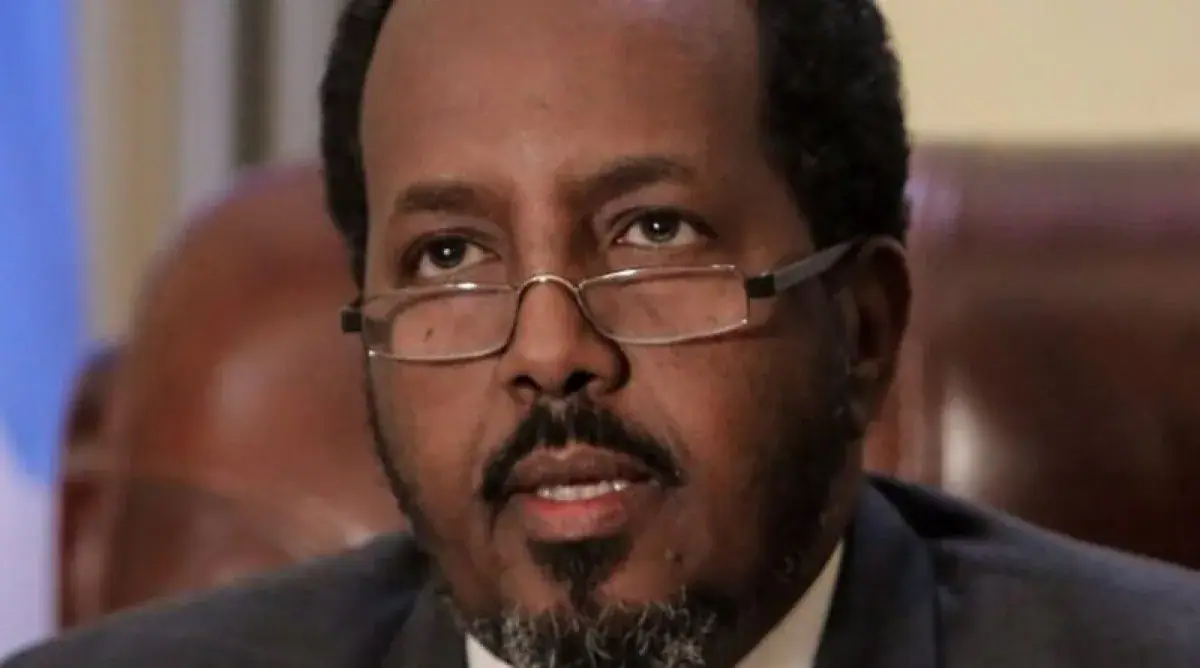
A recent op-ed by Horseed Media argues that the United Arab Emirates poses a long-term threat to Somali unity, while President Hassan Sheikh Mohamud poses an immediate threat. The UAE's influence is based on cultivating alternative centers of power outside Mogadishu, making them economically and politically viable. However, this strategy only works when Somalia's institutions are weak. A foreign government cannot destroy the legitimacy of a Somali state, but Somali leaders can.
The op-ed highlights that the argument over Somali unity is often framed in simplistic terms, with some blaming foreign governments and others blaming corruption and failed governance. In reality, Somalia's crisis is a complex interaction between internal and external pressures. Foreign states act according to their interests, and Somalia's sovereignty depends on the strength and legitimacy of its institutions. The real question is whether Somalia still possesses a national authority capable of resisting foreign influence.
The constitutional confrontation between the presidency and the judiciary in 2026 was a significant event that transformed a political disagreement into a crisis of legitimacy. The Supreme Court ruled that constitutional amendments extending government terms could not automatically apply to officials already serving unless explicitly stated. The court's interpretation led to a conflict over the president's and parliament's mandates, which created uncertainty over who possesses lawful authority.
Somalia's greatest danger is not formal secession but political irrelevance. States collapse when actors begin behaving as though the center no longer matters. This process is visible across the federation, with regions like Puntland, Jubaland, and Somaliland operating separately. South West State has become a site of armed conflict, and local resistance in Hiraan has challenged federal authority. These disputes are symptoms of the same underlying problem: competing centers of power acting as though legitimacy can be obtained without national consensus.
The UAE's influence in Somalia is a concern, with Abu Dhabi pursuing direct relationships with Somaliland, Puntland, and Jubaland. Through port investments, security assistance, and commercial agreements, the UAE has built durable relationships that often bypass Mogadishu. These relationships reinforce the idea that regional administrations can conduct strategic affairs independently, weakening the argument that Mogadishu must remain the center of Somali political life.
Many Somalis view foreign interference as the source of domestic instability, but history suggests the opposite: foreign influence is most effective where domestic institutions are weakest. No foreign government created the constitutional crisis or produced the disputes consuming various regions. These are Somali political conflicts, and external actors merely operate within the opportunities those conflicts create.
The legitimacy of Somali institutions is crucial to resisting foreign influence and maintaining unity. The stronger the Somali state becomes, the more it can resist external pressures. The country's crisis is not a choice between internal and external pressures but the interaction between them. To address these challenges, Somalia must focus on strengthening its institutions and ensuring that its leaders do not undermine the legitimacy of the state.
Key points
- The UAE's influence in Somalia poses a long-term threat to Somali unity.
- President Hassan Sheikh Mohamud poses an immediate threat to Somali unity.
- The legitimacy of Somali institutions is crucial to resisting foreign influence and maintaining unity.