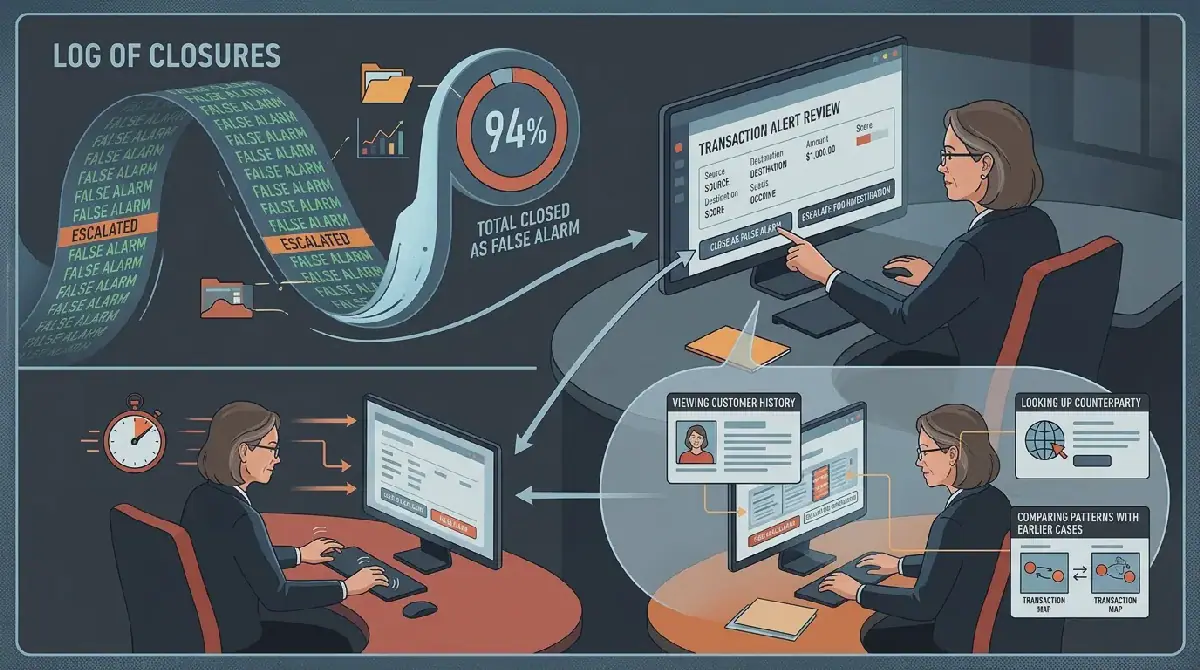
A recent analysis has highlighted the limitations of relying solely on false-alarm metrics in payments systems. In a hypothetical scenario, a software system flags approximately 500 transactions daily, which are then reviewed by an analyst. Over a 30-day period, this translates to 15,000 closure records, with 14,100 marked as "false alarms," resulting in a 94% false-alarm rate. This statistic can be interpreted in multiple ways, making it challenging to assess the effectiveness of the review process.
The 94% false-alarm rate could indicate that most alerts are genuinely harmless and the analyst is correctly dismissing them. Alternatively, it may suggest that the analyst is closing alerts faster than they can be thoroughly examined, potentially leading to overlooked issues. The current log entries only record a closure status and timestamp, providing limited insight into the analyst's review process. This lack of detailed information makes it difficult to determine whether the analyst reviewed the customer's history, checked the counter-party, or compared the pattern with prior cases.
To gain a deeper understanding of the analyst's performance, the author proposes a simulated exercise. By inserting 20 known irregular alerts into a day's queue of 500 and observing how many are escalated, the analyst's review process can be evaluated. In this simulated run, the analyst escalated 14 of the 20 known irregular alerts and 31 of the 480 ordinary alerts. This exercise illustrates two separate performance metrics: the analyst's ability to identify known irregularities and their capacity to detect potential issues in ordinary alerts.
The 31 escalated ordinary alerts are not automatically errors; they could represent genuine findings that were not previously catalogued. However, this simulated exercise provides only a snapshot of the analyst's performance, as results can vary from day to day due to factors such as queue composition, workload, or chance. Moreover, this exercise does not reflect broader organisational practices, highlighting the need for more comprehensive evaluation methods.
One potential solution to improve auditability is to require analysts to provide a brief reason for each closure. This additional information can help to ensure that alerts are thoroughly reviewed and reduce the likelihood of rushed dismissals. However, this approach incurs additional time costs for analysts, which may impact their productivity and efficiency.
The study was conducted by a news analyst and published on Kenya Today, a local news outlet. The findings emphasize the importance of critically evaluating false-alarm metrics in payments systems. By recognizing the limitations of these metrics, organisations can implement more effective evaluation methods and improve the overall review process.
The proposed simulated exercise and the inclusion of detailed closure reasons can help to address the limitations of false-alarm metrics. By adopting these approaches, organisations can gain a more comprehensive understanding of their analysts' performance and improve the effectiveness of their payments systems. This, in turn, can help to reduce the risk of overlooking potential issues and improve overall organisational efficiency.
Key points
- A 94% false-alarm rate in transaction alerts can mask both thorough reviews and rushed dismissals.
- The current log entries do not provide sufficient information to assess the effectiveness of the review process.
- Requiring analysts to provide a brief reason for each closure can improve auditability.