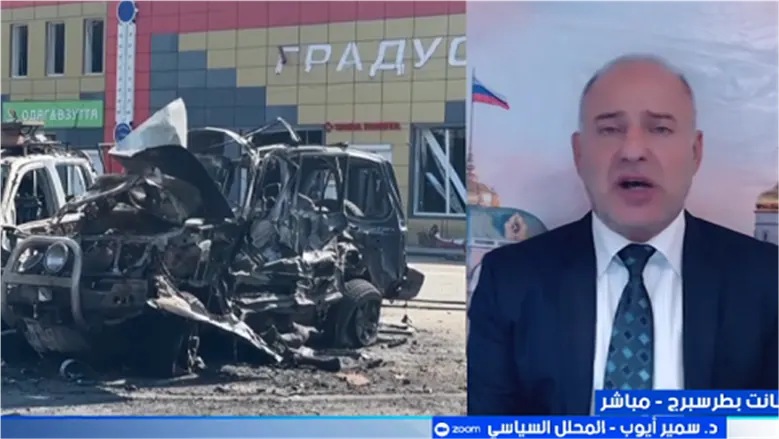
Egyptian political analyst Dr. Samir Ayub stated that the conflict in Ukraine has evolved into a confrontation between Russia and the North Atlantic Treaty Organization (NATO) on Ukrainian territory. He noted that continued European support for Ukraine has been a key factor in prolonging the conflict. Ayub made these remarks during an intervention on the "Extra News" screen. The analyst emphasized that Europe is paying an economic and political price for the ongoing war.
According to Ayub, Europe's financial and political costs, although significant, are dwarfed by those borne by Ukraine. He highlighted growing popular pressure within European countries, which is reflected in political divisions and election outcomes, with some right-wing parties gaining traction. This shift in public opinion could potentially influence European policy towards Ukraine and Russia. The analyst's comments shed light on the complexities of the conflict and its far-reaching implications.
Ayub emphasized that Russia currently has no intention of expanding the conflict. However, he noted that European statements regarding a "hybrid war" and potential drone strikes on European targets may be laying the groundwork for continued support for Ukraine. This support could include the provision of more advanced arms, enabling Ukraine to strike deeper into Russian territory. Such developments may contribute to a prolonged conflict.
The analyst also touched on the ambiguous stance of the United States regarding the conflict. He pointed out that US President Donald Trump's statements on seeking a settlement between Russia and Ukraine contrast with the continued provision of support to Ukraine and the imposition of sanctions on Russia. Ayub suggested that the US faces challenges in resolving the conflict, given ongoing European support for Ukraine and internal American pressures on Trump regarding dealings with Russia.
Ayub's comments underscore the intricate nature of the conflict, involving multiple stakeholders with competing interests. The provision of advanced arms to Ukraine has significant implications for the balance of power in the region. As the conflict continues, its impact on European and global security is likely to grow. The analyst's insights highlight the need for a nuanced understanding of the complex factors at play.
The conflict in Ukraine has significant implications for European security and stability. As the situation continues to unfold, European countries are likely to face increasing pressure to define their stance on the issue. The analyst's remarks suggest that a peaceful resolution to the conflict will require a coordinated effort from all parties involved. The international community must navigate a complex web of interests and alliances to achieve a lasting resolution.
In conclusion, Dr. Samir Ayub's analysis highlights the complexities of the conflict in Ukraine and its far-reaching implications for European and global security. The provision of advanced arms to Ukraine is likely to prolong the conflict, contributing to a heightened state of tension between Russia and Europe. As the situation continues to evolve, a deep understanding of the underlying factors and competing interests will be essential in seeking a peaceful resolution.
Key points
- Providing Ukraine with advanced arms prolongs the Russian-European escalation
- Europe faces significant economic and political costs due to the ongoing conflict
- The US stance on the conflict appears ambiguous, with competing pressures influencing policy decisions