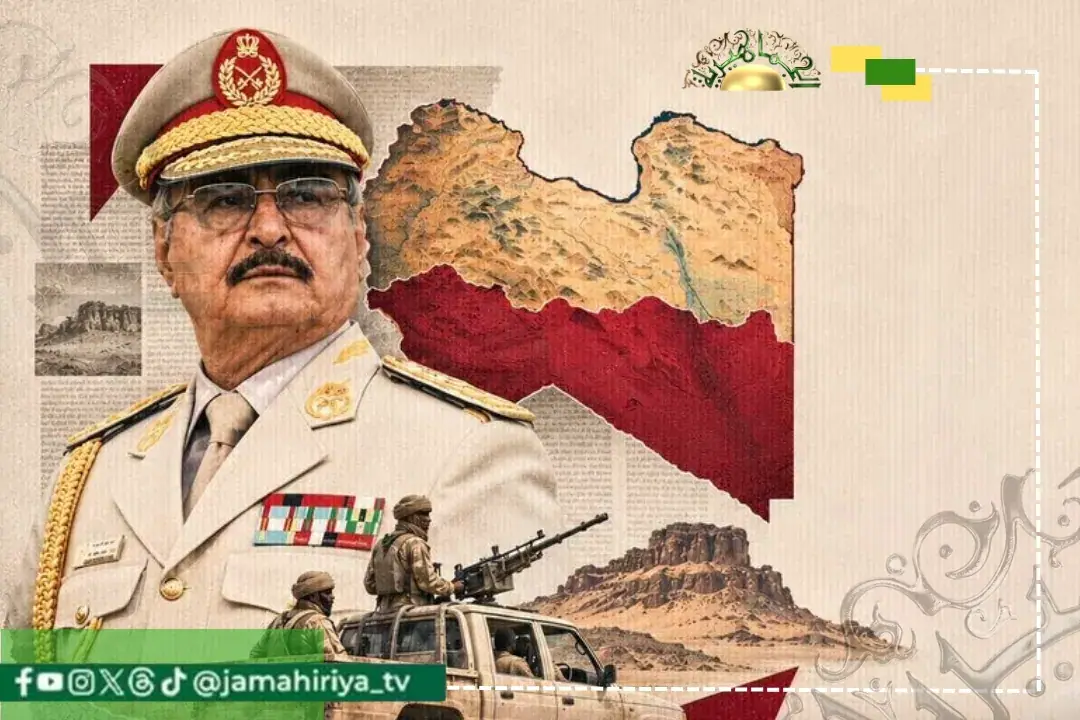
The Libyan Center for Security and Military Studies has released a report highlighting the growing rifts within Khalifa Haftar's camp and the likelihood of an imminent loss in southern Libya. The region has long been plagued by insecurity and social unrest, largely due to its desert and border nature, making it a hub for refugees, human trafficking, and smuggling.
The center's report, part of its "Dimensions of the Situation" series, examines the roots of the escalation in southern Libya, the formation of the "Southern Liberation Operations Room," and the implications for the region's military, security, and political landscape. Southern Libya is a critical area, with various groups vying for control, including the Tuareg and Tubu, who have historically maintained strong identities and wield significant influence.
The region's complex dynamics have made it a focal point for various Libyan and international actors. Haftar's forces have controlled large swaths of southern Libya, often through negotiations and strategic alliances. However, pockets of resistance have emerged, particularly among groups opposed to Haftar's rule. These groups have coalesced around the "Southern Liberation Operations Room," which has announced its intention to coordinate military operations against Haftar's forces.
The leader of the "Southern Liberation Operations Room," Mohamed Wordaqo, is a former Haftar associate who defected and now spearheads the opposition. Wordaqo's background reveals a history of military involvement, having served as one of the prominent leaders of the 128th Enhanced Brigade under Hassan al-Zadma. This brigade's dissolution led to Wordaqo's rebellion against Haftar, ultimately resulting in his emergence as a key figure in the resistance.
The "Southern Liberation Operations Room" primarily consists of former soldiers and officers from the disbanded 128th Brigade, representing various ethnic groups, including the Tubu, Tuareg, and Arab communities. This diversity underscores that the opposition is not a foreign entity but rather a collection of Libyan forces pushing back against Haftar's control. The group's actions signify a turning point in the conflict, potentially altering the balance of power in southern Libya.
The report suggests that the opposition's efforts will intensify, with support from various quarters, potentially drawing in external actors. The situation in southern Libya has far-reaching implications, not only for the country's internal stability but also for regional security, given its porous borders with countries like Niger, Chad, and Mali. As the conflict escalates, the international community watches closely, aware of the potential for wider instability.
The emerging dynamics in southern Libya indicate a critical phase in the country's ongoing conflict. With Haftar's grip on the region weakening, the "Southern Liberation Operations Room" and similar groups may capitalize on this momentum, potentially leading to a significant shift in the country's power structure. As the situation unfolds, Libya's future hangs in the balance, with the international community monitoring developments and their implications for regional and global security.
Key points
- The Libyan Center for Security and Military Studies has highlighted growing divisions within Khalifa Haftar's camp and the likelihood of an impending loss in southern Libya.
- The "Southern Liberation Operations Room," led by Mohamed Wordaqo, has emerged as a key opposition force, comprising former soldiers and officers from various ethnic groups.
- The conflict in southern Libya has significant implications for regional stability, given its borders with countries like Niger, Chad, and Mali.