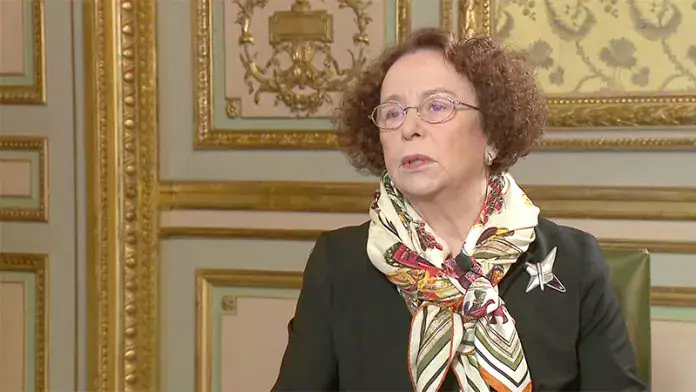
In a recent article published in El Mundo, former Spanish Foreign Minister Ana Palacio stated that the expiration of the MINURSO mission's mandate does not alter the legal status of Western Sahara, which remains a non-autonomous territory according to international law and UN resolutions. The MINURSO mission was created to organize a referendum in Western Sahara, which has been occupied by Morocco since 1975.
Palacio emphasized that the end of the MINURSO mission does not transfer sovereignty to Morocco, nor does it abolish the powers of the UN General Assembly or resolve the conflict between the Polisario Front and Morocco. The Russian veto on a US resolution aimed at imposing autonomy as the sole solution to the Western Sahara conflict blocked the initiative. Palacio noted that the US proposal would have transformed MINURSO into a political mission, reduced its military component, and removed the reference to a referendum.
The former Spanish minister highlighted that the Security Council has found itself in an unprecedented situation, with disagreements between two permanent members, Russia and the US, preventing the renewal of MINURSO's mandate. On October 30, Russia vetoed a US resolution that had garnered eleven votes in favor. A Russian counter-proposal to extend the mandate was also rejected, with only three votes in favor and eleven abstentions.
Palacio also pointed out that Morocco has not imposed its sovereignty over Western Sahara, despite its efforts to gain international recognition. She noted that Morocco has made significant diplomatic progress in gaining support from some Western powers, but its attempts to have its sovereignty recognized by the Security Council have been met with obstacles.
The former minister suggested that Morocco may prefer to consolidate its current position and prioritize bilateral recognitions rather than continuing to submit its position to periodic examination by the Security Council. Palacio also highlighted that Morocco is trying to exploit this situation domestically, using sovereignty as a fundamental element of the monarchy's legitimation.
Palacio criticized the US for attempting to instrumentalize UN organs to promote its own interests, even if they do not align with its priorities. She cited the example of the Baker II plan, which was considered by the Security Council in 2003 as the optimal political solution but was never implemented due to Morocco's refusal.
In conclusion, Palacio emphasized that the right to self-determination does not disappear when powerful countries disregard the law. However, an international order where rules persist but mechanisms for their application are dismantled leads to collective insecurity. She joins many diplomats who believe that the Western Sahara conflict can only be resolved by recognizing the Sahrawi people's right to self-determination.
Key points
- The expiration of the MINURSO mission's mandate does not change Western Sahara's status as a non-autonomous territory.
- The Russian veto blocked a US resolution aimed at imposing autonomy as the sole solution to the Western Sahara conflict.
- Morocco has not imposed its sovereignty over Western Sahara, despite its efforts to gain international recognition.