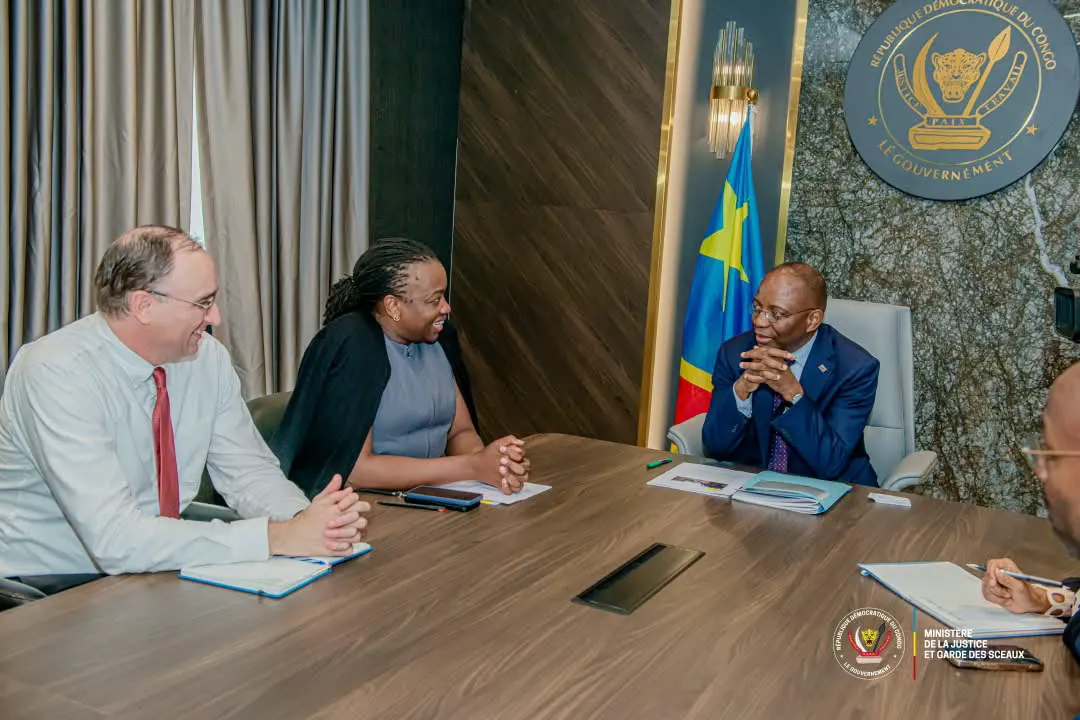
Amnesty International has emphasized the need for stronger efforts to combat impunity and ensure access to justice for victims in the Democratic Republic of Congo. The organization's Regional Deputy Director for East and Southern Africa, Flavia Mwangovya, discussed these issues with Congolese Justice Minister Guillaume Ngefa in Kinshasa on October 2. Their talks focused on documenting severe crimes in eastern DR Congo and mechanisms for transitional justice.
During her visit, the Amnesty International delegation presented findings from research on alleged human rights abuses in eastern DR Congo, particularly in mining areas controlled by the M23 rebel group. The organization reported deaths, torture, forced recruitment, and illicit exploitation of natural resources. Mwangovya highlighted that impunity is a significant issue fueling the cycle of conflict in DR Congo.
Flavia Mwangovya described the meeting with Justice Minister Guillaume Ngefa as "very constructive." She stressed Amnesty International's commitment to supporting efforts to strengthen justice in DR Congo. According to Mwangovya, the organization has found that impunity is at the heart of the country's conflict cycle.
Minister Guillaume Ngefa indicated that the documented evidence from Amnesty International could aid investigations into crimes committed in eastern DR Congo. He reaffirmed the government's commitment to holding alleged perpetrators accountable, regardless of their nationality, affiliation, or status. Ngefa stated that combating impunity is a government priority and praised Amnesty International's documentation work.
The discussions also covered transitional justice mechanisms and avenues for prosecuting international crimes. Both parties emphasized the importance of addressing impunity and ensuring justice for victims. Amnesty International's visit aimed to support the Congolese government's efforts to tackle these challenges.
The organization's research highlighted severe human rights abuses in areas controlled by armed groups, including the M23. These abuses include forced recruitment, torture, and exploitation of natural resources. The findings underscore the need for accountability and justice for victims.
The meeting between Amnesty International and the Congolese government reflects ongoing efforts to address human rights issues and promote justice in DR Congo. Key outcomes include a commitment to enhance documentation of crimes and strengthen transitional justice mechanisms. The collaboration aims to hold perpetrators accountable and provide justice to victims.
Key points
- Amnesty International emphasizes the need to combat impunity to break the cycle of conflict in DR Congo.