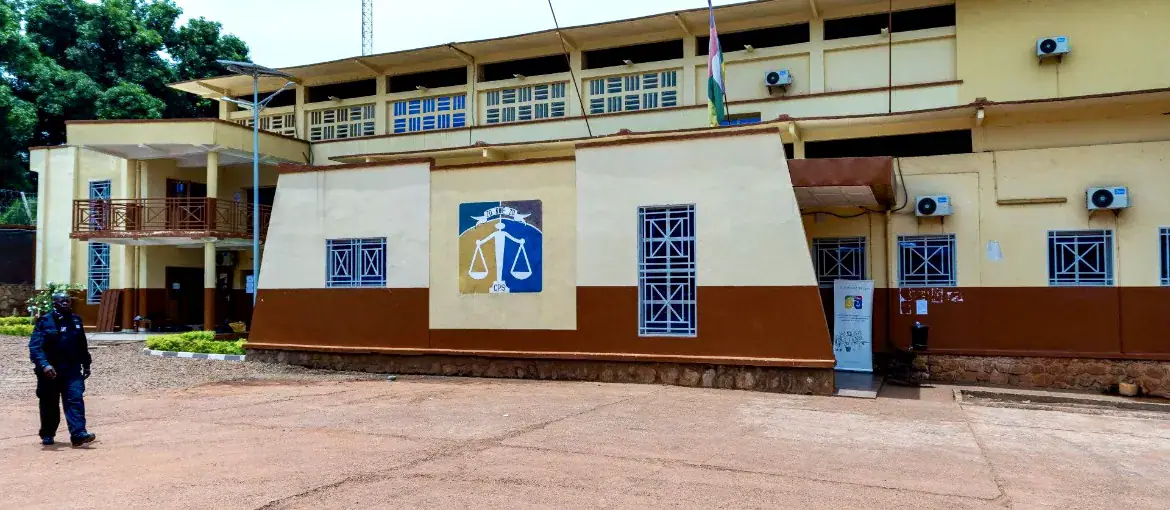
Amnesty International has released a report highlighting the challenges faced by the Special Criminal Court (SCC) in the Central African Republic (CAR). The report, published on October 26, 2026, emphasizes the court's struggles with financial difficulties, the use of in absentia trials, and the expectations of victims seeking justice. The SCC, established to investigate and prosecute serious human rights abuses and international humanitarian law violations, has made progress since its first trial in 2022.
The SCC has jurisdiction over crimes committed in the CAR since January 1, 2003, including war crimes, crimes against humanity, and genocide. Amnesty International's report is based on a mission conducted in Bangui from April 8 to 18, 2026, during which delegates met with 63 individuals, including 25 women, from the judicial sector, civil society, and victims of conflict-related crimes. Their testimonies were cross-checked with legal documents, court decisions, reports, and press articles.
One of the main concerns raised by Amnesty International is the use of in absentia trials, where defendants are not present. In 2025, ten individuals were sentenced to 20-25 years in prison in the "Ndélé 1" and "Ndélé 2" cases. However, these convictions can be annulled if the individuals appear before the court or are arrested and request a retrial. This procedure has elicited mixed reactions from victims, with some welcoming the public naming of the convicted, while others want to see the accused present or imprisoned.
Amnesty International argues that in absentia trials are incompatible with the right of defendants to be present at their trial and participate in their defense. The organization calls on the Central African authorities, the United Nations, and partner states to provide sustainable financial support to the SCC. They also recommend renewing the court's mandate until its mission is accomplished and pursuing investigations and prosecutions against alleged perpetrators.
The organization recommends ending in absentia trials, strengthening the effective participation of victims and defendants in proceedings, and improving the visibility and accessibility of court decisions. Amnesty International also urges the CAR, the United Nations Multidimensional Integrated Stabilization Mission in the Central African Republic (MINUSCA), and states where suspects may have taken refuge to take measures to facilitate their arrest and extradition.
Amnesty International emphasizes that the right of victims to justice, truth, and reparations should not depend on the changing priorities of donors. The Central African authorities and international partners must ensure the continuity of the fight against impunity. "The perpetrators are still there," the organization recalls, calling not to abandon the judicial process in the CAR.
The report's findings and recommendations highlight the need for sustained support and cooperation to ensure accountability for serious crimes committed in the CAR. The SCC's effectiveness in delivering justice to victims and their families remains a significant challenge.
Key points
- Amnesty International raises concerns over the use of in absentia trials in the Special Criminal Court.
- The organization calls for sustainable financial support to the SCC.
- Amnesty International recommends ending in absentia trials and strengthening victim and defendant participation in proceedings.