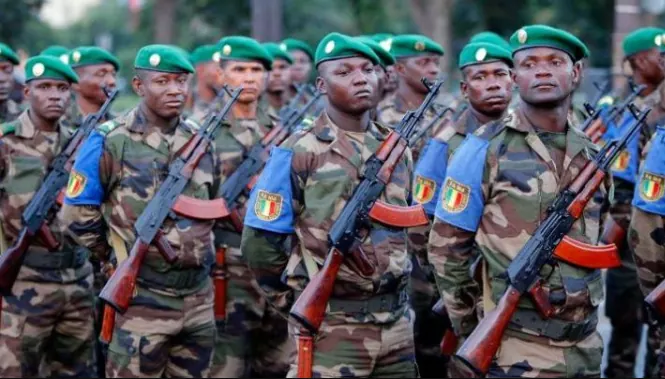
Amnesty International has released a report accusing members of Mali's armed forces and Wagner Group personnel of committing war crimes during joint military operations between 2023 and 2025. The organization documented at least 34 civilians unlawfully killed in seven localities, while others were allegedly tortured to death, forcibly disappeared, or subjected to severe abuse and destruction of property. The report, titled 'No one is spared': War crimes committed by the Malian army and foreign allied forces along the Mauritanian border, was based on research conducted between 2025 and 2026.
According to Amnesty, the 34 killings occurred in the Ségou, Mopti, and Timbuktu regions, with victims allegedly deliberately shot while fleeing or after being arrested. Some were reportedly subjected to throat slitting, while others were burnt alive or after their deaths. The report cited an incident at Tin Adanda, a hamlet in the Timbuktu region, where four people were allegedly killed on February 12, 2025, during a joint patrol by the Forces armées maliennes (FAMa) and Wagner personnel.
Amnesty documented two drone strikes by the FAMa which it said killed at least 23 people, including five children. One strike hit a market in Ejdeir on March 16, 2025, killing 16 people and injuring seven others, while another struck a family home in Tangata in November 2025. Amnesty said it found no evidence of armed group members or military objectives at either site and called for the incidents to be investigated as possible war crimes.
The report further documented alleged torture at military bases in Léré and Nampala. Amnesty said it interviewed 15 male survivors and obtained corroborating accounts from witnesses who reported torture involving at least 30 people. Victims were allegedly suspended by their arms from metal bars, subjected to simulated drowning, beaten with iron bars and sticks, and given electric shocks.
Amnesty said five people died at the military bases as a result of torture and poor detention conditions, while detainees were denied access to lawyers, families, and judicial proceedings. It further alleged that most victims belonged to pastoralist communities, particularly Fulani, Arabs, and Tuaregs, who were suspected of supporting non-state armed groups based largely on their ethnicity and presence in conflict-affected areas.
Amnesty's Regional Director for West and Central Africa, Marceau Sivieude, said the findings presented a "harrowing picture" of civilians caught in the conflict and called for impartial and effective investigations. The organization urged the Malian authorities to protect civilians, clarify the chain of command governing foreign military personnel, and establish an independent accountability mechanism.
Amnesty submitted its findings to the Malian authorities on August 3, 2026, but had received no response by publication. The organization interviewed 119 Malian refugees in 10 localities in Mauritania's Hodh ech Chargui region, where UNHCR had registered 290,000 Malian refugees as of July 31, 2026.
Key points
- At least 34 civilians were unlawfully killed in seven localities during joint military operations between 2023 and 2025.
- Amnesty documented alleged torture at military bases in Léré and Nampala, involving at least 30 people.
- The organization called for impartial and effective investigations into the incidents and urged the Malian authorities to protect civilians.