American company Otis has been selected to supply and install 125 vertical-mobility units at the Grand Stade Hassan II, a 115,000-seat football stadium in Casablanca, Morocco. The contract includes 73 Gen2 elevator systems, 42 Link escalator systems, four heavy-duty moving walks, and six freight elevators. The systems are designed to move visitors, staff, athletes, and VIP guests through the stadium during major events. Otis describes itself as the world's leading elevator and escalator company for manufacturing, installation, service, and modernization.
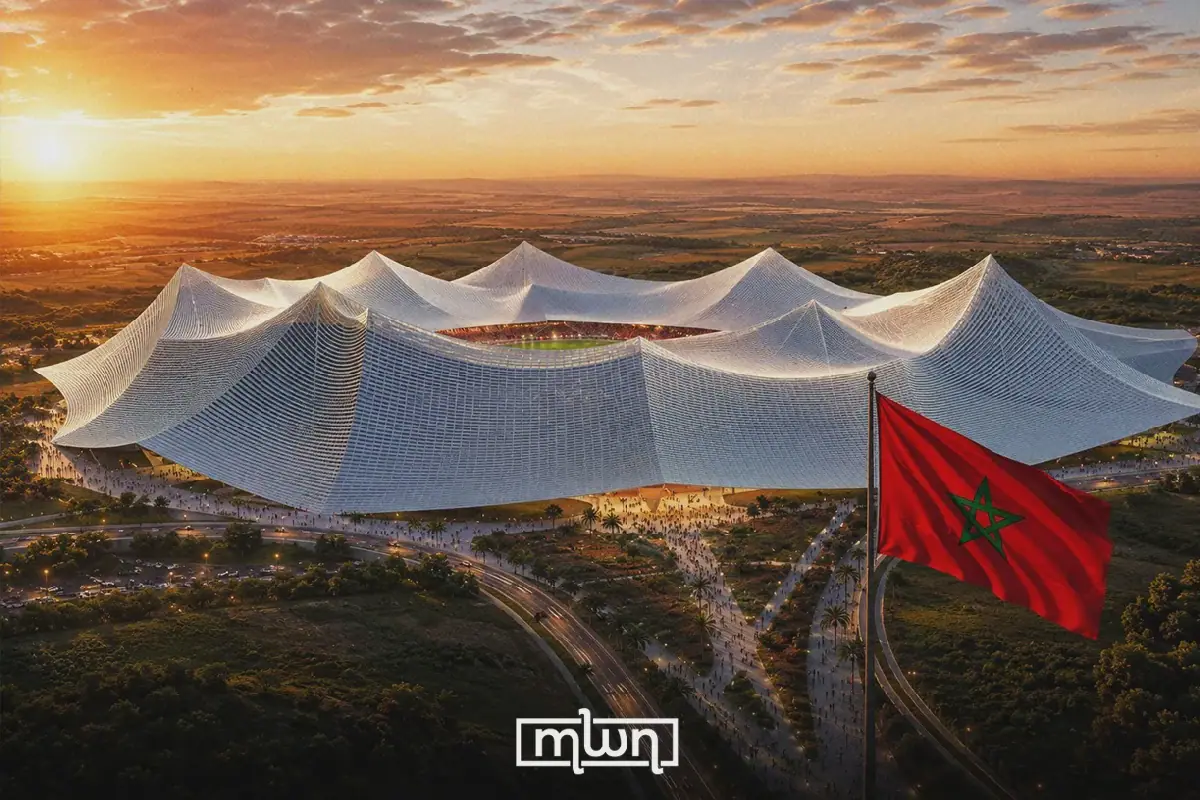
The Grand Stade Hassan II is being built for the 2030 FIFA World Cup, which Morocco will co-host with Spain and Portugal. The stadium is expected to be the largest football stadium in Europe, the Middle East, and Africa, with a gross capacity of 115,000 spectators and a net capacity of 108,800. The venue is owned by the Ministry of National Education, Preschool and Sports and operated by SONARGES. It is part of a planned 100-hectare sports complex that includes a 25,000-seat athletics stadium, an Olympic swimming pool, a convention center, a hotel, and training pitches.
The design of the Grand Stade Hassan II comes from the international firm Populous, working with the Moroccan practice Oualalou + Choi. The roof of the stadium draws on the traditional Moroccan moussem gathering tent and uses an aluminum lattice canopy. In June, the project won the jury award in the Unbuilt Sports and Recreation category of the Architizer A+Awards. Construction is moving toward an opening now targeted for early 2028.
Otis has a long presence in Morocco, with equipment already operating in stadiums, sports venues, airports, and transportation hubs in cities including Rabat, Casablanca, Marrakech, Tangier, and Fez. For Otis Morocco, the contract is an important milestone that reflects the trust customers place in the company's expertise and ability to deliver complex projects. Managing Director Abdelhak Hakki described the project as a national landmark that will play a key role in Morocco's future as a host of major international sporting events.
The financial picture for the Grand Stade Hassan II has grown alongside the structure. The government originally announced an investment budget of MAD 5 billion ($500 million) for the stadium. By September, the combined value of contracts awarded or launched for the project had reached about MAD 13.6 billion ($1.36 billion). Procurement remains active as FIFA inspections approach. A public tender for the stadium's seating equipment, estimated at MAD 277.5 million ($27.75 million), closed on November 13.
Morocco is advancing the Grand Stade Hassan II as its flagship venue for the 2030 World Cup. The Moroccan bid proposes Hassan II for either the opening match or the final, alongside Madrid's Santiago Bernabéu and Barcelona's Camp Nou. FIFA has not yet awarded either match to any venue. The decision will be settled only after FIFA's venue inspections conclude. Royal Moroccan Football Federation President Fouzi Lekjaa pointed to an early 2028 opening date in an October 28 interview.
The role of the Grand Stade Hassan II in the 2030 tournament has become a contested issue among the three co-hosts. Spanish officials have pressed for the final to be staged on Spanish soil, and senior figures have accused Morocco of trying to "steal" the match. None of that lobbying has moved the decision, which FIFA alone controls. FIFA confirmed it would inspect candidate host cities and stadiums across the three countries during November and December 2026.
Key points
- Otis wins contract to supply and install 125 vertical-mobility units at Morocco's Grand Stade Hassan II.
- The Grand Stade Hassan II is expected to be the largest football stadium in Europe, the Middle East, and Africa.
- Construction of the Grand Stade Hassan II is moving toward an opening now targeted for early 2028.