The American company KoBold Metals has entered the global race for critical minerals in the Democratic Republic of Congo (DRC), employing an advanced team of explorers guided by artificial intelligence. KoBold's geologists venture into the countryside with high-precision GPS and tablets connected to an AI system that operates in real-time on the company's servers in California. This technology enables the company to efficiently explore for minerals such as lithium, a key component in electric vehicle batteries.
The DRC, a vast country with over 2.3 million km2 of territory, has significant untapped mineral resources. KoBold has obtained 14 exploration permits covering over 3,000 km2 since 2025. The company's arrival in the DRC is part of a US strategy to secure a stable supply of strategic minerals and reduce Chinese dominance in the sector. China currently controls 70-80% of the Congolese copper and cobalt market, with the DRC being the world's second-largest producer of copper and largest producer of cobalt.
KoBold's exploration efforts focus on lithium, for which global demand is expected to more than double by 2030, according to the International Energy Agency. The company has set up its base camp in Manono, a remote town in the Katanga region, which is rich in critical minerals. KoBold aims to enter production within a few years and plans to invest over $50 million in the DRC by early 2027. The company's teams have been actively exploring since April, collecting an average of 2,000 soil samples per week.
KoBold's use of AI enables the company to analyze large amounts of data, including historical geological maps, old drill logs, and satellite images. This technology allows KoBold to create predictive models and identify areas with high potential for mineral deposits. The company's responsible for laboratory work, Kévin Tambwe, explains that once lithium is detected at specific points, the AI system helps to reorganize drilling operations.
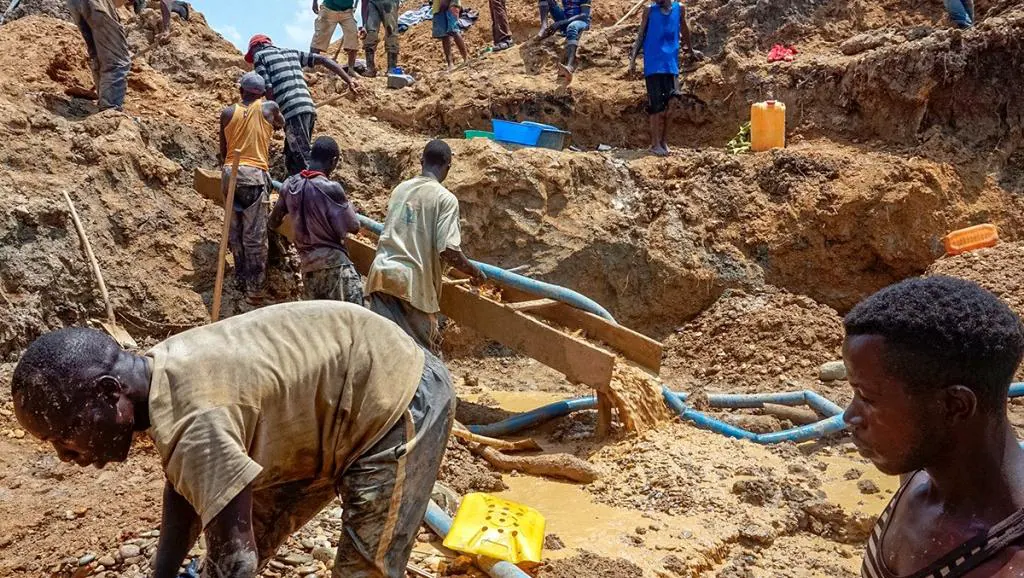
The arrival of KoBold in Manono has raised expectations among locals, but also concerns about working conditions and the impact of mining on the environment. The town has a poverty rate of 88%, according to official statistics, and has been affected by the decline of the mining industry. Local residents and miners have expressed hopes that the presence of KoBold will improve working conditions and bring economic benefits to the community.
However, some local leaders and residents remain skeptical about the benefits of mining in the region. The vicar general of the local diocese, Wilson Katende, hopes that the competition brought by KoBold will lead to better working conditions and higher wages for miners. The town's administrator, Cyprien Kitanga, highlights the need for basic infrastructure, including access to clean water and electricity.
As KoBold continues its exploration efforts, the company faces challenges in the DRC's mining sector, which has been marred by corruption and environmental scandals. The company's investment in the DRC is seen as a test of the country's ability to attract foreign investment and create a more favorable business environment. Key points: - KoBold Metals uses AI to explore for critical minerals in the DRC. - The company aims to reduce Chinese dominance in the sector and secure a stable supply of strategic minerals. - KoBold plans to invest over $50 million in the DRC by early 2027.