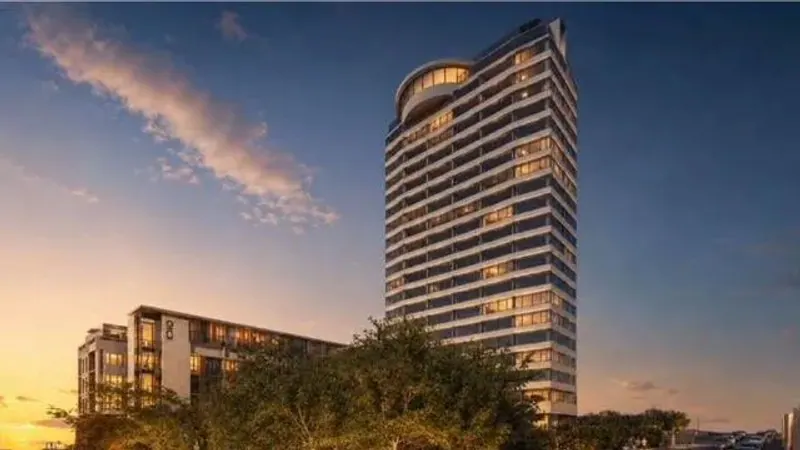
The long-abandoned Ritz Hotel in Cape Town's Sea Point is poised for a major revival, with plans lodged with the City of Cape Town to transform the iconic landmark into a thriving hub of activity. The proposed development, submitted by OKU Cape Town, includes the renovation of the existing 25-storey hotel tower, conversion of floors four to eight into residential apartments, and the addition of new facilities such as a spa, gym, and restaurants. The plans, which are open for public comment until November 2, mark a significant step towards reviving a building that has stood vacant for years.
The proposed development will see hotel suites retained on floors nine to 22, while floors four to eight are converted into 44 residential apartments. The top of the tower will retain its restaurant spaces on floors 23 and 24, preserving the part of the building famous for its sweeping views over the Atlantic Seaboard. A new façade, balustrades, and screening around the building will also be added to address structural and fire-safety requirements. At ground level, the proposal includes an expanded swimming pool, gym, and spa, as well as a covered yoga deck and a larger arrival and forecourt area.
The existing parking structure along Grimsby Road will remain, and a mixed-use building fronting Main Road will be developed, featuring retail space, a hotel reception and lounge, co-working and conference facilities, apartments, hotel suites, and a pool terrace, bar, and restaurant. This building already has a separate City land-use approval granted in January 2026 and is not the main subject of the current application. The plans also provide for a 75m tower, which exceeds the height allowed under the current zoning, and a height departure from the 60m limit under the proposed GB7 zoning.
One of the intriguing questions surrounding the planning documents is why the City now needs to approve a new land-use application for a hotel that has stood on the site for decades. The answer lies in the property's complicated planning history, with the site currently split between two zonings: GB5 and GR4. The hotel use is not a primary permitted use in the GR4 zone under the current scheme, and the existing 75m tower also exceeds the height allowed under that zoning. The City searched its archives for previous planning authorisation for the hotel's use and height but found no record.
The applicant argues that the hotel use may never have needed a separate planning approval in the first place, citing the old Cape Town Zoning Scheme, which permitted "residential buildings," including hotels, as of right in the relevant General Residential zone. The height of the tower is more complicated, with the planning document identifying the Ritz among a small group of high-rise buildings developed under older planning schemes and now exceeding the height limits of their current zonings. The applicant says it is reasonable to presume that the tower's height was authorised at the time, despite the City being unable to locate that authorisation in its records.
The current application is seeking to resolve the planning position as part of the Ritz's revival, including a 75m height departure from the 60m limit under the proposed GB7 zoning. It also seeks permission for four existing carriageway crossings along Grimsby Road and subdivision to create a servitude for an electrical substation. The planning application is not simply about renovating an old hotel but also an attempt to resolve decades-old questions about what development rights the Ritz actually has and what the City will allow on the site now.
The Ritz, completed in 1972, is just under 60 years old, and its redevelopment falls within the scope of the National Heritage Resources Act. However, the planning application says the building has been graded "Not Conservation Worthy" in the City of Cape Town's Heritage Audit, meaning that the proposed redevelopment does not require a full heritage impact assessment. With the public comment period open until November 2, the City will now assess the application and consider public representations before making a decision on the proposed development.
Key points
- The proposed development of the Ritz Hotel includes 44 residential apartments, restaurants, and wellness facilities.
- The hotel's complicated planning history has led to the need for a new land-use application.
- The City will assess the application and consider public representations before making a decision on the proposed development.