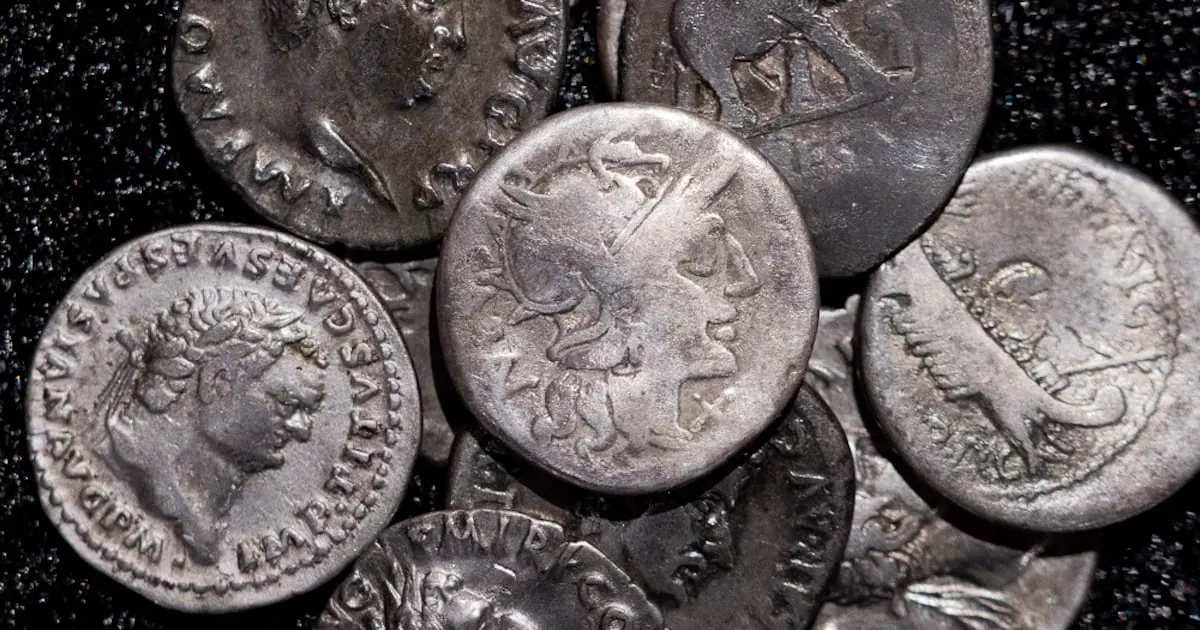
A significant archaeological find has been unearthed in western Germany, where an amateur archaeologist stumbled upon a large cache of Roman silver coins. Oliver Riedl, the amateur archaeologist, made the discovery in a field near Wesseling, south of Cologne, using his metal detector. Initially, Riedl thought he had found a few coins, but his metal detector continued to signal, indicating that there was more to discover. Authorities were called, and a team of experts began digging, ultimately uncovering a substantial treasure trove.
The hoard, which consists of 934 Roman silver denarii, is the largest coin treasure ever found in Germany from the time of Roman Emperor Hadrian. The coins, weighing 3.1kg, have been dated to the second quarter of the second century AD. According to Erich Classen, state archaeologist and director of the LVR Office for the Preservation of Archaeological Monuments in the Rhineland, it is likely that someone buried the coins to keep them safe, as banks did not exist at that time. The coins are now on display at the LVR-LandesMuseum Bonn.
The LVR Office for the Preservation of Archaeological Monuments in the Rhineland has been studying the coins, and experts believe that they were deliberately buried. The motives behind this action are unclear, but it is thought that the owner may have died without passing on the knowledge of the coins' location. This discovery provides valuable insights into the history of the region, which was under Roman control from 39 BCE to AD 459. The Romans established a military outpost in the area, which later became Colonia Agrippina, today's Cologne.
The discovery of the coin hoard has generated significant interest among archaeologists and historians. According to Rahel Otte, a research associate at the archaeological office, the pay of Roman legionaries provides a point of reference for estimating the value of the coins. An ordinary soldier in the legion earned 300 denarii a year, but about half of that was withheld for food and equipment. Otte estimates that a legionary would have had to save all of his disposable income for about six years to amass the Wesseling hoard.
The coin hoard is a significant find, not only due to its size but also because of its rarity. Few treasures from the second century are as extensive as the one found in Wesseling. The archaeological office has noted that treasure troves from ancient Roman times are not uncommon, but this discovery is particularly noteworthy. The coins provide a unique window into the past, offering insights into the economic and social conditions of the time.
The discovery of the coin hoard has shed new light on the history of the region, which was an important part of the Roman Empire. The Romans established a presence in the area to secure their empire's border along the Rhine River. The coin hoard is a testament to the region's rich history and provides a fascinating glimpse into the lives of people living in the area during Roman times.
The Wesseling hoard is now on display at the LVR-LandesMuseum Bonn, where it is attracting significant attention from visitors and historians alike. The discovery of the coin hoard is a reminder of the importance of preserving our cultural heritage and the significance of archaeological finds in understanding our past. The LVR Office for the Preservation of Archaeological Monuments in the Rhineland continues to study the coins, and further research is expected to reveal more about this significant discovery.
Key points
- The amateur archaeologist, Oliver Riedl, discovered 934 Roman silver denarii in a field near Wesseling, south of Cologne, which is the largest coin treasure ever found in Germany from the time of Roman Emperor Hadrian.