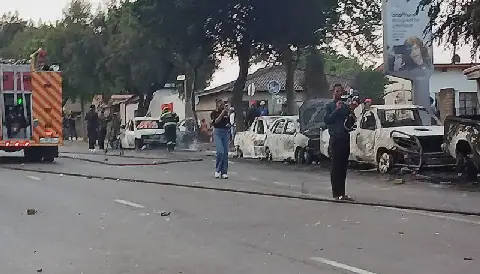
A fire that swept through the Kofikrom squatter settlement at Avenor in Accra's North Industrial Area has prompted the Accra Metropolitan Assembly (AMA) to promise free housing for residents who lost their homes. The Municipal Chief Executive of AMA, Michael Kpakpo Allotey, announced plans to construct a residential complex made up of single-room units for Kofikrom residents following the blaze. The fire destroyed several makeshift structures in the densely packed community. Kofikrom is a squatter settlement, meaning its residents occupy the land without formal legal ownership or documented title.
The informal, closely packed nature of structures in settlements like Kofikrom makes them especially vulnerable to fire outbreaks, a recurring hazard in similar communities across Accra. The settlement is home to low-income families and migrant workers who cannot afford formal housing in the capital. The structures in Kofikrom are frequently built from wood, metal sheeting, and other combustible materials. The community lacks basic infrastructure and services, making life difficult for its residents.
AMA's pledge raises the prospect of permanent, safer housing to replace the makeshift shelters that were previously occupied by the displaced families of Kofikrom. However, the announcement also raises an unresolved question: would any new housing be built on the same land, formalising the community's status, or would residents be relocated elsewhere? The community's lack of formal land title adds complexity to the situation.
The pledge comes against the backdrop of broader scrutiny of Accra's informal settlements, many of which face similar risks of fire outbreaks due to overcrowding and the use of flammable building materials. How AMA's response to Kofikrom fits into any wider policy on squatter communities has not been detailed. The AMA's announcement has sparked hope among residents, but also raised concerns about the feasibility of the project.
As of the announcement, AMA has not disclosed a timeline for construction, a budget for the project, or the specific site where the single-room units would be built. The assembly has not identified a funding source, nor has it indicated whether central government or other agencies would be involved. Displaced residents are uncertain about where and under what terms they might eventually be housed.
The lack of detail has left residents and observers of Accra's informal housing landscape waiting to see whether the promise will translate into a concrete, funded project or remain a statement of intent. The AMA's plan is seen as a step towards addressing the housing needs of low-income communities, but its success depends on the assembly's ability to provide a clear plan and secure funding.
The Kofikrom fire and AMA's subsequent pledge highlight the need for a comprehensive approach to addressing the challenges faced by informal settlements in Accra. The situation in Kofikrom is not unique, and the AMA's response will likely have implications for other similar communities in the city. The effectiveness of the AMA's plan will depend on its ability to engage with residents and stakeholders, and to provide a sustainable solution to the community's housing needs.
Key points
- AMA's pledge of free housing for Kofikrom fire victims lacks details on funding, timeline, and site.
- The Kofikrom settlement is a squatter settlement, with residents occupying the land without formal legal ownership or documented title.
- The AMA's plan is seen as a step towards addressing the housing needs of low-income communities, but its success depends on the assembly's ability to provide a clear plan and secure funding.