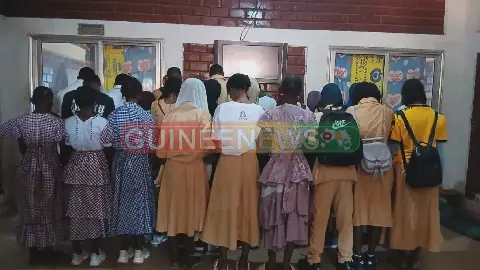
Peter Nortsu-Kotoe, Chairman of Parliament's Education Committee, has defended the requirement for candidates to complete nine years of basic education before writing the Basic Education Certificate Examination (BECE). He argues that allowing pupils to sit the examination earlier undermines the country's education policy. The policy, introduced under the 1987 education reforms, requires pupils to complete six years of primary education and three years of junior high school before progressing to senior high school or technical education.
Nortsu-Kotoe expressed concerns that permitting exceptions could encourage schools and parents to disregard the established education structure. He acknowledged that some children may be academically advanced and capable of passing the BECE at a younger age but maintained that academic ability should not be used to bypass the prescribed period of basic education. According to him, all pupils should receive the education prescribed at the basic level.
The Education Committee Chair made these comments in response to questions about the government's position on exceptionally gifted children writing the BECE ahead of schedule. The education minister had announced a two-year ban on pupils in JHS 1 and JHS 2 who attempt to write the BECE before completing the required period. Nortsu-Kotoe dismissed concerns that the restriction could prevent exceptionally gifted children from achieving their potential.
The West African Examinations Council (WAEC) has also emphasized that regular JHS pupils must complete three years before writing the BECE. This directive is aimed at ensuring that pupils receive a comprehensive basic education before progressing to senior high school or technical education. The National Council for Private Technical and Vocational Education (NCPTA) has, however, suggested that the BECE directive must make room for exceptionally talented pupils.
Various stakeholders have shared their views on the issue, with some arguing that gifted students should be exempted from the BECE age restriction. The Ghana National Association of Private Schools (GNAPS) and other stakeholders have expressed concerns that the restriction could deny some pupils the opportunity to progress earlier. The education minister's announcement of a two-year ban on pupils who attempt to write the BECE before completing the required period has also generated debate.
In the 2027 Budget, the government allocated GH¢562m to support teacher trainees, BECE candidates, and basic schools. This allocation is aimed at improving the quality of education and supporting pupils in their academic pursuits. The budget also highlights the government's commitment to addressing the challenges facing the education sector.
The debate on the BECE age restriction highlights the challenges facing Ghana's education sector. While some argue that gifted students should be exempted from the age restriction, others believe that the restriction is necessary to ensure that pupils receive a comprehensive basic education. The government and stakeholders must work together to find a solution that balances the needs of all pupils.
Key points
- The 9-year basic education policy requires pupils to complete six years of primary education and three years of junior high school before progressing to senior high school or technical education.