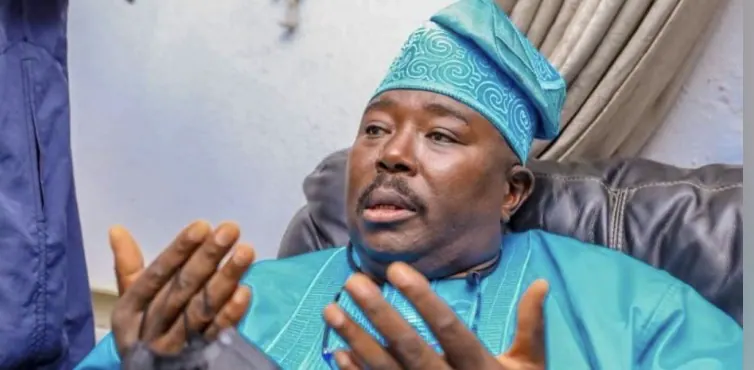
The Senator Sarafadeen Alli Campaign Organisation has expressed concerns over Oyo State Governor Seyi Makinde's approach to addressing the state's power issues. According to a statement from the campaign's Director of Media and Publicity, Bisi Oladele, the organization criticized Makinde's administration for relying on fuel-powered generators to run streetlights, describing it as a leadership failure. They pointed out that the Electricity Act 2023, signed into law by President Bola Tinubu, empowers states to generate, transmit, and distribute their own electricity.
Oyo State has taken steps to regulate its electricity sector by setting up the Oyo State Electricity Regulatory Commission, which assumed responsibilities from the Nigerian Electricity Regulatory Commission (NERC). The Alli campaign organization argued that this move gives the state the authority to attract investors, license electricity projects, and create tailored power solutions. However, they claim that Governor Makinde's administration has not effectively utilized these powers to address the state's electricity needs.
A major point of contention is the 11-megawatt Independent Power Project (IPP) awarded to Elektron Energy at a cost of ₦8.5 billion. The campaign organization alleged that the project failed to produce electricity and was shut down by the state government late last year after significant expenditure. They questioned why the project did not supply electricity to essential public services such as streetlights, the Oyo State Secretariat in Agodi, and healthcare facilities, as mentioned in government documents.
The Alli campaign organization compared Oyo State's power situation with that of other states, citing Abia's 188 megawatts, Akwa Ibom's 191 megawatts, and Ekiti's 8.6 megawatts. They also noted that many diesel-powered streetlights in Oyo State are no longer operational, leaving major roads in darkness at night. The expenses for fueling and replacing generators have reportedly become unsustainable.
The campaign group expressed concern that Governor Makinde, an electrical engineer, continues to blame irregular electricity supply for the state's power challenges. They emphasized that leadership should focus on solving problems rather than using them as excuses for failure. After more than seven years in office, the administration is expected to tackle power issues using its regulatory and institutional capabilities.
The Alli campaign organization proposed a state electricity plan that includes solar-powered streetlights, embedded generation, renewable energy sources, independent distribution networks, and private-sector investment. They suggested that these initiatives would be part of Alli's proposed agenda if he becomes governor. The organization criticized the current administration for investing heavily in projects they described as publicity-driven, only to offer excuses when those projects fail.
The criticism from the Alli campaign organization highlights the ongoing challenges in Oyo State's power sector and the need for sustainable solutions. The state's ability to regulate its electricity sector and attract investment could be crucial in addressing these challenges. The effectiveness of Governor Makinde's approach to power issues remains a significant concern for residents and stakeholders in the state.
Key points
- The Senator Sarafadeen Alli Campaign Organisation criticizes Governor Seyi Makinde's administration for its handling of power projects, including a failed 11-megawatt IPP that cost ₦8.5 billion.
- Oyo State has the legal authority to regulate its electricity sector and attract investment, but the current administration has not effectively utilized these powers.
- The Alli campaign organization proposes a state electricity plan that includes solar-powered streetlights, embedded generation, and private-sector investment as part of their agenda.