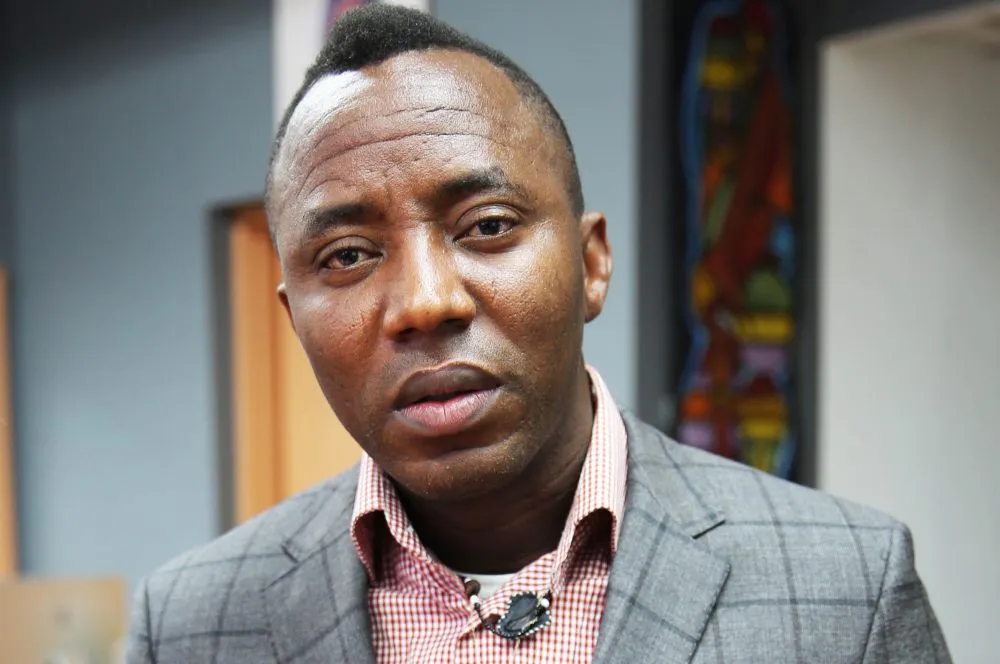
A Federal High Court in Abuja heard arguments on Friday, October 2, 2026, regarding a subpoena request by presidential candidate Omoyele Sowore to compel the Department of State Services (DSS) Director-General, Tosin Ajayi, to testify in person in a cybercrime case against him. Sowore's lawyer, Adeyinka Olumide-Fusika, SAN, initially agreed with the Attorney-General of the Federation (AGF) that any senior official of the DSS could represent the Director-General. However, he later made a volte-face, insisting that the DSS boss must appear personally.
The case against Sowore relates to allegations of cyberbullying arising from posts he published on X (formerly Twitter) and Facebook in August 2025, in which he described President Bola Tinubu as a “criminal” and accused him of misrepresenting the level of corruption in the country. The prosecution team, led by Akinlolu Kehinde, SAN, argued that it was absurd for Sowore's counsel to insist on the personal appearance of the DSS Director-General, citing a Supreme Court decision in Ishaq v. Soniyi (2002).
The Supreme Court decision held that where a subpoena is directed to a named public officer, it would be absurd to insist that only the named officer is to appear in due compliance with the subpoena. Kehinde argued that the AGF and the prosecution team had previously agreed that an official of the DSS could represent the Director-General, and that a DSS official had been designated and was present in court, ready to testify.
The prosecution counsel further argued that the DSS Director-General had no personal interest in the case, having acted only in his official capacity. He stated that it would be impracticable for the Director-General to personally attend every proceeding involving the DSS, particularly as the Service has cases pending before different divisions of the Federal High Court.
Kehinde said that the defence's change of heart was unjustified, especially given that the prosecution had closed its case since March 16, 2026. He added that the decision as to who should attend court is at the discretion of the court, not that of the defence, and that an official of the DSS is competent to give evidence in place of the Director-General.
The court has adjourned the matter until October 6, 2026, for a ruling on whether the DSS Director-General can be compelled to personally appear and testify as a defence witness. The case has sparked controversy over the interpretation of subpoena requests and the role of public officials in court proceedings.
The outcome of this case may have implications for future subpoena requests and the testimony of public officials in Nigerian courts. The court's ruling will provide clarity on the requirements for public officials to testify in person or through representatives.
Key points
- The court will decide whether the DSS Director-General must testify in person in the cybercrime case against Omoyele Sowore.
- The prosecution team argues that a DSS official can represent the Director-General, citing a Supreme Court decision.
- The case has sparked controversy over the interpretation of subpoena requests and the role of public officials in court proceedings.