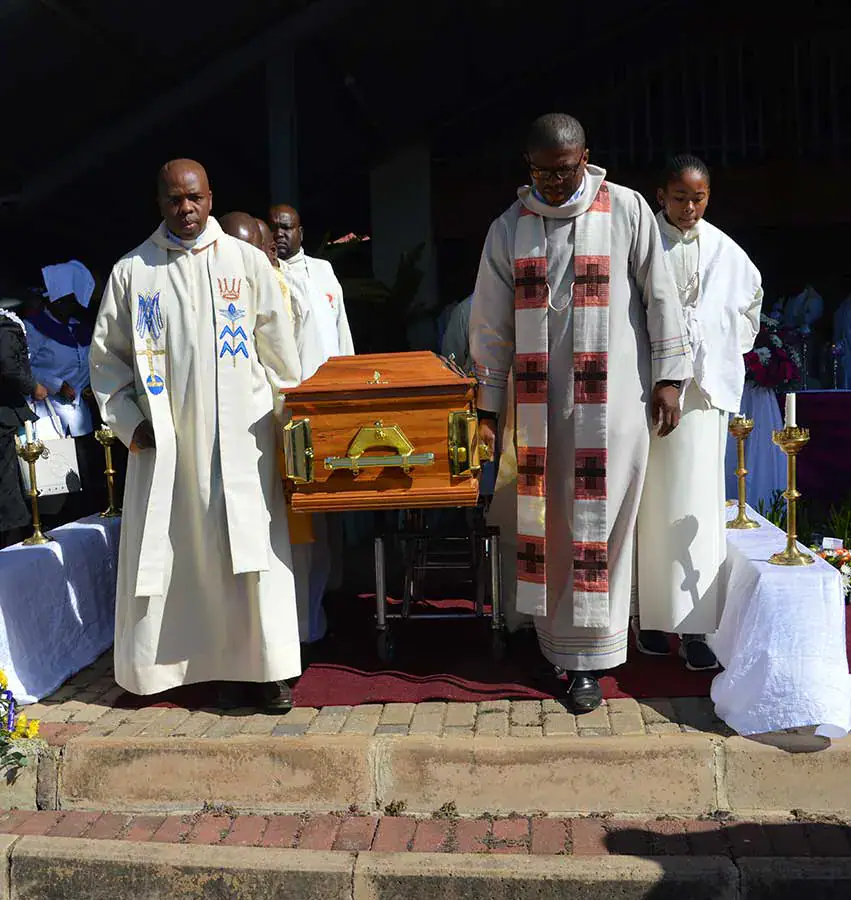
On November 2, the Catholic Church celebrates All Souls Day, a day to remember and pray for the faithful departed. In South Africa, people visit graves, light candles, and reflect on death and eternal life. For many Africans, remembering the dead is an integral part of their culture, woven into their understanding of family, identity, and belonging. The departed remain part of family conversations, histories, and collective memory.
However, a tension exists between African Christians and traditional communities. While Christians celebrate All Souls Day, they become uncomfortable when traditional communities speak about ancestral remembrance or Badimo. This discomfort often stems from a misunderstanding of African traditional spirituality, with some associating it with paganism, ancestor worship, or demonic activity. This has led to a call for a more honest conversation about African spirituality and its relationship with Christianity.
The language we use to describe African spirituality is also crucial. In Setswana, Sesotho, and Sepedi, words like Legodimo, Modimo, Badimo, and Ledimo offer insights into African thought. These words have linguistic relationships that invite reflection on the spiritual world. For example, Legodimo refers to the sky or heaven, while Modimo is the Supreme Being, the Creator. Badimo, on the other hand, refers to ancestors who have passed away.
One of the greatest misunderstandings surrounding African traditional spirituality is the translation of Badimo as gods. This translation can lead to theological confusion, as Badimo simply refers to ancestors, not multiple competing supreme deities. The distinction between Modimo and Badimo is essential, as Modimo is the Supreme Being, while Badimo are ancestors who have passed away and are remembered within the family and community.
African communities have different explanations of the relationship between ancestors and the Creator. Some understand ancestors as intercessors, guardians, or members of the extended family who have entered the spiritual dimension of existence. Others emphasize remembrance, lineage, and the moral responsibilities of the living. These understandings should not be reduced to accusations of ancestor worship.
The Kenyan theologian and philosopher John S. Mbiti made significant contributions to African reflections on time, life, and death. His discussion of Sasa and Zamani, referring to the immediate and recent past and the more distant past, is particularly relevant. In many African communities, a person who has died does not immediately disappear from the social and spiritual consciousness of the family.
As African Christians reflect on their heritage and the Church's role in embracing African spirituality, they are calling for intellectual honesty, theological maturity, and the freedom to be both authentically Catholic and genuinely African. This conversation is not about defending every traditional practice but about understanding and reclaiming African heritage in Christianity.
Key points
- The distinction between Modimo and Badimo is essential in understanding African traditional spirituality.
- African Christians are calling for intellectual honesty and theological maturity in their understanding of African spirituality.
- The language used to describe African spirituality carries memory, philosophy, history, and people's understanding of existence.