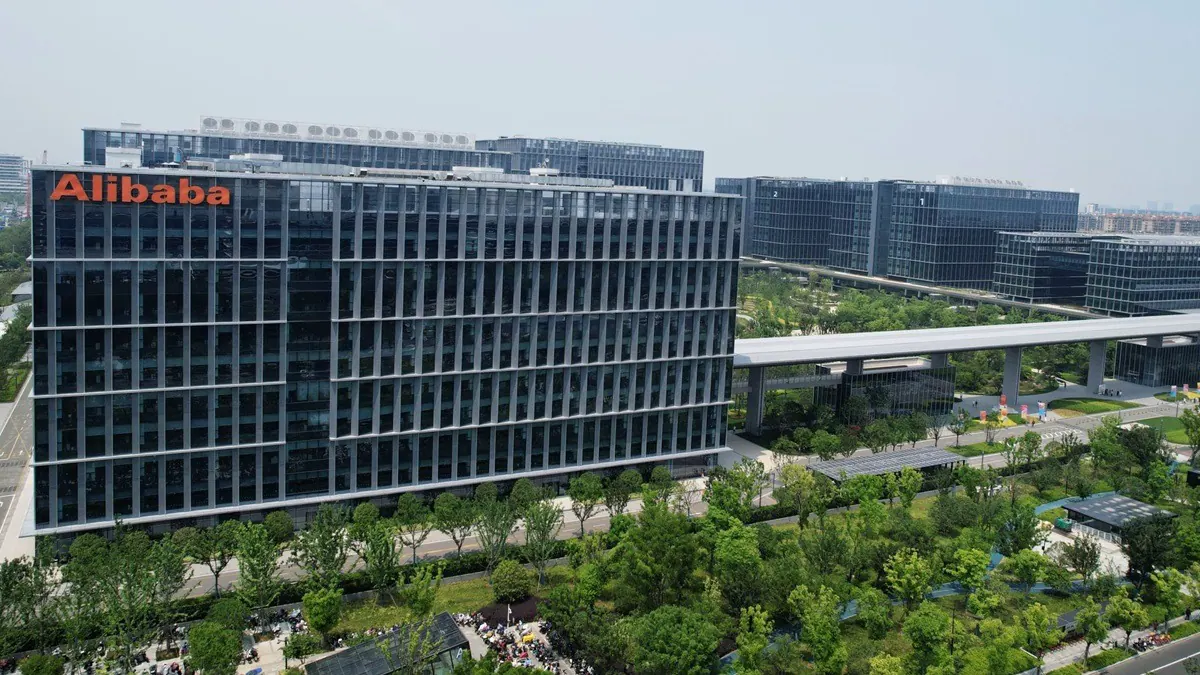
Alibaba has announced the launch of its new AI chip, Zhenwu V900, and plans for a substantially larger artificial intelligence model. The announcement was made on September 22, 2026, at the company's Apsara conference in Hangzhou, China. The new chip is developed by Alibaba's T-Head semiconductor business and is expected to deliver three times the performance of its predecessor. The company claims that the V900 can support both training AI models and running them after deployment.
The Zhenwu V900 AI chip is scheduled for mass production in the first quarter of 2027. While the company claims that the chip delivers three times the performance of its predecessor, customers will need to assess its actual performance, operating costs, software compatibility, and dependable availability. The announcement also includes plans for a successor to Alibaba's flagship Qwen model, which is expected to have five to ten trillion parameters, compared to the reported 2.4 trillion in its current Qwen3.8-Max.
Alibaba's new AI model will require significant infrastructure, including more than 20 gigawatts of global data-centre capacity by 2032. The company is expanding its effort to develop the hardware, software, and cloud infrastructure behind its AI services. This move is expected to provide cloud customers and developers with a supplier that can coordinate more of the technology needed to deliver AI. However, it remains to be seen whether this will result in cheaper services for customers.
The announcement sets out what Alibaba intends to build, but commercial availability, published pricing, and independently tested performance will be crucial for customers. The company's plans for a larger Qwen model and increased data-centre capacity will require significant investment, manufacturing, and construction. The success of these plans will depend on customer demand and the company's ability to deliver on its promises.
Alibaba's chief executive, Eddie Wu, presented the plans at the Apsara conference, highlighting the company's commitment to AI development. The company's AI chip, Zhenwu V900, is expected to support the training and deployment of AI models. The planned Qwen model will be significantly larger than its current version, with five to ten trillion parameters.
The development of AI infrastructure is a significant investment for Alibaba, requiring substantial resources and commitment. The company's plans for a larger Qwen model and increased data-centre capacity will require sustained investment and customer demand to justify the expense. The commercial availability of these services and independently tested performance will be crucial for customers assessing the company's AI services.
Alibaba's expansion into AI development is part of a larger trend in the tech industry. The company's commitment to AI development and its plans for a larger Qwen model and increased data-centre capacity position it for a significant role in the future of AI services. The success of these plans will depend on the company's ability to deliver on its promises and meet customer demand.
Key points
- Alibaba unveils new AI chip, Zhenwu V900, with mass production scheduled for Q1 2027.
- The company plans a larger Qwen model with 5-10 trillion parameters.
- Alibaba targets over 20 gigawatts of global data-centre capacity by 2032.