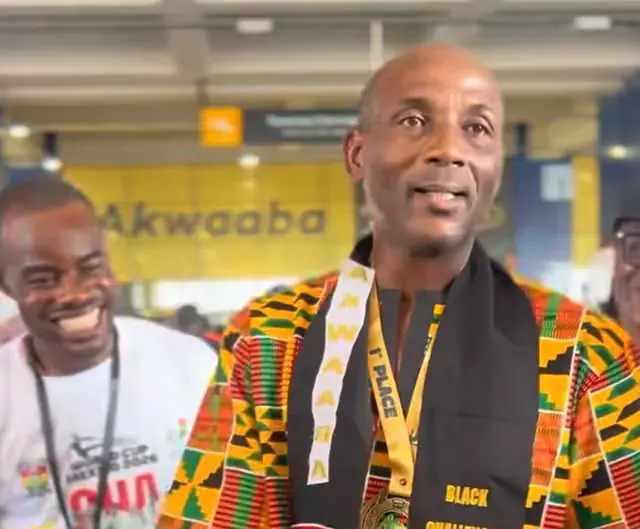
Ali Jarra, a former goalkeeper for Ghana's Black Starlets, has had a remarkable journey in football. In 1991, he was part of the team that won Ghana's first world title at the FIFA U-17 World Cup in Italy. He was also the first-choice goalkeeper for Hearts of Oak and won all three major awards in the 1992/93 season. However, his promising career was cut short in 1993 when he was suddenly paralyzed, forcing him to retire from professional football.
Despite the setback, Jarra chose to stay involved in the game and started training goalkeepers. He established an academy in Mamprobi, Accra, which coaches both boys and girls and emphasizes the importance of education. In 2024, the Ghana Football Association supported his academy with footballs and cash. Jarra has also been the technical director of the Black Challenge, Ghana's national amputee team, for over a decade, mentoring players who have faced their own challenges.
On November 20, 2026, Jarra posed a question to Sports Minister Kofi Adams, asking if the minister would receive the Black Challenge team in his office if they won the Amputee Football World Cup. The team went on to win the tournament, defeating Morocco 1-0 in the final, with captain Richard Opentil scoring the winning goal in the 32nd minute. This victory marked Ghana's second African nation to win the tournament, after Angola in 2018.
The Black Challenge team's victory was met with a hero's welcome, with the squad returning home to a red carpet and an open-top double-decker bus. At the welcome ceremony on November 26, Sports Minister Kofi Adams praised the team and singled out Jarra as a member of the 1991 Black Starlets team, calling the title another milestone in his football journey. Adams promised to work with corporate Ghana to improve sports infrastructure.
Jarra's contribution to Ghana's football has come full circle, as he has now helped the country win a world title from the touchline. His journey, which began with a promising career as a goalkeeper, was marked by a sudden and mysterious paralysis in 1993. However, Jarra has continued to be involved in the game, inspiring others with his resilience and determination.
The Black Challenge team's win has also highlighted the importance of support and recognition for athletes with disabilities. Jarra's work with the team has provided a platform for players to showcase their skills and overcome their challenges. The team's victory has also sparked renewed interest in amputee football in Ghana, with the potential for further growth and development in the sport.
As Ghana celebrates its latest football victory, the question remains what the country will do next to build on this success. With Jarra's experience and expertise, there is potential for further growth and development in Ghanaian football, particularly in the area of amputee football. The country's football authorities will be looking to capitalize on this momentum, with Sports Minister Adams promising to work with corporate Ghana to improve sports infrastructure.
Key points
- Ali Jarra's journey from paralysis to helping Ghana win the Amputee Football World Cup is an inspiration to many.
- Jarra's academy in Mamprobi, Accra, provides training and education to young players.
- The Black Challenge team's victory has sparked renewed interest in amputee football in Ghana.