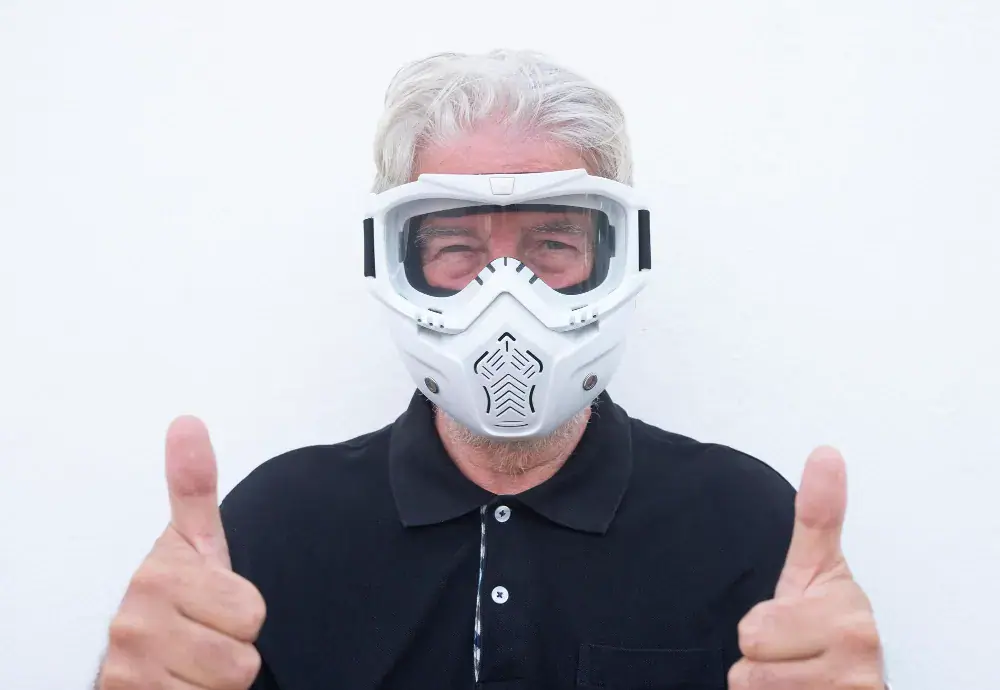
In industries, water treatment plants, and confined spaces, air quality can deteriorate rapidly due to gas leaks, smoke emissions, or oxygen deficiency. These situations can quickly escalate into emergencies, where every second counts. Having the right safety equipment is crucial to evacuate the area without exposing oneself to further danger. Self-rescue masks are designed to provide temporary respiratory protection to enable individuals to reach a safe zone.
Unlike respiratory equipment used for certain professional interventions, self-rescue masks are primarily intended for emergency evacuation. They are commonly used in the chemical industry, sewage networks, water treatment plants, and installations where hazardous gases may be present. According to identified risks, self-rescue masks are designed to allow workers to leave a hazardous area quickly. The goal is not to continue working in a contaminated atmosphere but to distance oneself from the danger.
Not all self-rescue masks offer the same level of protection, and they are not interchangeable. Some models work with a filtration system, retaining specific substances present in the air, but require a sufficient oxygen concentration. They are not suitable for oxygen-depleted atmospheres. Other devices are isolating, with their own source of breathable oxygen, and can be adapted to situations where the ambient air can no longer be breathed. The choice depends on the dangers workers may face.
Before selecting a self-rescue mask, several questions need to be asked. What gases may be present on the site? How long does it take to reach an exit? Do workers need to climb stairs or cover a significant distance? The announced protection duration must be compatible with the planned evacuation route, taking into account real usage conditions. Practical aspects, such as storage, accessibility, and ease of use, must also be considered.
Having a high-performance safety equipment, but difficult to find or master, may lose much of its interest in emergency situations. Self-rescue masks are part of a broader safety approach. Providing them does not exempt from working on risk prevention at the source. Gas detection, ventilation, intervention procedures, and evacuation instructions remain essential. The choice of respiratory equipment complements these measures, not replaces them.
Algerian employers are required by law to assess risks and take necessary measures to protect their workers. Equipment must be controlled and maintained according to the manufacturer's recommendations. Their presence on site is not enough; users must also be trained in their use. In respiratory protection, the most important thing is to have anticipated risk situations. When evacuation becomes necessary, it is not the time to discover how to use the equipment.
To ensure workers' safety, it is crucial to anticipate and prepare for emergency situations. Self-rescue masks can be a vital piece of equipment in such situations. By understanding the risks and choosing the right equipment, workers can be better protected. Employers must prioritize worker safety and provide necessary training and equipment to ensure a safe working environment.
Key points
- Employers must assess risks and provide necessary training and equipment.
- Self-rescue masks are designed for emergency evacuation, not for working in hazardous conditions.
- The choice of self-rescue mask depends on the specific dangers workers may face.