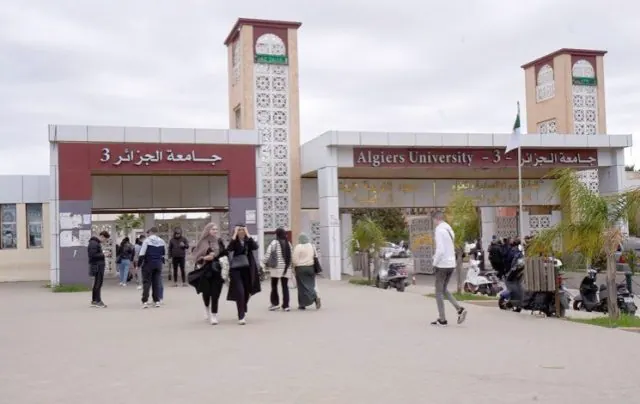
The Algerian university sector is undergoing significant changes for the 2026-2027 academic year, with nearly 2 million students, including 424,226 new high school graduates, joining institutions of higher education. This year's enrollment is marked by the introduction of 13 new specialties, including artificial intelligence, quantum technologies, and space system mechanics. These additions aim to address the country's needs in digital and technological transformation.
The new academic programs include an engineering degree in artificial intelligence, with the goal of training 30,000 specialists in this field by 2030. Other new programs comprise a master's degree in quantum technologies, a master's in information system interoperability, and a master's in space system mechanics. The health sector is also expanding, with new programs such as a license in oral health and hygiene, and master's degrees in genetic counseling, medical artificial intelligence, and addiction studies.
The Algerian government is also working to strengthen the country's medical education network, with the transformation of seven medical annexes into faculties, bringing the total number of medical faculties to 21. Additionally, a pharmacy program has been established at the University of Saida, and a master's degree in anesthesia has been habilitated. A specialized post-graduate diploma in precision medicine has also been created.
The 2026-2027 academic year will also see an increased focus on cultural identity and international openness. A new program in information and communication sciences in the Amazigh language has been introduced, and six new academic programs have been established through international partnerships and agreements. Furthermore, 35,000 teaching positions will be available in the Ecoles normales supérieures (ENS) to train future teachers.
The Algerian university sector is also undergoing significant digital transformation, with the introduction of online registration and orientation for new students. An AI-based university orientation assistant and data analysis tools have been developed to optimize the orientation process. The number of preferences that can be expressed by candidates has increased from 10 to 12, and all university services will be progressively digitalized.
The student housing network is also expanding, with ten new university residences set to open, offering 17,000 additional beds. This brings the total number of available beds to 630,202. The renovation of existing university residences continues, with 2,058 pavilions already refurbished and 1,200 more scheduled for renovation over the next two years.
Key points
- The Algerian university sector is introducing new academic programs, including artificial intelligence and quantum technologies, to address the country's needs in digital and technological transformation.
- The sector is also undergoing significant digital transformation, with online registration and orientation, and the introduction of AI-based tools to optimize the orientation process.
- The student housing network is expanding, with ten new university residences set to open, offering 17,000 additional beds.