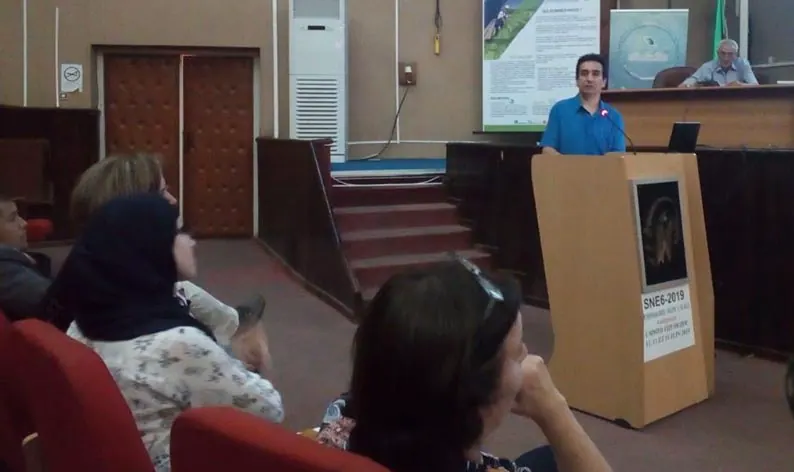
The University Mouloud Mammeri in Tizi-Ouzou, Algeria, organized the 6th Water Seminar from June 12 to 14, 2019. The event, held at the Hasnaoua auditorium, drew the university community, scientists, and specialized organizations. Discussions focused on water resource management, regional hydrogeology, urban hydraulics, and dam and water protection. The seminar provided a platform for the Tizi-Ouzou Water Distribution Company (ADE) to highlight its efforts in monitoring water quality.
The ADE laboratory in Tizi-Ouzou plays a crucial role in ensuring the quality of water distributed to consumers. With a network of 21 centers, the laboratory monitors the quality of nearly 280,000 cubic meters of treated water distributed daily. The laboratory's primary objective is to meet regulatory requirements and protect consumers from potential water pollution. To achieve this, the ADE implements measures to raise awareness among the population about pollution sources.
Pollution sources, according to ADE officials, include the return of polluted water from households to water supply networks, excessive sand extraction, water stagnation in reservoirs and pipes, frequent water outages, and illicit connections. The ADE advises against consuming untreated water from uncontrolled sources and warns against exposing water containers to direct sunlight. The seminar showcased innovative approaches to addressing these challenges.
One such approach is the use of constructed wetlands, specifically filters planted with reeds, to treat wastewater naturally. This method, part of a project to develop a park for protecting a wetland area, aims to maintain ecological balance and preserve the natural environment. The project involves designing adapted leisure activities, creating equestrian and pedestrian trails, and developing a natural wastewater treatment station using reed filters.
According to AFITEX Algeria, a company involved in the project, reed filters are particularly suitable for rural communities with limited resources. The optimized management of sludge and the simple operation of the system make it an attractive solution. The process involves primary treatment, where large particles are removed, followed by filtration through a vegetated bed, where finer particles and solid matter are retained.
The biological aerobic process uses microorganisms present in the natural environment to degrade pollution. This approach draws inspiration from the natural purification properties of soils and rivers. The objective of designing a reed filter-based wastewater treatment station is to reduce nitrogen, phosphorus, and suspended solids levels. Experts from SEAAL, a water and sanitation company, also presented a training program on the WIKTI methodology.
The WIKTI approach, developed by Suez experts, aims to diagnose and improve the know-how of water and sanitation companies. The seminar concluded with excursions to local sites, including the Taksebt dam, Tizi-Ouzou Step, and Djurdjura water catchment areas. These visits provided participants with concrete examples of water management and treatment solutions in practice.
Key points
- The seminar highlighted the importance of natural wastewater treatment methods, such as constructed wetlands and reed filters.
- The Tizi-Ouzou Water Distribution Company (ADE) emphasized its efforts in monitoring water quality and raising awareness about pollution sources.
- Experts presented innovative approaches, including the WIKTI methodology, to improve water management and treatment in Algeria.