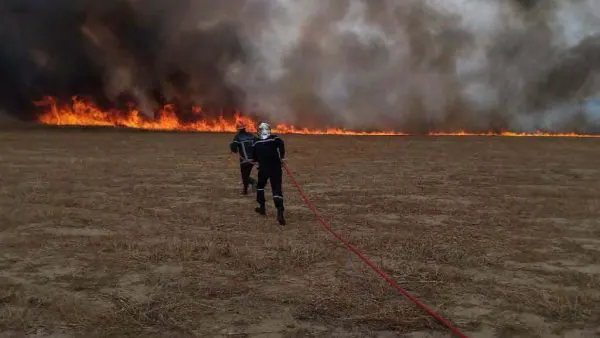
The summer of 2026 has left an indelible mark on Algeria's ecosystem and its people's memories. The Protection Civil services faced an unprecedented challenge with over 141,000 hectares of vegetation affected and nearly 200 fires occurring in a single day. A detailed provisional report presented by Lieutenant Colonel Nassim Bernaoui highlighted the severity of the situation. The report revealed 1,166 forest fires, 378 maquis fires, and 1,050 incidents of wildfires that ravaged various regions.
The statistics paint a grim picture of the destruction caused by the wildfires. Over 43,000 hectares of forests and 46,000 hectares of maquis were destroyed. Additionally, 38,000 hectares of scrubland and dry grass, 13,000 hectares of alfa and mountain vegetation, and nearly 2,000 cultivated plots were affected. The fires also destroyed over 4,000 hectares of wheat, 2,000 hectares of barley, 668,000 bales of hay, and at least 131,000 fruit trees. The exact number of palm trees destroyed is still being verified, but initial estimates suggest over 70,000 specimens were affected.
The summer of 2026 was marked by extreme heatwaves, with temperatures soaring to record highs. On July 22, 195 fires were recorded in 24 hours across several wilayas, and a similar situation occurred at the end of August with 193 fires declared in a single day. These heatwaves, which lasted for over 20 consecutive days, exacerbated the situation and made it challenging for the authorities to respond effectively.
The topography of the regions in the Center-East and East of Algeria complicated the rescue efforts. The close proximity of homes, villages, and hamlets to forest areas made it difficult for the authorities to extinguish the fires, protect human lives, and secure residential areas. A multisectoral approach was required, involving the Protection Civil, forest services, the People's National Army, security services, local authorities, and citizens.
The Algerian government has acknowledged the need for a comprehensive strategy to tackle the issue of wildfires. The Council of Ministers on September 20 outlined a plan for structural reform, focusing on prevention, anticipation, and modernization of equipment. The plan includes continuous training and tactical formation for leadership cadres, as well as the deployment of mobile columns and support detachments at the regional level.
The use of aerial equipment is a crucial aspect of this strategy. However, this requires not only logistical availability but also highly qualified crews and effective coordination with ground units. The government is also considering the creation of surveillance points and semi-centers in high-density forest areas and the specialization of units dedicated to large-scale fires.
The sacrifices made by the agents on the ground have been recognized by the Algerian government. A revision of the special status of Protection Civil personnel, coupled with a general increase in salaries and allowances, is underway. The 2026 summer serves as a catalyst for change, demonstrating that responding to new climate challenges requires permanent preparedness, combining rigorous monitoring and rapid intervention on the ground.
Key points
- Over 141,000 hectares of vegetation were affected by wildfires in Algeria's summer of 2026.
- The Algerian government has outlined a plan for structural reform to tackle the issue of wildfires, focusing on prevention, anticipation, and modernization of equipment.
- The use of aerial equipment and highly qualified crews is crucial to the strategy to combat wildfires.