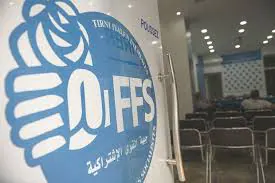
The Front des Forces Socialistes (FFS), a major Algerian socialist party, is facing internal turmoil as factions clash over control of the party. The crisis escalated recently with reports of violent incidents at the party's national headquarters in Algiers. On April 13, Ali Laskri, a leading member and coordinator of the party's presidential instance, was forcibly ejected from the premises. This event marked a turning point in the party's internal power struggle.
The FFS party has a long history, dating back to 1963, and has traditionally been associated with ideals of liberty and democracy. A group of founding members from 1963, known as the "anciens de 63," has issued a statement condemning the use of violence to occupy the party's national headquarters. They emphasized that the headquarters should be a neutral space for party activities and not a site for factional power struggles. The group expressed its willingness to mediate in the conflict but lamented that no dialogue or mediation opportunities have been offered.
The current crisis is not an isolated incident but rather a culmination of tensions within the party over several years. Following the death of the party's charismatic leader, Hocine Ait Ahmed, the party has struggled to manage internal conflicts. The absence of a unifying figure has contributed to the escalation of tensions, with factions vying for control. The party's internal dynamics have become increasingly fractious, with accusations and counter-accusations flying between rival groups.
On April 18, a group of individuals reportedly armed with knives and tear gas canisters stormed the FFS headquarters in Algiers, leading to violent clashes. Party cadres present at the scene described the events as an attempt to intimidate and aggress party members. The rival faction, however, views these individuals as "squatters" and "excluded" members. The exchanges of accusations have continued, with each side attempting to justify its position.
The "anciens de 63" group has called on sincere party militants to preserve their unity and solidarity and to mobilize against those seeking to impose their will through force. They urged party members to respect the party's texts and statutes. The group also expressed its support for Ali Laskri, the coordinator of the party's presidium, who has been at the center of the conflict.
Ali Laskri has since called on the party's first national secretary to continue consultations to form an "inclusive national secretariat" and prepare for an extraordinary national council meeting scheduled for May 4. The party's internal crisis has raised concerns among its members and supporters, who fear that the infighting may undermine the party's credibility and effectiveness.
The FFS party's crisis highlights the challenges facing Algeria's political parties in maintaining internal cohesion and stability. The situation will likely continue to be closely watched by observers and party supporters, who hope for a peaceful resolution to the conflict. The party's ability to navigate this crisis will be crucial in determining its future trajectory and relevance in Algerian politics.
Key points
- The FFS party's internal crisis is a culmination of tensions within the party over several years.
- The "anciens de 63" group has condemned the use of violence to occupy the party's national headquarters.
- Ali Laskri has called for an inclusive national secretariat and an extraordinary national council meeting.