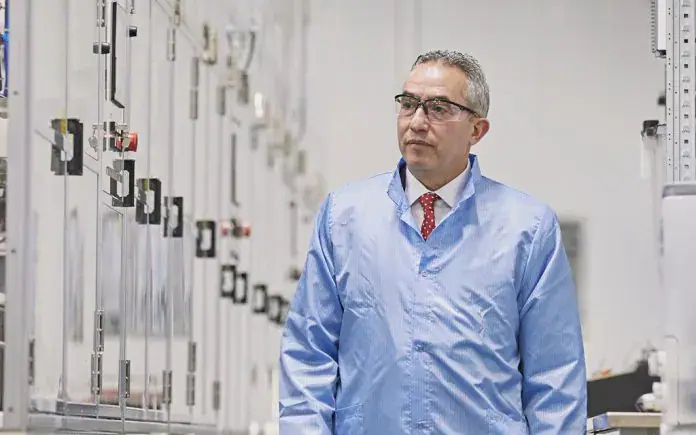
Algerian scientist Karim Zaghib, renowned for his work on lithium batteries, has been appointed to lead a strategic project to establish a lithium battery factory in Algeria. Born in Constantine in 1963, Zaghib is a specialist in electrochemistry, materials science, and lithium batteries. His academic journey began in Algeria, followed by a doctorate in electrochemistry from France and research experience in Japan. In 1995, he joined Canadian company Hydro-Québec, where he spent nearly 28 years researching and developing lithium-ion battery technologies.
Zaghib's career has been marked by significant contributions to the field of lithium batteries, particularly in the development of lithium-iron-phosphate (LFP) technology. His research has focused on the safety, durability, and cost-effectiveness of batteries. He has published hundreds of papers, holds over 600 patents, and has a dozen licenses to his name. In 2015, he was ranked among the world's most influential scientists by Clarivate Analytics. Zaghib has also received several awards, including a prestigious Quebec distinction in 2019 and the Order of Canada in 2025.
Currently a professor at Concordia University in Montreal, Zaghib directs the Volt-Age research program, which focuses on energy technologies and electricity storage. He is also a member of the High Scientific Council of the national community established abroad, created at the initiative of the President of the Republic. Despite his international career, Zaghib has maintained ties with his home country, Algeria, and has been involved in discussions with energy sector officials and researchers since 2022.
On November 23, 2026, President Abdelmadjid Tebboune officially designated Zaghib to lead the project to establish a lithium battery factory. The project aims to produce 5 gigawatt-hours (GWh) of batteries for electric vehicles and energy storage. The goal is to develop an integrated value chain around iron, phosphate, and lithium, prioritizing the transformation of raw materials on Algerian territory. Zaghib's appointment is seen as a strategic move to leverage his expertise and experience in the field.
Zaghib's vision for the project goes beyond the construction of a factory. He aims to create an Algerian industry capable of mastering the production of active materials, cathodes, and battery cells, while promoting research and innovation. He emphasizes the importance of mobilizing national experts, engineers, and competencies around a "100% Algerian" industrial strategy. The project has the potential to open up export opportunities to African, European, North American, and Asian markets.
The development of an Algerian electric vehicle is also a long-term goal, with Zaghib aiming to achieve this within five to six years. His trajectory illustrates the journey of a researcher who now seeks to contribute to the structuring of a new energy sector in his home country. The challenge lies in transforming scientific and technological expertise into concrete and sustainable industrial capabilities.
The project is expected to be carried out in partnership with Sonelgaz International, under the supervision of the Ministry of Energy and Renewable Energies. Zaghib will be responsible for studying and monitoring the technical and technological stages of the project. The establishment of a lithium battery factory in Algeria is seen as a significant step towards developing the country's energy sector and promoting sustainable development.
Key points
- Algerian scientist Karim Zaghib to lead lithium battery factory project
- Project aims to produce 5 GWh of batteries for electric vehicles and energy storage
- Zaghib's vision is to create an Algerian industry capable of mastering battery production and promoting research and innovation
Reporting sources
- KARIM ZAGHIB : Le père de la batterie au lithium algérienne · lecourrier-dalgerie.com