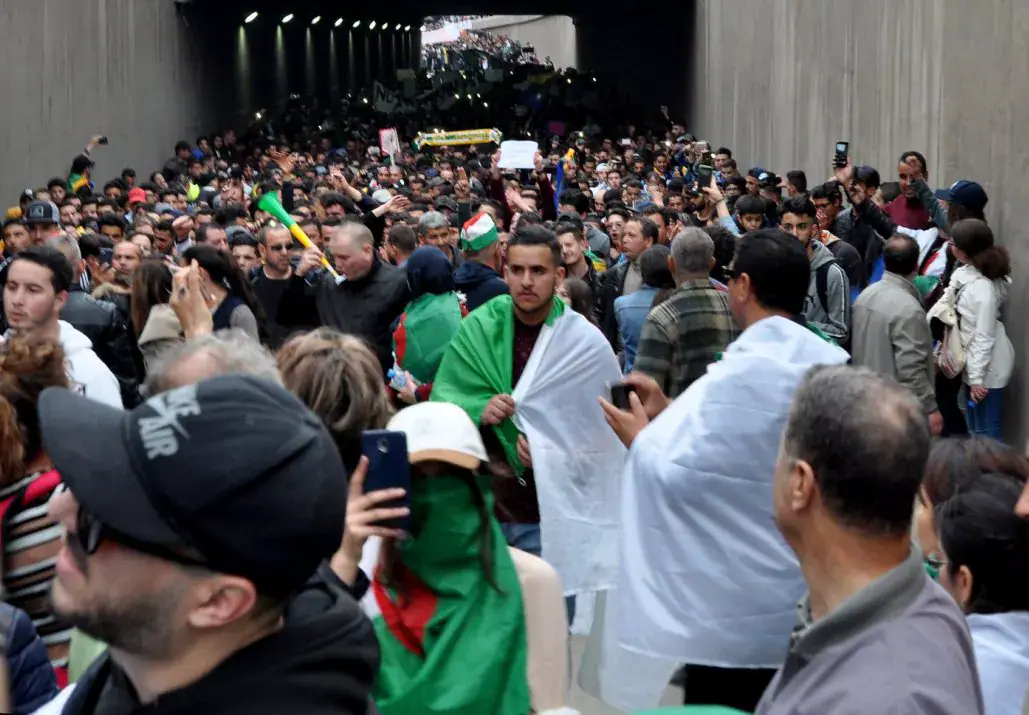
The third wave of protests in Algeria has shown that the people will not back down from rejecting the current political system and opposition figures. During recent marches, protesters expressed their refusal of the tutelage that opposition leaders have tried to impose on them. The rejection of opposition leaders was symbolically illustrated by the exfiltration of Ali Ghediri, a serious contender for the presidency, from a march in Algiers.
Ghediri's legitimacy and supposed strength, which he claimed came from the people, was revealed to be another political trick. His first real contact with the people turned out to be a rejection, as they turned their backs on him. Before Ghediri, Louisa Hannoune, a self-proclaimed voice of the proletariat, and Makri, a symbol of Islamic hypocrisy, were also booed by protesters. The masses are demanding a complete overhaul of the current system and the consequences of the 1988 confiscation.
Three decades have passed since the first popular uprising against the regime, and Algerians have grown up witnessing the confiscation and betrayal of their hopes. The younger generation, born during this era, is now driving the movement for change and freedom, possibly towards a real democracy. The opposition has long relied on soothing rhetoric, but they knew the people were suffering under the weight of empty promises.
The leaders of the opposition have been searching for their place in a society suffocated by insincere speeches. According to Ibn Khaldoun, the life of a state is three generations, which seems to be the case for Algerian opposition parties that are now three decades old. The images from the popular movement show the end of an era for a moribund opposition.
Even attempts by opposition leaders to survive, such as the alliance between Benflis and other parties, have been met with rejection. Karim Tabou, an active member of the opposition, denounced the intentions of the former head of government and quit the party. The opposition parties are no longer relevant to the people, who have decided to elevate their own voices.
The new generation is focused on a single message: no more tutelage that has prevented them from becoming independent and forward-thinking adults. The peaceful protests in the streets are no longer directed only at the current system but also at the opposition parties that were born and nurtured within it. This includes the party created by the revolutionaries of the war of liberation.
The question now is what steps the opposition should take to reposition itself within society, with which it has apparently divorced. Should they opt for a complete reset of the political field, including parties and laws, to rebuild a new political life in Algeria? The people are demanding change, and it remains to be seen how the opposition will respond to this call.
Key points
- Algerian protesters are demanding an end to the current political system and the opposition leaders they see as out of touch.
- The protests are being driven by a new generation that wants to break free from the tutelage of the current system and opposition parties.
- The opposition parties are struggling to survive as the people turn against them and demand real change.