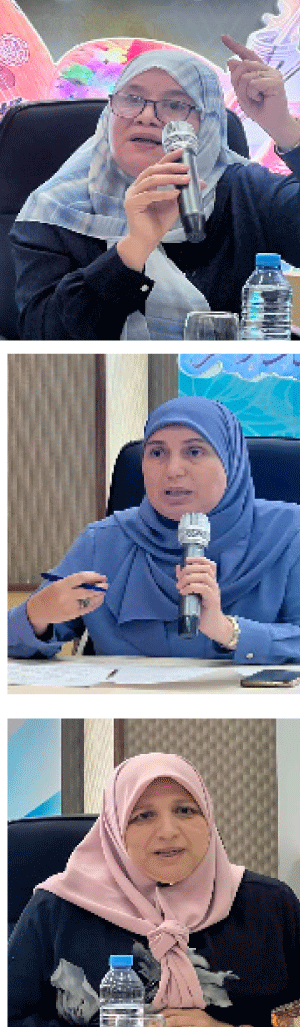
In a workshop titled "Between the Lines: The Art of Critical Reading," held at the Mustapha Nattour Public Library in Constantine, Algeria, professors discussed the decline of traditional reading habits and the need to revive them. The workshop, led by professors Inas Kabir, Leila Louair, Naima Boulkceibat, and Amal Louati, aimed to promote critical reading and its benefits in producing new creative works. The professors highlighted the impact of digital age habits on reading, including the rise of rapid reading and the decline of in-depth analysis.
The workshop participants emphasized that critical reading is essential for acquiring culture and building a knowledgeable individual. They argued that reading is not only a means of gaining knowledge but also a way to regain tranquility and focus in a world dominated by rapid information exchange. The professors stressed that critical reading enables readers to develop a deeper understanding of texts, analyze information, and produce new ideas. They also highlighted the importance of developing critical thinking skills, which are essential for evaluating information and making informed decisions.
Professor Leila Louair discussed the different levels of reading, including reading for understanding, analysis, and criticism. She emphasized that critical reading involves not only understanding the text but also analyzing its structure, identifying the author's intentions, and evaluating the information presented. Louair also highlighted the importance of developing a critical reading strategy, which involves asking questions, making connections to prior knowledge, and evaluating the author's arguments.
Professor Naima Boulkceibat discussed the importance of reading in building a civilized society. She argued that reading is essential for developing critical thinking skills, which are necessary for evaluating information and making informed decisions. Boulkceibat also emphasized that reading enables individuals to develop a deeper understanding of themselves and the world around them. She highlighted the need to move beyond superficial reading and engage in more in-depth analysis of texts.
Professor Amal Louati led a practical exercise on critical reading, using a selection of books by different authors. She demonstrated how to analyze a book's content, structure, and themes, and how to identify the author's intentions and biases. Louati emphasized that critical reading involves not only understanding the text but also evaluating its relevance and significance.
The workshop participants also discussed the challenges facing readers in the digital age, including the rise of superficial reading and the decline of attention span. They emphasized the need to promote a culture of critical reading and to encourage readers to engage in more in-depth analysis of texts. The professors highlighted the importance of developing critical thinking skills, which are essential for evaluating information and making informed decisions.
The workshop concluded with a call to action to promote critical reading and to encourage readers to engage in more in-depth analysis of texts. The professors emphasized that critical reading is essential for developing a knowledgeable and thoughtful society. They highlighted the need to revive traditional reading habits and to promote a culture of critical engagement with texts.
Key points
- Critical reading is essential for acquiring culture and building a knowledgeable individual.
- Critical reading enables readers to develop a deeper understanding of texts, analyze information, and produce new ideas.
- Promoting a culture of critical reading is essential for developing a knowledgeable and thoughtful society.