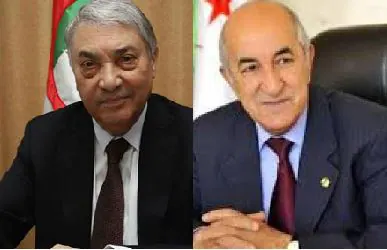
The deadline for submitting candidatures for the Algerian presidential election passed with 12 candidates registering with the Independent National Electoral Authority (ANIE). Ali Benflis was among the first to submit his dossier, stating that despite the country's violent and profound crisis, he was determined to participate in the December 12 election. Benflis' decision to run was not taken lightly, reflecting the complexities of the current situation.
Benflis was followed by other prominent figures, including Abdelmadjid Tebboune, a former Prime Minister under President Bouteflika. Tebboune confirmed that he had fulfilled all the necessary conditions for his candidacy and promised to unveil his electoral program later. He emphasized that the presidential election offered a new beginning and a chance to consolidate the sovereignty of the people, as enshrined in the constitution.
Tebboune's program would focus on economic, social, and cultural development, with the aim of building a new Republic that would provide a sense of belonging for Algerian citizens. He also pledged to strengthen cohesion among Algerians. According to sources close to his campaign, Tebboune had gathered over 127,000 signatures in support of his candidacy, exceeding the required threshold.
Other candidates, including Abdelaziz Belaid, Belkacem Sahli, and Souleiman Bekhlili, also submitted their dossiers to the ANIE. The authority reported that 145 candidates had initially expressed interest but ultimately failed to meet the requirements. Those who succeeded in submitting their candidatures must now await validation by the ANIE within a seven-day period.
The process of gathering signatures proved challenging for many candidates, with some alleging partiality, falsification, and even sale of signatures by certain administrations. The ANIE has launched investigations into these claims and promised to take action if irregularities are confirmed. These allegations highlight the complexities and controversies surrounding the electoral process.
Abdelkader Bengrina, president of the El-Bina movement, and Ali Zeghdoud, president of the Algerian Rally, were among other prominent figures who submitted their candidatures. Azzedine Mihoubi, secretary-general of the National Democratic Rally (RND), had also registered earlier. The increasing number of candidates reflects the diverse range of interests and aspirations within Algerian politics.
The ANIE will review and validate the submitted candidatures within the next seven days. Once validated, the candidates will proceed to the next stage of the electoral process. The December 12 presidential election is expected to be a crucial event in Algeria's recent history, with citizens eagerly awaiting the outcome.
Key points
- Abdelmadjid Tebboune submits his candidature, promising to focus on economic, social, and cultural development.
- 12 candidates register with the ANIE, with 145 others failing to meet requirements.
- Allegations of irregularities and controversies surround the electoral process.