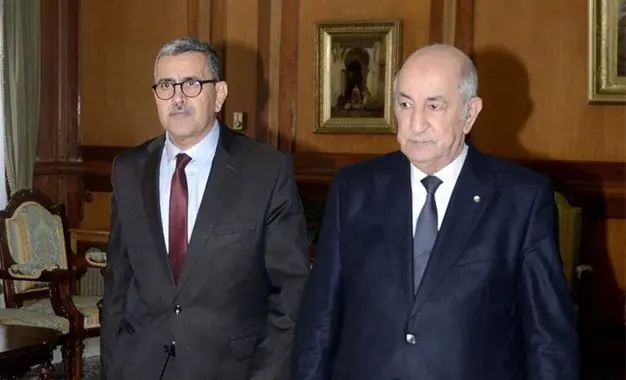
Algerian President Abdelmadjid Tebboune will preside over his first Council of Ministers meeting with the newly appointed government. The meeting aims to establish a work plan for the government under Djerad's leadership. The plan will be submitted for adoption at the next Council of Ministers meeting and then to the Parliament. The new ministers, mostly inexperienced, face significant challenges in a complex political and social context. They are expected to make a positive impact from the start.
The new government will focus on various sectors, including health, economy, education, communication, employment, and social welfare. These sectors have been lagging behind due to incomplete projects left by the previous government under former President Bouteflika. The new ministers must tackle these projects, which require urgent attention. The health sector, in particular, faces significant challenges, including a shortage of personnel in healthcare facilities.
The new Health Minister, Pr Benbouzid, is expected to implement a new healthcare law that has been in preparation for two years. He must also address the shortage of healthcare personnel and manage the budget constraints due to financial restrictions. Additionally, the construction of new hospitals in the Hauts plateaux and the Grand Sud regions is a priority to improve healthcare access for southern Algerians.
The economy sector also faces significant challenges, with the new minister expected to prioritize the sale of underperforming public entities. However, this may be difficult due to the complexities of the small and medium-sized enterprise (SME) sector and the automotive, electronics, and telecommunications industries. The new government must also address the issues affecting the education sector, which has faced significant challenges in recent years.
The education sector is awaiting the implementation of President Tebboune's electoral promise to reduce the weight of schoolbags. The sector also requires a refocusing of the school curriculum, which has been chaotic over the past three decades. The new government must prioritize these issues to improve the education system.
The communication sector is also facing significant challenges, with the new minister, Belhimer, aiming to work with all stakeholders to improve the sector. He has expressed his commitment to finding solutions to the professional, material, and organizational problems facing the sector. The new government must also address social issues, including measures to boost purchasing power.
President Tebboune is expected to take measures to alleviate the burden on citizens, including eliminating income tax for salaries equal to or less than 30,000 dinars and increasing the national minimum wage. The new government's success will depend on its ability to address these challenges and implement its plans effectively.
Key points
- President Tebboune to chair first cabinet meeting with new government
- New government to focus on health, economy, education, and social welfare sectors
- President Tebboune expected to take measures to boost purchasing power