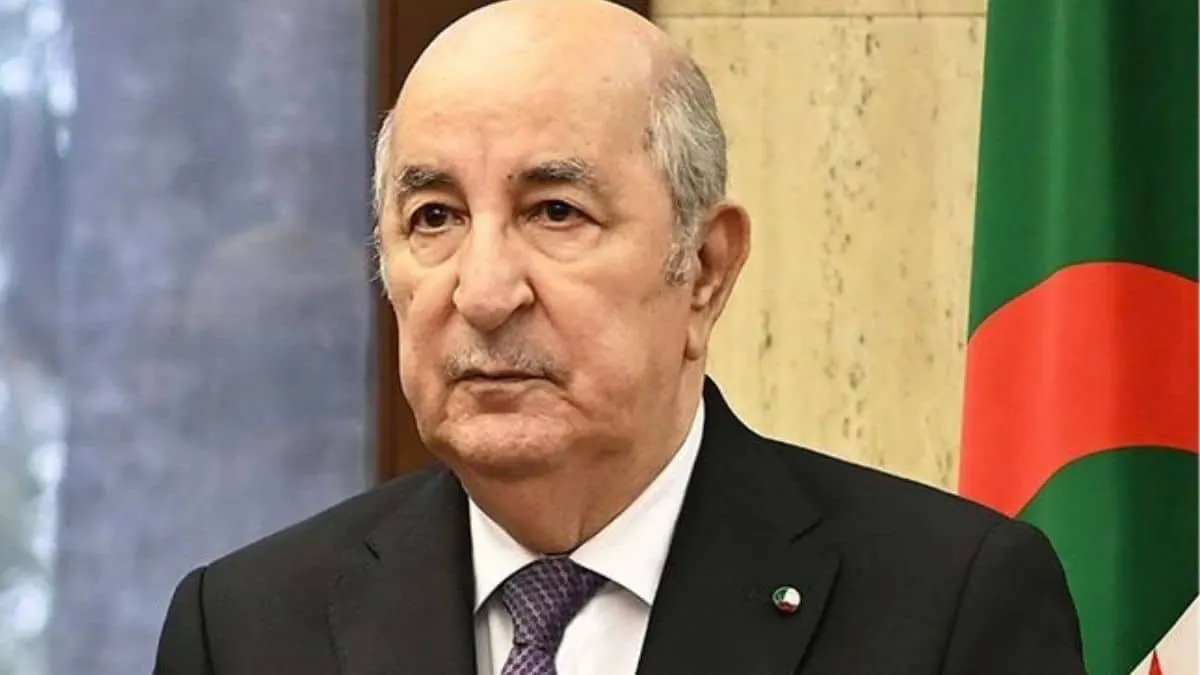
Algerian President Abdelmadjid Tebboune has countered the International Monetary Fund's (IMF) forecast on the country's foreign exchange reserves. In a recent address, Tebboune stated that Algeria's reserves are at an "acceptable level," covering nearly a year and a half of imports. This comes after the IMF predicted a significant decline in the reserves to $19.8 billion by 2031. Tebboune emphasized that the country's focus on diversifying its economy will help mitigate the decline.
According to the IMF's report published on September 21, Algeria's foreign exchange reserves were estimated to be $69 billion in 2024 and $51 billion in 2025. However, the fund predicts that the reserves will dwindle to $46.5 billion in 2026 and further decline to $19.8 billion by 2031. The IMF based its calculations on the evolution of imports and forecasts of oil prices in the coming years. Algeria's economy is heavily reliant on hydrocarbon exports, making oil and gas prices crucial in determining the country's foreign exchange reserves.
Tebboune's comments on the foreign exchange reserves were made during a meeting with national media outlets. He emphasized that Algeria is committed to diversifying its resources, stating, "We are working to increase our revenues outside of hydrocarbons. It's not a question of currency; it's a question of sovereignty." The president's statement highlights the country's efforts to reduce its dependence on hydrocarbon exports and develop other sectors of the economy.
Algeria has made significant strides in diversifying its economy, with non-hydrocarbon exports increasing to over $6 billion in 2022, up from less than $1 billion in previous years. The country aims to further boost non-hydrocarbon exports, with forecasts predicting $7.8 billion in 2026. Large-scale projects, such as the exploitation of iron deposits in Gara Djebilet, phosphate in Tébessa, and zinc and lead in Béjaïa, are expected to contribute to the growth of non-hydrocarbon exports.
In addition to increasing non-hydrocarbon exports, Algeria is also focused on substituting imports through domestic production. The country has launched several large-scale projects, including a giant farm in Adrar and a cereal project with Italian company BF in Timimoun. These projects aim to reduce Algeria's reliance on imports and support the growth of the domestic economy.
One notable project is the Baladna farm in Adrar, which will produce 193,000 tonnes of powdered milk per year. This project alone is expected to save Algeria $600 million in imports annually. The country's aim is to increase its cereal production to 9 million tonnes in the medium term, covering a significant portion of its needs.
The Algerian government's efforts to diversify the economy and reduce reliance on hydrocarbon exports are crucial in addressing the IMF's concerns about the country's foreign exchange reserves. With a focus on increasing non-hydrocarbon exports and substituting imports, Algeria aims to maintain a stable economic trajectory.
Key points
- Algeria's President Tebboune counters IMF forecast on foreign exchange reserves, emphasizing the country's commitment to economic diversification.
- IMF predicts significant decline in Algeria's foreign exchange reserves to $19.8 billion by 2031.
- Algeria aims to increase non-hydrocarbon exports and substitute imports through large-scale domestic projects.