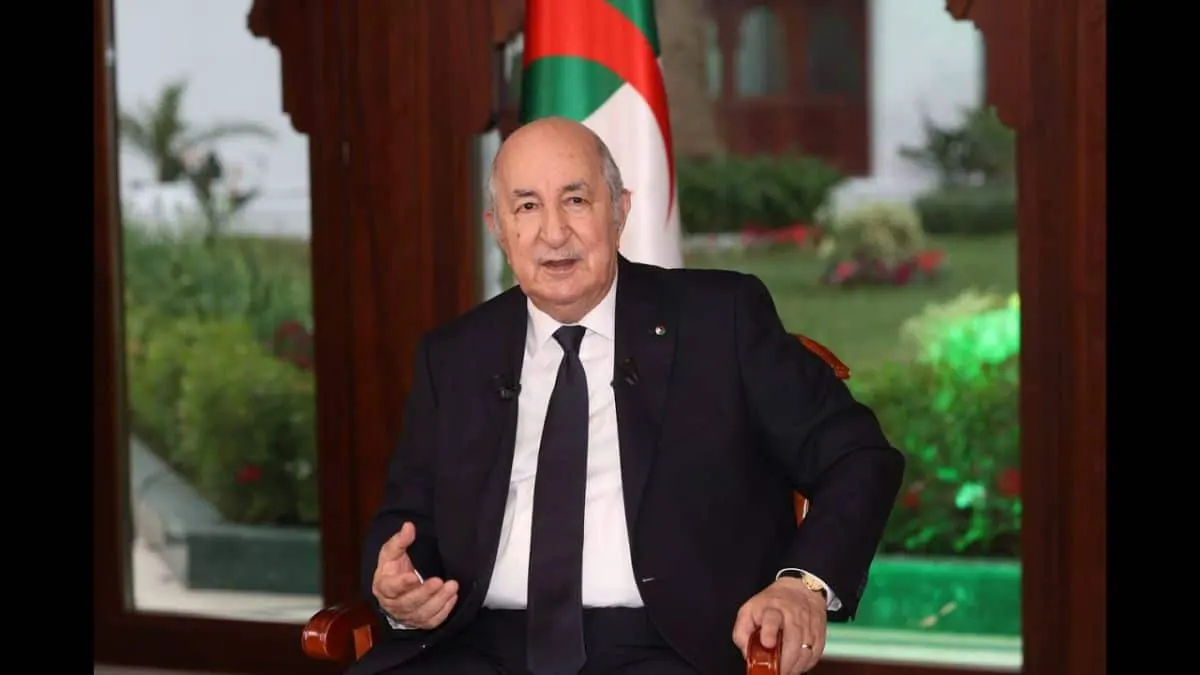
Algerian President Abdelmadjid Tebboune has disputed the International Monetary Fund's (IMF) projection that Algeria's foreign exchange reserves will decline by 2030. In a recent statement, Tebboune expressed his views on various pressing issues, including the country's economic situation and its relations with neighboring countries. The President's comments come as Algeria continues to navigate economic challenges. Tebboune is set to elaborate on these issues in an upcoming interview with Algerian media.
Tebboune's comments on foreign exchange reserves contradict the IMF's forecast. The IMF had predicted that Algeria's reserves would decline significantly by 2030. However, Tebboune provided no specific details to support his claim. Algeria's economy is heavily reliant on oil and gas exports, which can be volatile. The country's foreign exchange reserves have been under pressure in recent years due to declining oil prices and reduced export earnings.
The Algerian President also discussed the country's decision to send four Su-30 fighter jets to Niger. Tebboune did not provide further details on the deployment, but it is seen as part of Algeria's efforts to strengthen regional security. The move comes amid growing concerns about security in the Sahel region, where extremist groups have been active. Algeria has been working to bolster its military cooperation with neighboring countries.
Tebboune also addressed the issue of rising prices of fruits and vegetables in Algeria. The President acknowledged that the increase in prices was affecting the purchasing power of Algerian citizens. The government has been working to address the issue through various measures, including subsidies and price controls. However, the problem persists, and Tebboune's comments suggest that the government is committed to finding a solution.
The President's upcoming interview with Algerian media is expected to provide more insight into his views on various issues. The interview, which will be broadcast on Algerian television, will cover a range of topics, including the economy, security, and foreign policy. Tebboune's comments are likely to be closely watched by Algerians and international observers alike.
Algeria's economic challenges are significant, with the country facing declining oil revenues and a widening trade deficit. The government has been working to diversify the economy and reduce its reliance on oil exports. However, progress has been slow, and the country remains vulnerable to fluctuations in global commodity prices. Tebboune's comments on the economy are likely to be closely scrutinized in this context.
The President's statements on foreign exchange reserves, military cooperation with Niger, and rising prices reflect the complexities of Algeria's current challenges. As the country navigates these issues, Tebboune's leadership will be closely watched by Algerians and international observers. The President's ability to address these challenges will be crucial in determining the country's future prospects.
Key points
- Algerian President Abdelmadjid Tebboune disputes IMF forecast on declining foreign exchange reserves.
- Tebboune explains decision to send Su-30 fighter jets to Niger.
- President addresses rising prices of fruits and vegetables in Algeria.