Algerian President Abdelmadjid Tebboune recently addressed the issue of drug trafficking in his country, stating that the influx of drugs from neighboring countries constitutes a "war against our people and our youth." While not explicitly mentioning Morocco, Tebboune emphasized that Algeria may need to target the source of drug production in the future, citing the right to self-defense. This statement has sparked a heated debate with Morocco.
The Moroccan press has reacted strongly to Tebboune's comments, with some outlets interpreting them as a declaration of war. Maroc-Hebdo published an article titled "Tebboune plays with fire," suggesting that the Algerian president's comments introduce a military perspective into a domestic security issue. The article further implies that Morocco could be directly affected by Algeria's potential actions.
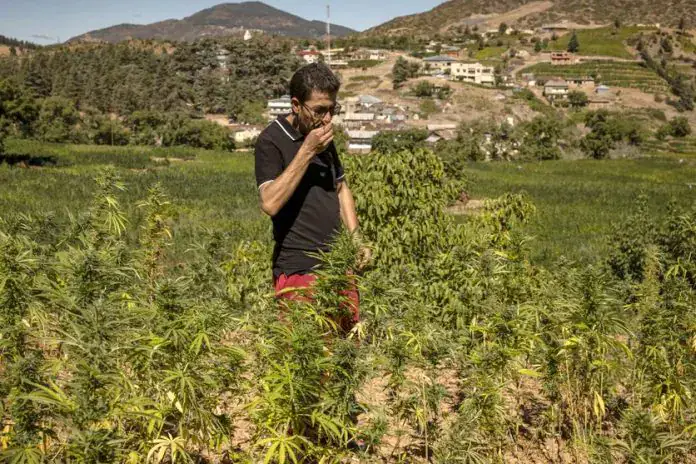
Algerian media have responded to the Moroccan press reaction, arguing that it amounts to an admission of guilt. The Algerian press notes that Moroccan media have acknowledged their country's role in producing and trafficking drugs, citing reports from the United Nations Office on Drugs and Crime (UNODC). According to the UNODC, Morocco is one of the top three countries producing cannabis resin.
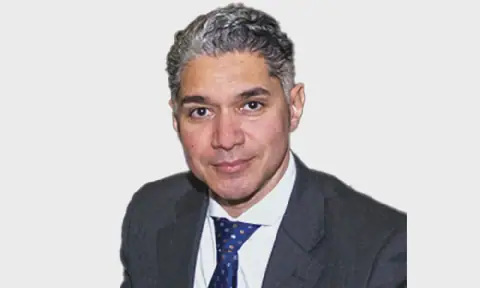
Mustapha Adib, a former Moroccan air force officer and current opponent in exile in the United States, has weighed in on the issue. Adib believes that Algeria has the right to target drug production sites under international law, citing the principle of self-defense. He also suggests that Algeria possesses sufficient evidence to prove Morocco's involvement in drug trafficking.
The international community has taken note of the controversy, with some experts pointing out that Algeria is within its rights to take action against drug trafficking under international law. The UN's system of international drug control is based on three main treaties that allow countries to take measures to combat drug production and trafficking.
The dispute between Algeria and Morocco highlights the complex issue of drug trafficking in the region. Both countries have a vested interest in addressing the problem, but their differing approaches and interpretations of international law have created tension. Algeria has long accused Morocco of being the source of drugs entering its territory.
The situation remains volatile, with both sides seemingly entrenched in their positions. As the international community continues to monitor developments, it remains to be seen how the situation will unfold. One thing is certain, however: the issue of drug trafficking will continue to be a pressing concern for both Algeria and Morocco.
Key points
- Algerian President Abdelmadjid Tebboune's comments on drug trafficking have sparked controversy with Morocco.
- Moroccan press reactions have been interpreted by Algerian media as an admission of guilt.
- The dispute highlights the complex issue of drug trafficking in the region.